


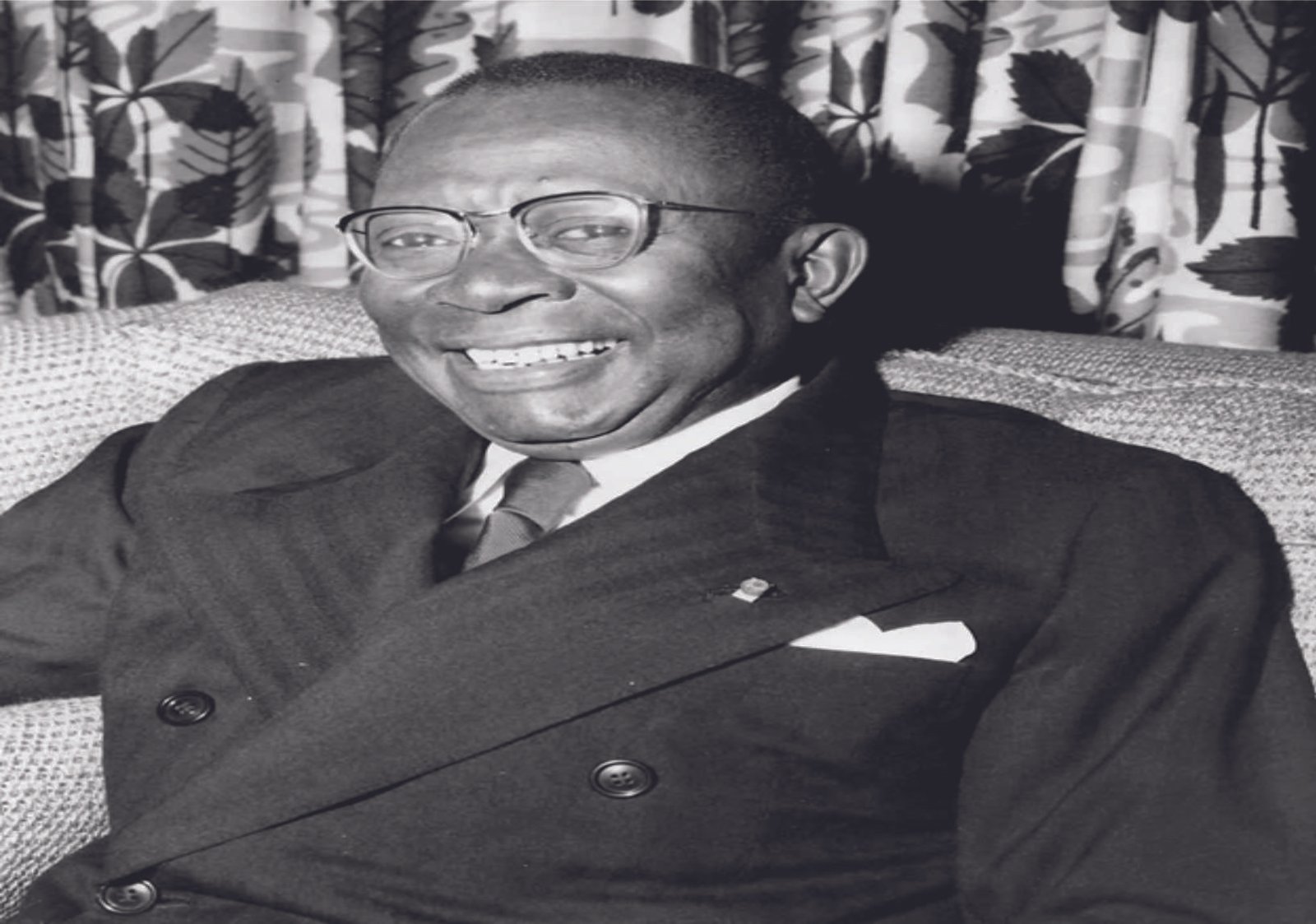
The legacy of former President William V. S. Tubman is one of the great paradoxes of Liberian history.
His 27-year presidency, the longest in the nation’s political journey, stands at the intersection of remarkable national transformation and deeply entrenched authoritarianism.
As Liberia continues to commemorate Tubman’s birthday each year, it becomes increasingly important to grapple with both the progress he unlocked and the flaws his governance implanted into the roots of the state.
Tubman’s achievements are undeniable. He presided over the most ambitious era of infrastructure development the country had ever seen.
The Capitol Building, the Executive Mansion, the Temple of Justice, the Freeport of Monrovia, and Roberts International Airport remain symbols of his developmental drive.
These were not mere vanity projects; they formed the architecture of governance and mobility upon which Liberia still relies today.
In health, Tubman expanded Liberia’s capacity at a time when modern medical care was out of reach for most African nations.
Institutions like the John F. Kennedy Medical Center continue to serve as national medical pillars, a testament to the enduring value of his investments. The same can be said of educational facilities such as Tubman High School and Bassa High School, which democratized access to quality learning for thousands of Liberians.
Economically, Tubman’s “Open Door Policy” stands as one of his most influential reforms.
By attracting foreign direct investment from global mining giants and agricultural companies, he brought Liberia into a new era of economic relevance.
The influx of revenue and global attention turned Liberia into one of Africa’s early economic success stories, particularly in the 1960s.
But beneath this veneer of modernity was a political system that constricted personal freedoms. Tubman’s Liberia was not a space for dissent.
The lengthy rule of the True Whig Party became synonymous with stagnation in political pluralism. Opposition figures were intimidated, incarcerated, or pushed abroad, leaving the country with the appearance-but not the substance-of stability.
This centralization of power has come to be seen as one of Tubman’s most damaging legacies. By consolidating authority and weakening systems of checks and balances, he created a political structure vulnerable to abuse by future leaders.
It is no coincidence that, after his death, Liberia struggled to navigate the pressures of governing a politically awakened and diverse population.
Many scholars argue that the seeds of the country’s later instability were already planted during his administration.
The celebration of Tubman’s birthday, therefore, cannot be viewed through a singular lens. It is not simply an endorsement of everything he did; rather, it represents a national acknowledgment of the complex figure he was. Liberians honor him because the country he built, its physical structures, its educational systems, its diplomatic stature-still shapes the nation’s identity. For many, Tubman symbolizes a moment in Liberian history when national progress felt purposeful and attainable.
At the same time, commemorating Tubman allows Liberians to reflect on the cautionary aspects of his rule. His life offers lessons on governance, the dangers of unchecked power, and the need to balance development with democratic values.
Tubman’s legacy is not a story of triumph or failure; it is a story of both. And perhaps this is why his birthday remains on the national calendar: it forces Liberia to wrestle with its past honestly, acknowledging the heights he helped the country reach and the structural weaknesses that still challenge it today.
In the end, Tubman’s place in history is secured not because he was flawless, but because he shaped Liberia in ways few others have. His legacy is, and will remain, a mirror-reflecting both what Liberia achieved and what it must continue striving to become.