
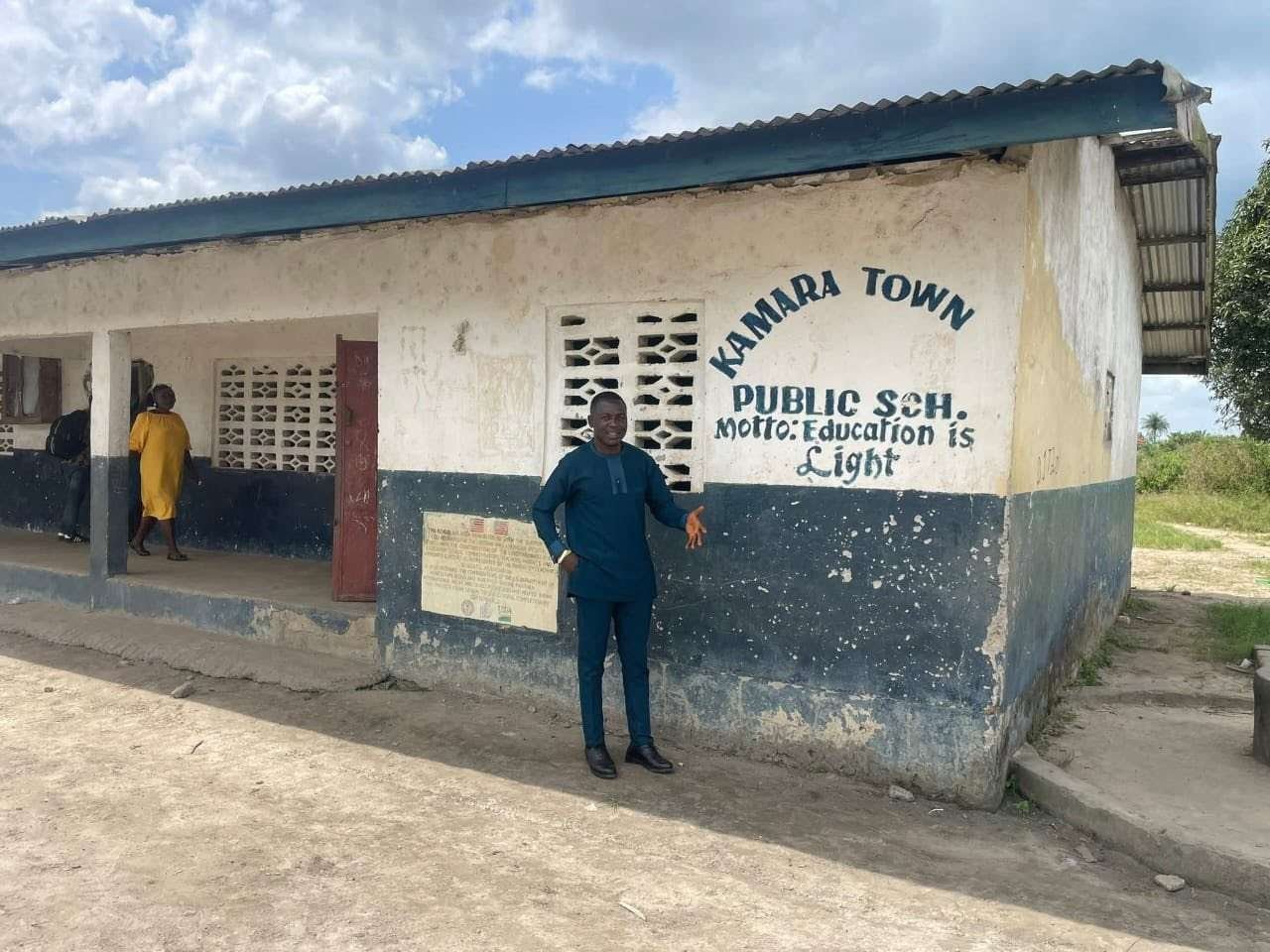
Kamara Town Public School and Billy’s Public School, located on the outskirts of Monrovia, have once again drawn national attention to the fragile and underdeveloped state of Liberia’s public education system. The conditions at these institutions reflect what many education advocates describe as the extreme backwardness of a system that continues to fail thousands of children, particularly those from poor and marginalized communities.
During a recent visit to the two schools, young civic leader James Gbelee Washington expressed strong concern about the learning environment and the overall structure of public education in the country. His observations, later shared on social media, have since sparked renewed public debate on the urgent need for reform.
According to Washington, the current public education system is no longer functional and does not meet the basic standards required to prepare students for the future. “The current system does not work and has to be replaced with something more efficient and vigorous,” he wrote on his Facebook page after touring the schools. He further emphasized that meaningful change would only come through collective action and sustained pressure on the government.
Kamara Town Public School and Billy’s Public School reportedly suffer from inadequate infrastructure and a lack of essential teaching and learning materials. These challenges are not unique to the two institutions but are common across many public schools, especially in rural and semi-urban parts of Liberia. In such areas, public schools are often the only option available to children from low-income families, making their poor condition even more troubling.
Education stakeholders have long called on the government to implement a comprehensive overhaul of the public education system, which they say has been neglected for decades. Washington echoed this sentiment, calling for what he described as “an era of cohesive academic revolution” in Liberia’s near future.
As discussions continue, many Liberians are urging policymakers to prioritize education reforms that will ensure equal access to quality learning for all children, regardless of their economic background.