


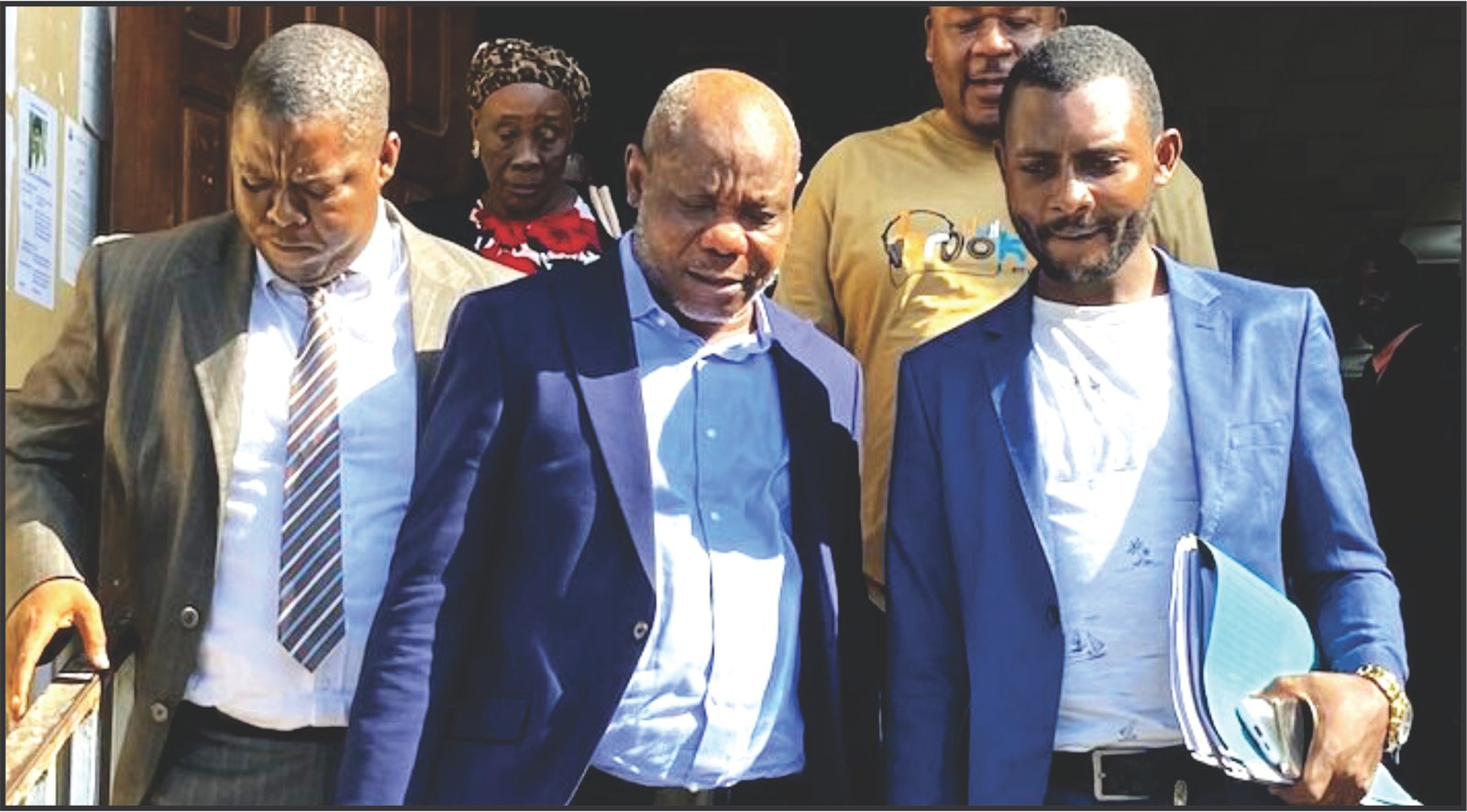
The Supreme Court of Liberia has ruled against several former senior government officials seeking to halt ongoing criminal proceedings at the Criminal Court ‘C’ at the Temple of Justice in Monrovia.
The Supreme Court,sitting in its, Term, issued a definitive judgment denying the petition for a writ of prohibition.
The case involved former Minister of Finance and Development Planning Samuel D. Tweah, former Acting Minister of Justice Counsellor Nyenati Tuan, former Director of the Financial Intelligence Agency Stanley S. Ford, former Comptroller of the Financial Intelligence Agency D. Moses P. Cooper, and former National Security Advisor Jefferson Karmoh.
The petitioners sought to prevent a trial presided over by His Honor Roosevelt Willie, Assigned Circuit Judge for the First Judicial Circuit Criminal Assizes ‘C.’
The respondents in the case included Judge Roosevelt Willie, the Ministry of Justice, and the Liberia Anti-Corruption Commission.
The petitioners argued that their involvement in certain National Security Council activities afforded them immunity from the ongoing legal proceedings.
During the hearing, senior counsels representing the petitioners included Arthur T. Johnson, M. Wilkins Wright, A. Ndubuisi Nwabudike, G. Wiefueh Alfred Sayeh, and Norris L. Tweah.
The respondents were represented by Solicitor General Augustine C. Fayiah, Jerry D. K. Gariawulo, Joel Elkannah Theoway, and Richard J. Scott, Jr.
The Supreme Court reviewed extensive records and considered arguments from both sides before delivering its judgment.
The Court emphasized the importance of statutory interpretation in determining the scope of immunity and the role of officials in the executive branch.
In its ruling, the Court clarified that when a statute specifies certain individuals as beneficiaries of immunity, any other person must be expressly co-opted to claim such protection.
The High Court noted that the National Security Council Act specifically named its members and designated the Minister of Defense to preside in the absence of the Minister of Justice.
The Court determined that actions by the Acting Minister of Justice or other officials not explicitly named or co-opted by the President could not claim legal immunity.
This, the Court said, rendered the petitioners’ claims of protection invalid.
Furthermore, the Court highlighted Article 61 of the Liberian Constitution, which grants personal immunity solely to the sitting President of Liberia.
According to the judgment, no other executive branch is afforded such immunity under the Constitution.
The Supreme Court also addressed procedural issues, emphasizing that both civil and criminal procedure laws allow an adverse party to make ex-parte applications without prior notice to the opposing party.
The Court found no legal basis for halting the proceedings on procedural grounds.
As a result, the Supreme Court denied the petitioners’ request for the writ of prohibition. The alternative writ previously issued was quashed, and the peremptory writ sought by the petitioners was formally denied.
The case has now been remanded to the trial court in Montserrado County, which is ordered to resume jurisdiction and continue with the trial in accordance with the law.
The Supreme Court mandated the clerk to transmit the official judgment and directive to the lower court.
Chief Justice Yamje Quiqui Gbejsay, Sr., along with Associate Justices Yussif D. Kaba and Boakai N. Kanneh, signed the judgment.
The Court noted that Justice Jamesetta Howard Wolokolie recused herself due to family ties to one of the parties, and Justice Ceaineh D. Clinton Johnson recused herself after having issued the writ.
The trial court in Monrovia is expected to continue proceedings shortly, with close attention from both the public and the media, given the high-profile nature of the defendants and the issues involved.