
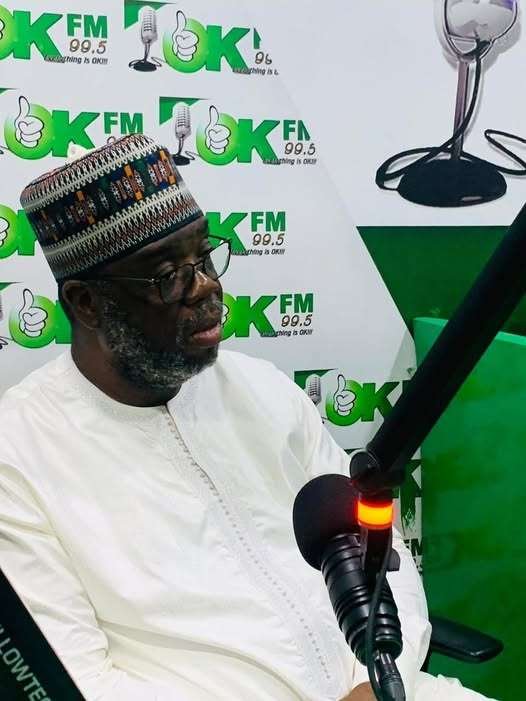
Monrovia, Liberia — Bomi County Senator Edwin Melvin Snowe has launched a blistering critique of Liberia’s political climate, accusing the ruling Unity Party (UP) of exhibiting a deeper desperation for power than the current opposition and warning that both sides risk public backlash if politics continues to trump governance.
Speaking on OK Morning Conversation, Senator Snowe said the political hunger once displayed by the Unity Party while in opposition has now resurfaced only more pronounced under its current leadership.
“The desperation and hunger for power we saw in the Unity Party in opposition, we are now seeing it again only this time in government,” Snowe said. “In fact, the ruling party today is more desperate for 2029 than the opposition.”
The Bomi lawmaker pointed to what he described as widespread fabrication and propaganda during the Unity Party’s years in opposition, warning that similar tactics are again seeping into national discourse.
Turning his criticism inward, Snowe did not spare the opposition, including his own Congress for Democratic Change (CDC). He labeled the opposition as weak and fragmented, cautioning that failure to unite now would doom any realistic challenge in the 2029 elections.
“If the opposition cannot unite now, let them forget about 2029,” he declared.
Snowe also took aim at what he called the “Rescue Boys,” dismissing their claims and political messaging as audacious and disconnected from reality.
On the economy and public sector welfare, the Senator issued a sharp message to civil servants, criticizing what he termed a dangerous narrative of “salary harmonization in exchange for votes.”
He reminded listeners that the US$1.2 billion national budget for FY2026, passed by the Legislature, did not reverse the controversial harmonization policy nor provide any meaningful salary increment for civil servants.
“Your so-called rescue government did not reverse harmonization, and it did not increase your salaries,” Snowe said. “Maybe in 2027 or 2028, small things will come for political reasons. But for now, you are on your own.”
Snowe’s remarks have ignited fresh debate over governance priorities, opposition unity, and the growing influence of early 2029 electioneering on national policy raising questions about whether Liberia’s political class is listening to the everyday struggles of its people or simply positioning for power.