
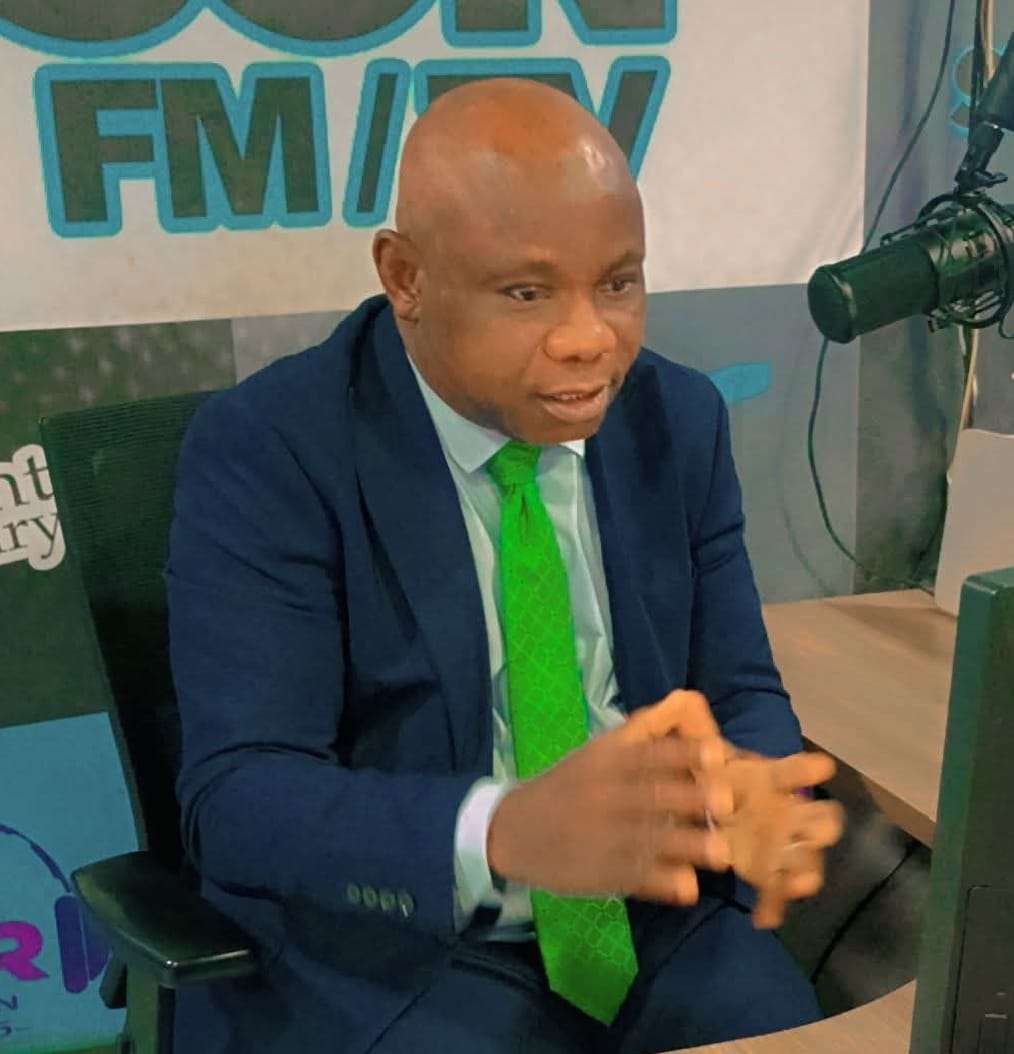
Former Finance Minister Samuel D. Tweah Jr. has strongly defended the record of the former Coalition for Democratic Change (CDC) government, insisting that major policy decisions taken under President George Manneh Weah were necessary, effective, and irreversible, while describing current legal and political pressures against him as politically motivated.
Speaking on the Spoon Talk program on late Tuesday night, Tweah maintained that Liberia did export electricity to Côte d’Ivoire during the CDC administration, dismissing contrary claims as misinformation.
“I maintain that we exported power to Ivory Coast. That’s a fact. It’s been fact-checked,” he stated.
Tweah also criticized the aftermath of the 2023 elections, arguing that the vote disrupted what he described as a positive national trajectory under the CDC.
“The 2023 election took the country from the positive trajectory it was on under the CDC,” he said, adding that the party is preparing a political comeback. “CDC is coming back on a radical plan.”
Addressing his ongoing court case, the former finance minister disclosed that his actions regarding the transfer of funds to the Financial Intelligence Agency (FIA) were authorized at the highest level of government. According to Tweah, former President Weah, acting through the National Security Council, approved the movement of funds for security-related operations.
“As a member of the National Security Council, the former President authorized me to approve and move money to the FIA for security operations,” Tweah explained. “That is the major reason why I and others are in court today.”
Tweah further expressed confidence that key CDC-era policies would not be reversed by the current Unity Party-led government, describing them as standard governance measures rather than partisan initiatives.
“The Unity Party Government will not reverse the harmonization policy, and it will not reverse the free tuition policy, because these are standard policies,” he said.
Defending the controversial salary harmonization policy, Tweah argued that it played a critical role in stabilizing the CDC government during a difficult period.
“Without harmonization, the CDC government would have collapsed in 2020,” he asserted, adding, “No government will undo the harmonization policy in the next 50 years because it was a good policy.”
On poverty statistics, Tweah acknowledged that poverty levels increased during the CDC’s six years in office but attributed the rise largely to the global impact of COVID-19.
“Before CDC came to power, about 2.2 million people were living in poverty,” he said. “Under the CDC, as a result of COVID-19, around 600,000 Liberians joined the poverty pool. Currently, about 3.2 million Liberians are in poverty.”
Tweah also rejected the basis of international sanctions imposed on him, insisting they were not grounded in evidence.
“My sanction was political, due to the role I played in the Weah Government, and not based on facts,” he declared.
The former finance minister’s remarks have reignited debate over the legacy of the CDC administration, the sustainability of its flagship policies, and the political motivations surrounding accountability efforts following the change of government.