


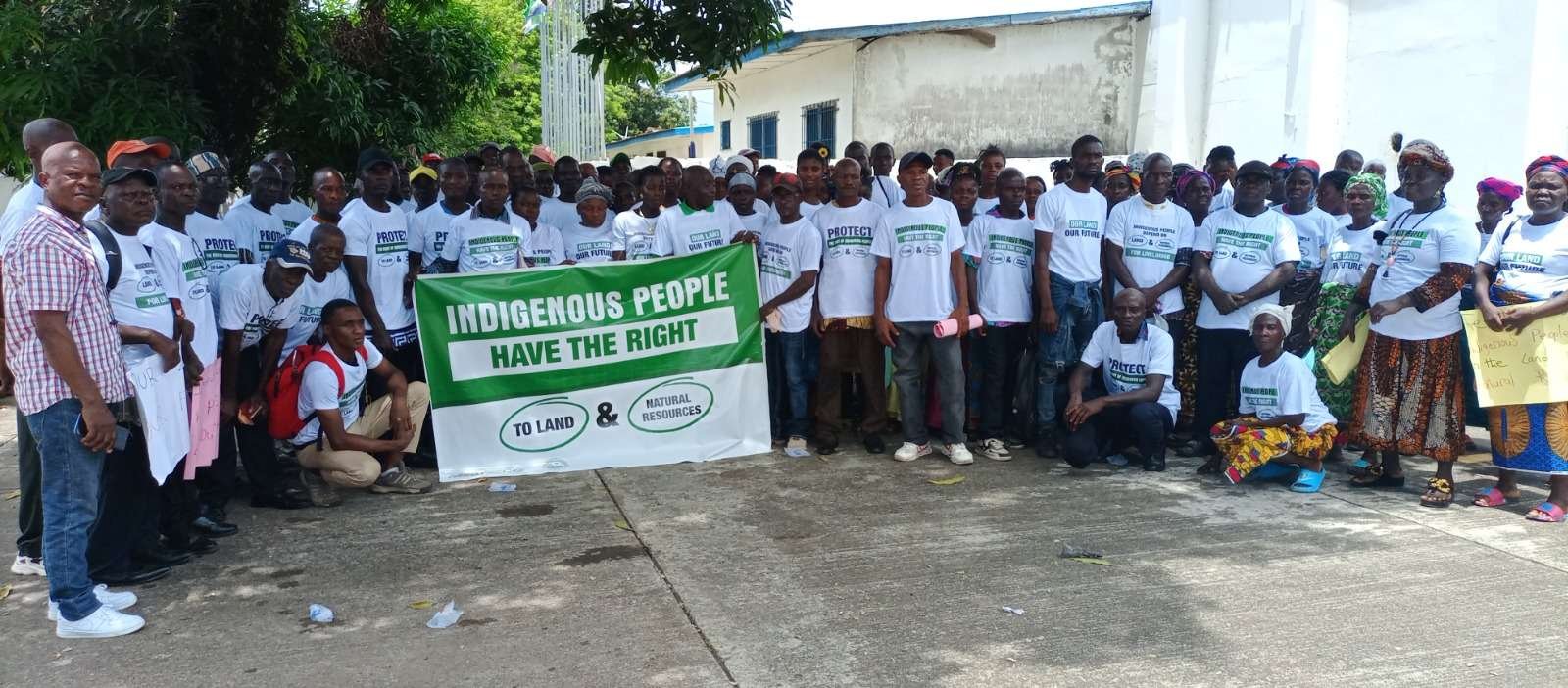
Communities affected by the operations of the Salala Rubber Corporation (SRC) and the Liberia Agriculture Company (LAC) have forcefully rejected Socfin Group’s 2024–2025 progress reports, accusing the multinational agribusiness of masking persistent environmental and human rights abuses behind what they describe as “paper compliance.”
In strong statements delivered through community representatives, residents from more than 22 indigenous communities say Socfin’s June 2024 and 2025 updates on the Socfin–Earthworm Action Plan are misleading, inadequate, and completely disconnected from realities on the ground.
“The reports describe progress that simply does not exist,” one community leader said. “What we experience daily is abuse, neglect, and intimidation.”
The situation is particularly dire in SRC-affected areas, where communities say the company transferred ownership of its investment without addressing long-standing harms. Residents argue this move effectively abandoned unresolved grievances, leaving victims without compensation or accountability.
In 2023, the Earthworm Foundation contracted by Socfin conducted an independent investigation into allegations of abuses by SRC and LAC. Its findings confirmed serious violations, including forced relocation of residents, inadequate crop compensation, sexual harassment and gender-based violence (SGBV), intimidation and reprisals against activists, and exploitative practices by middlemen purchasing from smallholders.
The investigation also found partial evidence of restricted movement, destruction of sacred sites and graveyards, and lack of access to safe drinking water. Earthworm issued recommendations that Socfin adopted as an action plan, later claiming implementation was underway. Communities say those claims are hollow.
Residents argue that the action plan lacks transparency and excludes affected people from monitoring or verifying progress.
“There is no participatory way for us to see whether these actions are actually working,” a community representative said. “Everything is reported from the company’s side.”
In August, the Alliance for Rural Democracy (ARD) visited SRC- and LAC-affected areas and documented wide gaps between Socfin’s reports and conditions on the ground. According to ARD, labor abuses persist, intimidation continues, crop compensation remains unresolved, and access to safe drinking water is still severely limited.
While Socfin claims it has updated its SGBV policies, awareness among workers and community members remains alarmingly low, especially in SRC areas.
In LAC communities, some residents acknowledged limited awareness efforts, including a hotline and a few signboards within plantation areas. In SRC communities, however, workers reported receiving no information at all.
“SGBV is still a serious issue here, but we don’t know of any new policy or protection,” said a worker from an SRC-affected community.
Socfin also reported improvements in recruitment and contracting procedures. Yet workers told ARD their wages fluctuate monthly without explanation, leaving families economically insecure.
Communities further reported ongoing intimidation, including the presence of paramilitary officers from the Liberia National Police in SRC areas. Both SRC and LAC residents said movement is restricted, with people barred from entering or leaving plantation areas after 10 p.m.
“There are still many restrictions on movement in the plantation,” said Moses Peter of LAC’s Quehya Town. “They do not allow us to enter during late hours.”
On crop compensation and cultural heritage, communities say engagement has been virtually nonexistent. In Gbarfein Town, residents reported that LAC fenced a gravesite only after a company worker fell into an open pit not as part of any reparative effort.
Access to safe drinking water remains a critical challenge. In SRC’s Monkey-tail Town, residents said a hand pump cited in Socfin’s report produces muddy, brown water unsuitable for drinking or bathing.
“They claimed they built us a hand pump, but the water is not good for drinking and bathing,” said Peace Sando, a community member.
For SRC communities, the Socfin–Earthworm Action Plan is not the only framework in play. In 2025, the International Finance Corporation (IFC) released a Management Action Plan (MAP) following an investigation by its Compliance Advisor Ombudsman (CAO).
Community members say they have not been informed how the IFC MAP is being implemented or how it differs from the Socfin action plan.
Affected communities are now calling on Socfin, SRC, LAC, and the IFC to take urgent corrective action. Their demands include the full implementation of all Earthworm recommendations, meaningful community participation in monitoring, regular and transparent updates shared directly with residents, and clear clarification of the differences between the Socfin–Earthworm Action Plan and the IFC Management Action Plan.
Until those demands are met, communities say Socfin’s claims of progress amount to little more than corporate rhetoric while abuses, they insist, continue unabated.