

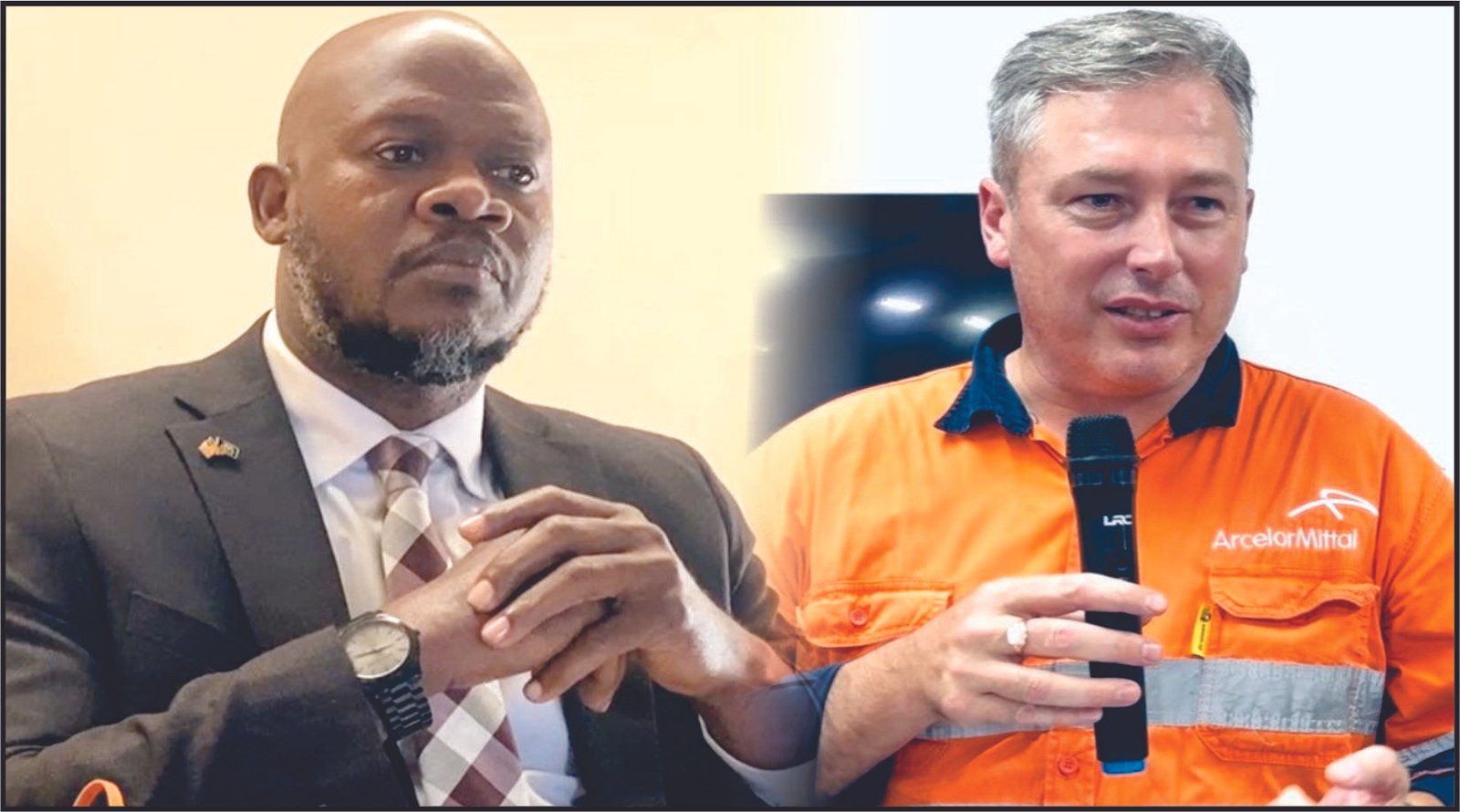
Senator Nya D. Twayen Jr. of Nimba County has issued a strong caution to the Liberian Legislature and the public over the proposed Third Amendment to the ArcelorMittal Mineral Development Agreement (MDA), warning that the draft amendment could weaken accountability, undermine community rights, and place national resources at risk if ratified in its current form.
In a press statement released Thursday, Senator Twayen described the proposed amendment as far more than a routine administrative update.
According to him, the amendment represents a “consequential restructuring of one of Liberia’s most strategic concession arrangements” and therefore requires “sober and rigorous scrutiny” by lawmakers.
At the center of the Senator’s concern is the transfer of rights and obligations from ArcelorMittal Switzerland AG to a newly structured entity, ArcelorMittal USA Liberia Holdings LLC.
Senator Twayen questioned the timing and transparency of the transaction, noting apparent inconsistencies between the date of the corporate change and the date the amended agreement was signed.
“The question now is: how can the change of company occur on December 9, 2025 and the agreement is signed on December 20, 2025, barely eleven days after?
Who then was the government negotiating with?” he asked, adding that such unanswered questions raise doubts about enforceability and accountability.
The Nimba County lawmaker warned that while the amendment claims to transfer all obligations in full, it fails to provide essential legal safeguards such as explicit parent company guarantees, continuity clauses for past liabilities, and enforceable security instruments.
“Assertions alone are not safeguards,” Senator Twayen said. “A concessionaire cannot be permitted to repackage itself in a manner that weakens accountability while retaining access to our mineral wealth and strategic infrastructure.”
Senator Twayen also strongly opposed provisions that would treat the entire concession area-including undeveloped and future exploration zones-as a single production area.
He argued that such an approach could lead to “mineral warehousing” and deprive communities of development opportunities.
“A production area is a legal authorization to extract, not an open-ended declaration; declaring areas productive where no mining is taking place amounts to surrendering regulatory control without corresponding benefit. Development delayed is development denied,” he stated.
Another major concern raised by the Senator is the omission of binding social infrastructure obligations from the proposed amendment.
He noted that previous agreements required ArcelorMittal to construct roads, bridges, hospitals, schools, and other facilities-obligations he said were often unmet but at least enforceable under law.
“The proposed Third Amendment omits these commitments entirely and replaces them with future promises. That approach is unacceptable. This Legislature cannot responsibly ratify an amendment that defers core community obligations to post-ratification instruments of uncertain legal force,” Senator Twayen said.
He called on the Inter-Ministerial Concessions Committee (IMCC) to submit a comprehensive social impact and community development framework as an appendix to the agreement before any ratification is considered.
He also urged lawmakers to demand full disclosure of transfer documents, beneficial ownership affidavits, and audited financial statements from ArcelorMittal entities dating back to 2005.
“This position is not anti-investment; it is pro-Liberia, pro-rule of law, and pro-community. Liberia welcomes responsible investment, but no investor is above accountability,” the Senator emphasized.
Senator Twayen concluded by warning that approval of the Third Amendment would be premature unless liability continuity is guaranteed, production areas are clearly delimited, and social obligations are explicitly embedded in the agreement.
“The people of Nimba County, and the people of Liberia, deserve better than uncertainty, deferred promises, and weakened oversight. As their Senator, I will continue to insist that concession compliance is not optional, and that development must be real, enforceable, and just,” he said.
The proposed amendment remains under legislative review, with growing calls for deeper scrutiny amid concerns over transparency, community impact, and national interest.