

A Candid Reflection on the 2026 State of the Nation Address
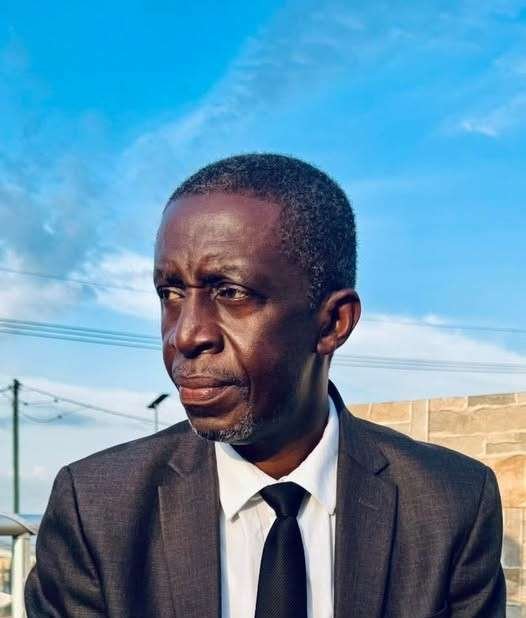
By Tiawan Saye Gongloe
Human Rights Advocate | Former Solicitor-General of Liberia
Former Cabinet Minister | Former President, Liberian National Bar Association
Assistant Professor of Law
I. Introduction: Why This Candid Reflection Is Necessary
Since the end of Liberia’s civil conflict, every government and every president has announced progress in various sectors, especially road connectivity. President Ellen Johnson Sirleaf rehabilitated most of the existing primary roads, broke ground for the pavement of the Monrovia–Lofa County road, and began the pavement of the Southeastern corridor. That work was continued under President George Manneh Weah and remains ongoing. Under the present administration, the rehabilitation of the Tappita road and the commencement of pavement works on the Zwedru–Harper road are commendable steps that deserve acknowledgment.
It is important to say this plainly: some progress has been made, and no honest assessment of Liberia’s post-war journey should deny that.
However, development is not measured by effort alone. It is measured by outcomes—by how decisively a nation lifts its people out of poverty and expands opportunity. I supported President Joseph Nyuma Boakai in the second round of the 2023 presidential election because I believed Liberia needed decent, restrained, and service-oriented leadership. That support carries a moral obligation. Therefore, I have decided to give my candid opinion on the 2026 State of the Nation Address, not as an adversary, not as an opportunist, but as a patriot who believes that honest critique strengthens democracy.
Botswana offers a powerful benchmark. It is landlocked. Nearly 70 percent of its territory is desert. It became independent in 1966—119 years after Liberia. Yet today, Botswana is a middle-income country. Its success did not come from geography or luck, but from disciplined, people-centered leadership and clear national priorities. Against that standard, Liberia must ask whether we are content with incremental improvement—or whether we are prepared for genuine transformation.
II. Leadership, Restraint, and the Cost of Governance
Botswana’s leaders governed with restraint and modesty, fully aware that leadership by example is a development tool. Liberia continues to struggle with a costly governance culture. Large presidential and vice-presidential convoys, similar practices by other senior officials, frequent foreign travel with large delegations, business-class flights, and private jets in a country where most citizens struggle to survive send the wrong signal.
This is not merely about optics. It has real economic consequences. Convoys disrupt traffic, slow productive activity, and normalize excess in a poor country. The President should expedite the renovation of the living quarters of the Executive Mansion and relocate fully to the official residence. Doing so would reduce unnecessary movement, improve productivity, enhance security efficiency, and demonstrate respect for public resources.
A poor country cannot develop with a rich-government lifestyle. Botswana understood this early.
III. Infrastructure and Roads: Necessary but Not Transformative on Their Own
The President emphasized roads, and rightly so. Roads are essential. But roads alone cannot transform a country. Roads are instruments, not outcomes.
Without deliberate investment in productive activities—agriculture, forestry, fisheries, tourism, manufacturing, and value-added industries—roads merely move poverty from one place to another. Botswana built infrastructure to support production, exports, and jobs. Liberia must consciously link infrastructure spending to productivity rather than treat road construction as development in itself.
IV. Education: The Missing Centerpiece of National Development
No nation has developed without placing education at the center of national policy. Botswana treated education as a survival strategy. Liberia still treats it as a secondary concern.
Parents continue to pay graduation fees in public and private schools. Public schools remain under-resourced, while private schools receive inadequate subsidies. A country cannot develop by shifting the cost of education onto poor families.
The crisis is most visible in Central Monrovia, the area with the highest population density in Liberia. Today, there is no functional public high school in Central Monrovia. This is a national failure. Thousands of children of market women, street vendors, motorcyclists, and informal workers are effectively denied access to secondary education.
I therefore appeal directly to President Boakai to reopen Monrovia Central High School, to be housed in the long-unfinished Housing Bank building on Ashmun Street. That structure has stood idle for years while generations of children have been denied opportunity. This problem is solvable—if education is truly a priority.
It is a shameful paradox that Liberians now send their children to Rwanda—a landlocked country that experienced a civil conflict as devastating as, if not worse than, Liberia’s—yet has transformed itself through disciplined leadership and education-first policies.
V. Health: Progress Will Be Believed When Liberians Stay Home
Reported improvements in the health sector are encouraging, but credibility matters. Liberians will believe healthcare reform has succeeded when sick Liberians stop traveling to Ghana and India for treatment.
Rehabilitation of facilities is necessary, but access, quality, and public confidence are the real tests. Two years into the administration, no major new public clinic has been completed, although several are reportedly under construction. Health reform must move from plans and statistics to visible, trusted outcomes.
VI. Agriculture and Food Security: Output Without Prosperity
Agricultural outputs were highlighted in the address, but farmers’ incomes, storage, processing, and market powerreceived far less attention. Food security is not only about producing more; it is about ensuring farmers earn dignified livelihoods.
Botswana protected rural livelihoods deliberately. Liberia must do the same, particularly in a country where most of the poor live in rural areas.
VII. Natural Resources, Value Addition, and Liberianization
Liberia continues to export raw rubber, raw iron ore, and raw gold, while importing finished products at many times the price. Botswana rejected this model and moved deliberately into beneficiation and domestic value addition.
Liberia must insist on local processing, skills transfer, and meaningful local ownership. Growth that enriches concessionaires while leaving communities poor is not development.
Equally troubling is weak Liberianization. Government continues to import foreign-made furniture, outsource services Liberians can competently provide, and underutilize domestic talent. Botswana invested deliberately in its people. Liberia must do the same.
VIII. Debt and the Question of Sustainability
Liberia’s public debt—now approximately US$2.8 billion—raises serious concerns about sustained development. Debt is not inherently bad, but borrowing without productivity is postponed poverty.
Botswana borrowed cautiously and tied loans to productive investments. Liberia risks financing consumption and administration rather than transformation. Every dollar spent servicing debt is a dollar not spent on education, health, or agriculture.
IX. Jobs, Data, and Credibility
The President stated that 70,000 jobs have been created. This is a significant claim and deserves clarification.
Liberians deserve to know:
a. The number of jobs were created per sector;
b. The number of permanent versus temporary jobs;
c. The gender distribution of those jobs;
d. The percentage of young people that benefited from these jobs.
Botswana’s development was built on data, transparency, and accountability. Job creation figures must be disaggregated and verifiable.
X. Yellow Machines and Capacity Building
The arrival of the 285 yellow machines is welcome. But machines alone do not build roads—people do.
Have enough Liberians been trained to operate and maintain them? Is there a sustainable maintenance plan? Botswana paired infrastructure investment with skills development. Liberia must do the same to avoid repeating costly mistakes.
XI. Public Spending Priorities: People or Prestige?
Perhaps the most troubling signal concerns priorities. In two years, no new public school and no completed new clinic were highlighted, yet a Presidential Center in Foya is reportedly nearing completion at remarkable speed. The President has personally visited the project.
This raises legitimate public questions:
a. Was the project budgeted?
b. Was it competitively procured?
c. Why prioritize this over schools, clinics, and urban infrastructure?
Liberia already has the Unity Conference Center in Virginia and neglected presidential villas at the Virginia OAU Village that could be rehabilitated at far lower cost. Botswana avoided prestige projects that did not directly improve people’s lives.
XII. Poverty Reduction: The Silent Gap
Most concerning is the weak emphasis on poverty reduction. Growth figures were highlighted, but growth without poverty reduction is hollow.
Botswana measured success by how many people exited poverty. Liberia must do the same, with clear targets, timelines, and accountability.
Conclusion: Choosing the Botswana Path
Liberia has far greater natural advantages than Botswana. What we lack is not resources, but discipline, restraint, and people-centered governance.
It would be unfair and inaccurate to deny that some steps have been taken under the current administration. However, acknowledging effort must not be mistaken for endorsement, nor should it distract from the urgent need for deeper, people-centered reforms. Liberia cannot afford complacency, incrementalism, or low ambition.
This commentary identifies missteps not to undermine the Government, but to help redirect Liberia toward a deliberate, people-centered development path like Botswana’s.
As I have always said, government is a place to serve, not to steal.
And a better Liberia is possible—if we choose it deliberately.