


By Morlu F. Freeman Sr.
Lofa County is among several counties in Liberia actively engaged in the production of palm oil, locally known as Toborgee, and water oil to supply consumers within and beyond the country.
The production process, which peaks during the dry season each year, involves both men and women across communities in the county. Families either hire contractors to harvest palm nuts or rely on able-bodied husbands and relatives to cut and process the palms themselves.
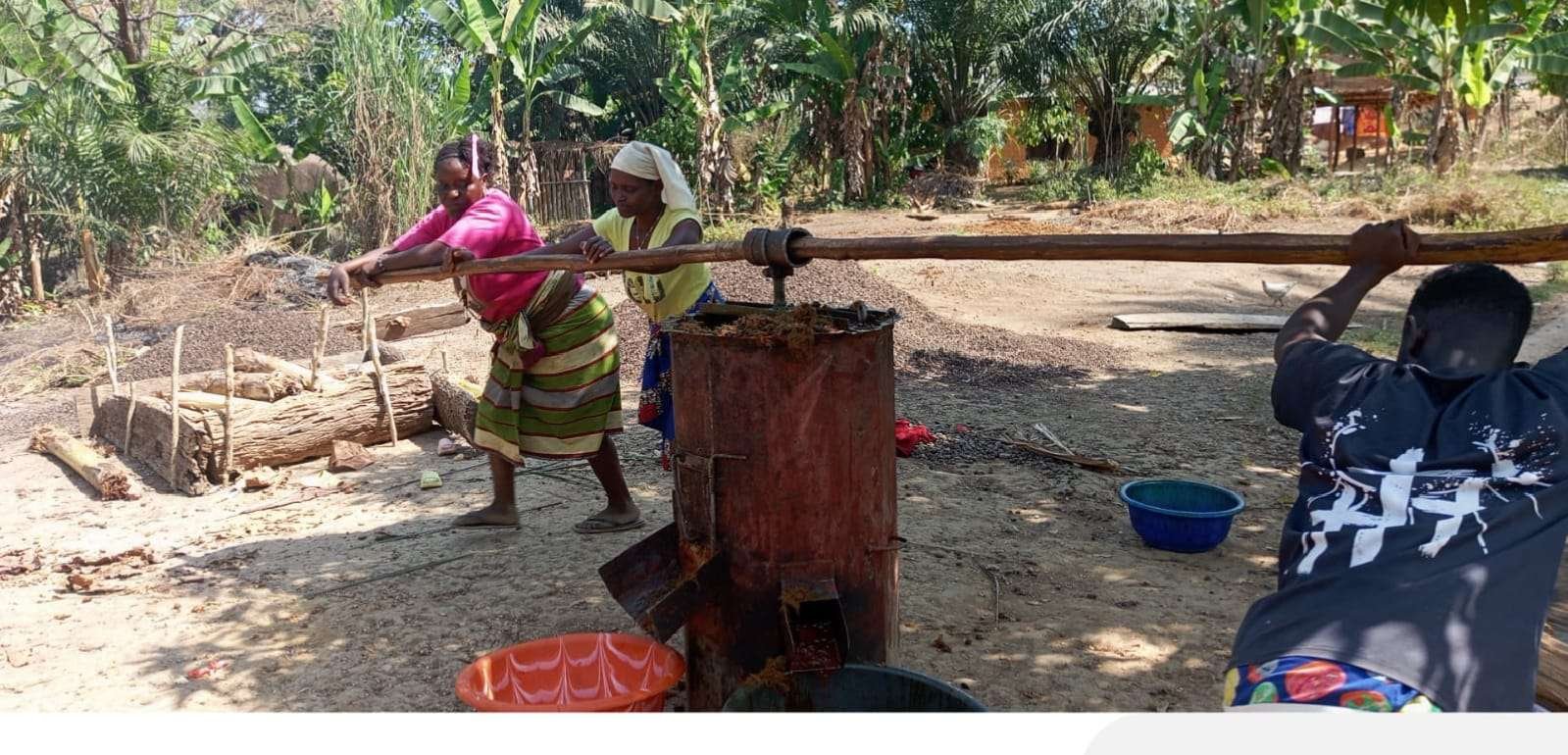
According to Kpana Jusu of Lower Lofa, palm oil production remains a major source of livelihood for many households. He explained that in recent years, producers have introduced simple processing machines imported from neighboring Guinea to improve efficiency.
“This machine we brought from Guinea is helping us to produce oil faster,” Jusu said. “Once we cook the palm nuts, the machine mixes them, and we are able to process the oil very quickly.”
Producers have also diversified their output by utilizing palm kernel waste to produce another oil known locally as palm kernel or Kana oil. The remaining by-products are used as feed for pigs and other domestic animals in towns and villages across the county, reducing waste and increasing overall value.
Despite these improvements, local farmers say most of the palm oil and kernel oil produced in Lofa County is sold in neighboring Guinea due to limited market opportunities within Liberia.
“We have the manpower, the women, and the modern technology,” said Karmo Mulbah, a local farmer. “We are producing more palm oil and kernel oil, but almost all of it is sold across the border. We are calling on the Government of Liberia to empower us so that we can have a good market here in the county for the benefit of our own communities.”
Meanwhile, concerns have been raised over the importation of processing machines from Guinea. It has been established that many of the machines currently in use are not adequately monitored by the Ministry of Commerce and the Liberia Revenue Authority (LRA) for regulatory compliance and taxation.
Although importers are believed to be generating significant profits from the machines, sources suggest that little revenue is being paid to the government, raising questions about enforcement and oversight.
As palm oil production continues to grow in Lofa County, farmers and stakeholders say increased government support, proper regulation, and access to local markets could significantly boost livelihoods and strengthen the county’s economy.