
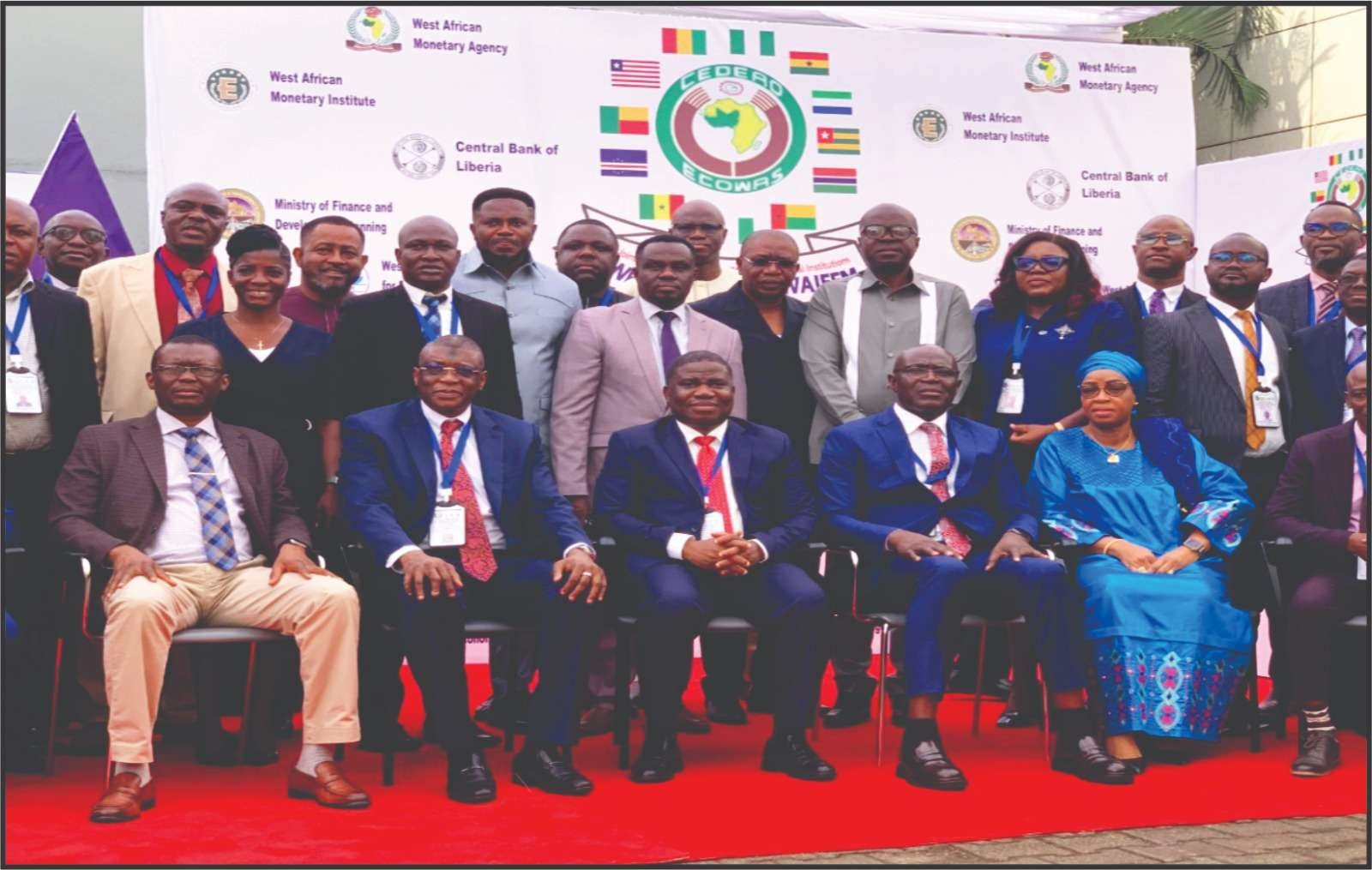
Liberia has been elected to chair the 58th Meeting of the Technical Committee of the West African Monetary Zone (WAMZ).
The election took place during meetings of the College of Supervisors of the West African Monetary Zone, currently being held in Monrovia. The Technical Committee plays a critical role in advancing the objectives of regional monetary integration, economic convergence, and financial stability among WAMZ member states.
Speaking at the opening session, Liberia’s Deputy Minister of Finance, Depu Zuo, welcomed delegates to Monrovia and reaffirmed Liberia’s commitment to regional cooperation and solidarity.
“Liberia had initially planned to host these meetings in person in 2022; however, due to our bicentennial celebrations, the sessions were held virtually,” Deputy Minister Zuo said. “It is therefore a great pleasure that we are now able to welcome you physically in Monrovia, reaffirming Liberia’s enduring commitment to regional cooperation and solidarity.”
Deputy Minister Zuo delivered remarks on behalf of Finance and Development Planning Minister Augustine Kpehe Ngafuan, who was unable to attend due to pressing national engagements. He noted that Minister Ngafuan looks forward to joining delegates during the upcoming Convergence Council meeting to be held in Farmington.
He also expressed appreciation to members of the Technical Committee for their continued dedication to advancing the shared objectives of the WAMZ, while commending the Government and people of Sierra Leone for their leadership during their tenure as chair.
“We extend our heartfelt gratitude to the Government and people of Sierra Leone for their exemplary leadership,” he said. “Your stewardship, generosity, and spirit of solidarity reflect the core values of our region.”
Outgoing Chairman of the WAMZ Technical Committee, Karamo Jarawa, reflected on his tenure and highlighted the challenging global economic environment in 2025.
“The global economy remains under pressure, with heightened policy uncertainty, rising fragmentation, and weakened growth prospects,” Jarawa said.
He noted that global output slowed from 3.3 percent in 2024 to an estimated 3.2 percent in 2025, driven by subdued investment, elevated tariff regimes, declining commodity prices, and ongoing geopolitical tensions.
Despite these challenges, Jarawa pointed to improved performance within the West African Monetary Zone. “Real GDP growth in the WAMZ is estimated at 5 percent in the first half of 2025, an improvement over the 3.7 percent recorded during the same period in 2024,” he said, attributing the growth to increased activity across the primary, secondary, and tertiary sectors in most member states.
Meanwhile, Henry Yanquoi, Assistant Minister for Financial and Macroeconomic Policy at the Ministry of Finance and Development Planning, was elected as the new Chairman of the WAMZ Technical Committee.
In his acceptance remarks, Assistant Minister Yanquoi described his election as a privilege and emphasized the importance of the committee’s work at a critical time for regional economies.
“We are reminded of our shared commitment to the ideals upon which the WAMZ was founded- monetary integration, economic convergence, and ultimately a single currency that will strengthen our collective prosperity,” Yanquoi said.
He noted that WAMZ economies continue to face global uncertainty, inflationary pressures, exchange rate volatility, and the need for strong fiscal discipline and monetary policy coordination.
“This Technical Committee bears the responsibility of providing sound recommendations that will guide the Committee of Governors and the Convergence Council in making practical and informed policy decisions,” he added.
The meetings are expected to conclude with key technical recommendations aimed at strengthening macroeconomic stability and advancing the region’s monetary integration agenda.