

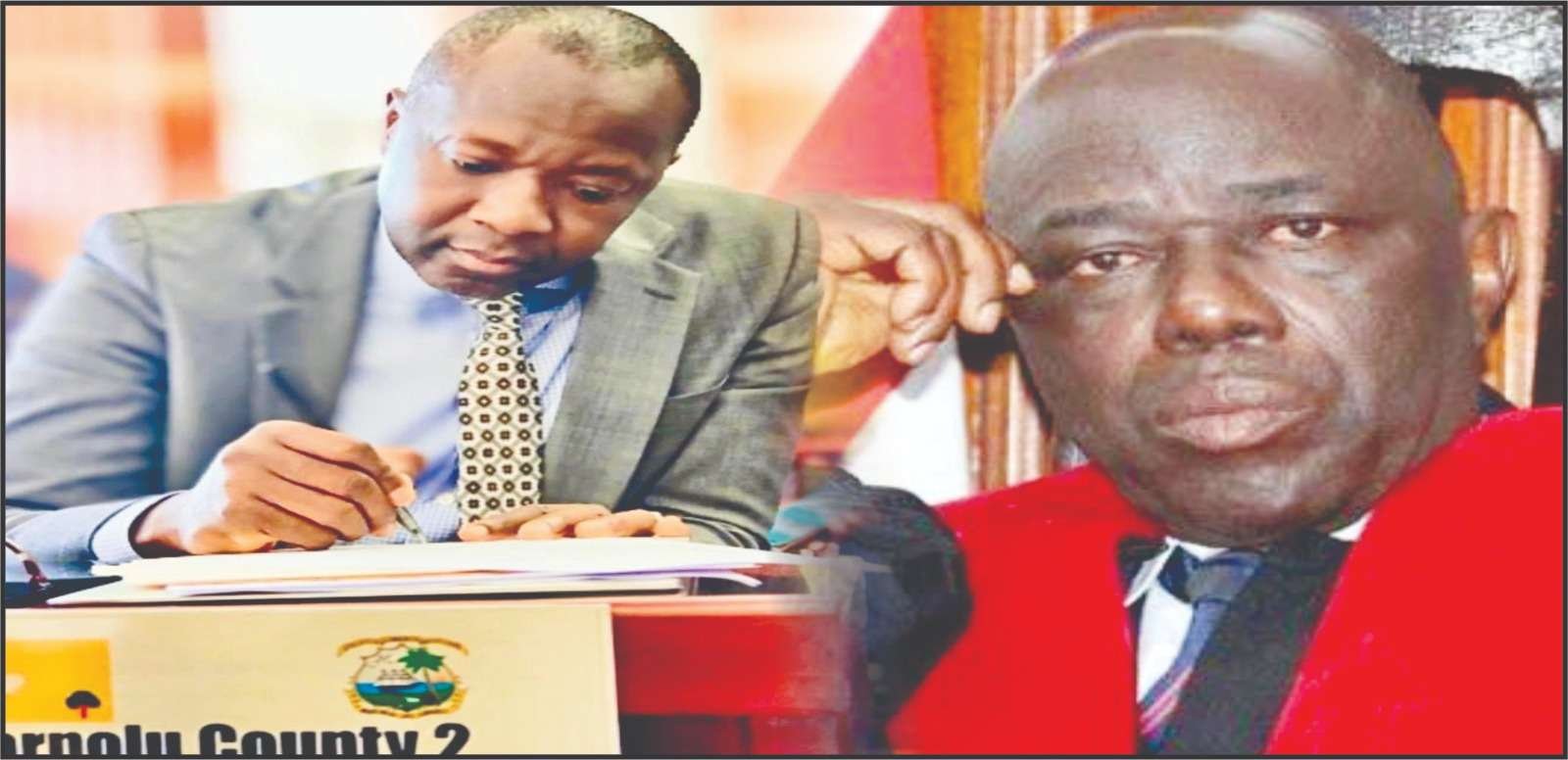
“The reality is, our courts are corrupt. We must acknowledge this in our debate with the same energy we are applying to the distasteful, vulgar language in Prophet Key’s utterances,” Sen. Amara Konneh, said.
The recent Supreme Court ruling sentencing social media commentator Justin Oldman Yeazehn, known as Prophet Key, to imprisonment for contempt has reignited a national debate on freedom of expression, defamation, and judicial accountability.
Senator Amara Konneh of Gbarpolu County has been vocal in framing the broader implications of the case, emphasizing both constitutional safeguards and the responsibilities they entail.
“As a non-lawyer, I observed the contempt proceeding of the Supreme Court against Justin Oldman Yeahzehn, aka ProphetKey, with keen interest. Article 15 of the 1986 Liberian Constitution guarantees freedom of expression but also explicitly states that individuals are accountable for misuse,” Konneh said. “While speech is protected, the Constitution also mandates accountability for abuse, especially in cases of defamation affecting both private citizens and public officials.”
Questions of Equal Justice
The case has raised public concerns about whether Liberia’s courts consistently enforce justice, particularly when high-profile figures are involved. Konneh posed a critical question about the principle of equality before the law:
“Now, let us suppose the case that led to ProphetKey’s imprisonment involved a private citizen or another public official rather than the Chief Justice; would the court have been just as quick to dispense justice? Would they have pushed back against interference or begging from powerful relatives of ProphetKey and those who hire him to accuse and insult their political opponents falsely?”
Her comments highlight enduring doubts over judicial fairness and whether influence or status affects outcomes.
Calls for Judicial Reform
Senator Konneh also stressed the need to confront systemic corruption, which she says continues to erode public trust in the judiciary:
“I expect the Supreme Court to address the issue of corruption in our courts, as ProphetKey raised in the same podcast, where he disgracefully insulted the Chief Justice’s mother, just as he has mercilessly insulted numerous other citizens, including me, with impunity. The reality is, our courts are corrupt. We must acknowledge this in our debate with the same energy we are applying to the distasteful language in ProphetKey’s utterances. We must endeavor to ‘Let justice be done to all men’ and women in our country. No cherry-picking!”
He emphasized that accountability for speech is not only a constitutional principle but also part of Liberian cultural norms:
“Finally, while I don’t know ProphetKey’s age, he appears to be a member of my generation with roots in the interior, as I am, raised on decency and respect while preserving our independence. We were punished for insulting others, especially anyone older than us. In the era and environment in which I grew up, the entire village raised its children. That is part of our Liberian culture and identity, and we must preserve it. It begins in our homes, families, and schools,” he noted.
Public Debate and Implications
The ProphetKey case has sparked national discussion about the balance between free speech and accountability, the amplification of defamatory content on social media, and the need for judicial transparency.
Konneh noted that these debates reflect broader societal concerns about fairness: “The public must see that justice is applied equally, whether the accused is a powerful influencer or an ordinary citizen. Until that happens, confidence in our legal system will remain fragile.”
Many Liberians are calling for reforms to ensure that “justice is done to all,” a principle repeatedly underscored by Konneh and legal experts alike.