

The Executive Director of the Office for the Establishment of the Wan and Economic Crimes Court (OWECC-L) Dr. Cllr. Jallah A. Barbu joined civil society leaders and European Union representatives on Tuesday, February 17, 2026, in calling for stronger protections and a more enabling environment for civil society organizations.
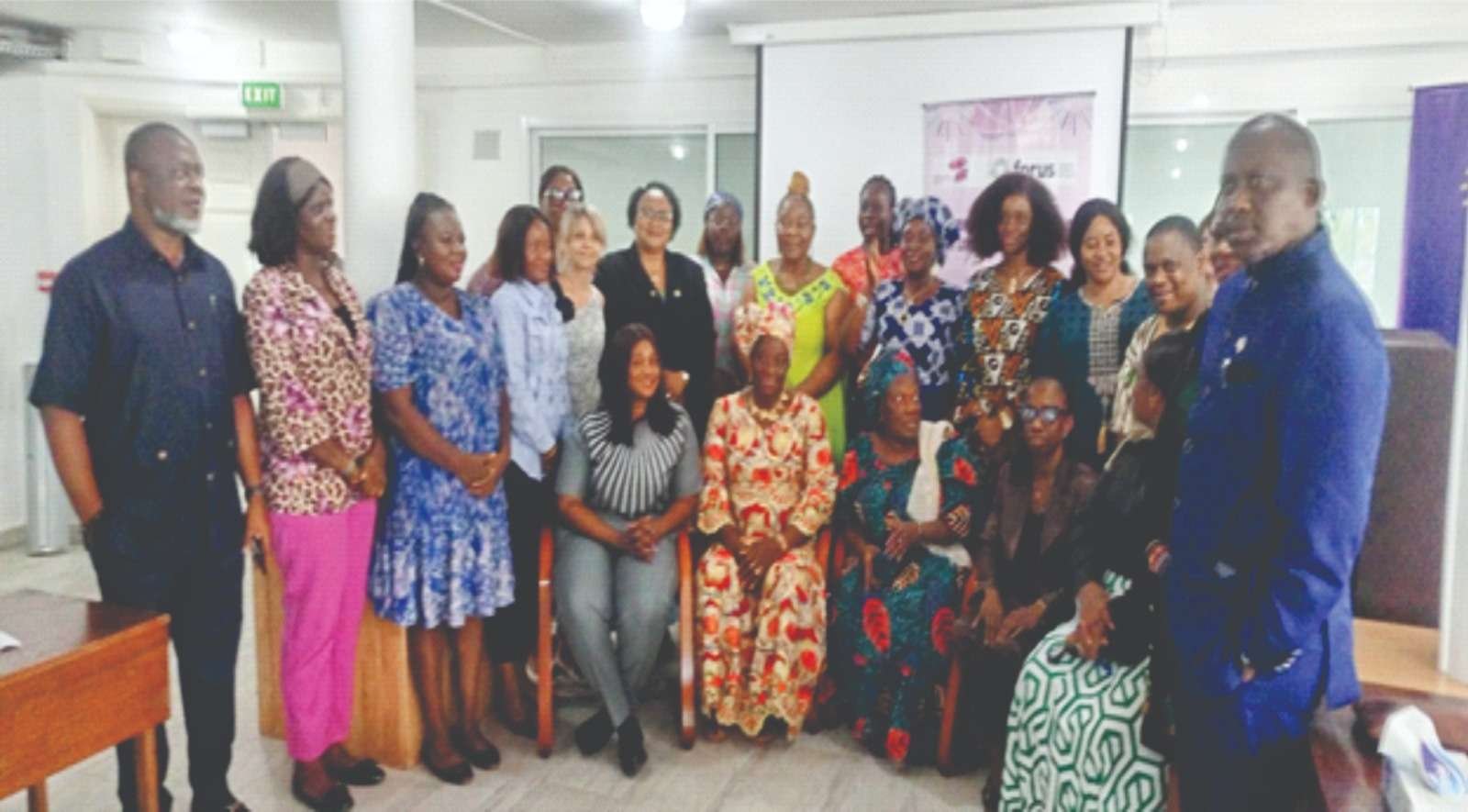
The event, hosted at the EU Conference Hall in Mamba Point by the Women NGO Secretariat of Liberia (WONGOSOL), in partnership with the International Forum of National NGO Platforms (FOCUS) with funding from the European Commission under the project: system for an enabling environment for civil society (SEE) focused on advancing implementation of the EU Six Principles and assessing the enabling environment for civil society in Liberia.
Dr. Jallah A. Barbu, Executive Director of the Office to Establish War and Economic Crimes Court for Liberia (OWECC-L), delivered special remarks underscoring the connection between civic space, accountability, and Liberia’s post-war justice agenda.
“We cannot thank the international partners sufficiently for their invaluable contributions to the stability of our country and the impressive growth we are experiencing even in our democracy and collective pursuit of good governance and respect for the rule of law,” Dr. Barbu said, addressing EU diplomats, government officials, civil society actors, and war survivors.
He noted that support from the European Union and other partners have strengthened OWECC-L’s efforts toward establishing two accountability mechanisms-the War and Economic Crimes Court (WECC) and the National Anti-Corruption Court (NACC).
“Civil society organizations deserve full access to a modern and sophisticated digital environment,” he said, stressing that such access must be “secured” and not used for abuse or “wanton misuse.”
Beyond Imported Principles
The dialogue centered on the EU System for an Enabling Environment (EU SEE), a global framework outlining six core principles necessary for civil society to operate freely and effectively.
Dr. Barbu urged Liberian stakeholders to internalize- and build upon- externally developed standards.
“To achieve these, we are bound to not only limit ourselves to the six principles as enshrined by the EU. We should, as a people, go further to develop a set of principles that draw from the EU’s and then hold ourselves to them,” he said.
He emphasized that constitutional guarantees of freedom of speech, association, and participation must be matched by responsible conduct from both state and non-state actors, describing civic engagement as “a give-and-take situation.”
In a solemn moment during his remarks, Dr. Barbu invited participants to observe silence in memory of “the thousands of lives we lost as a result of the civil war” and in prayer for survivors who “even up to today, bear the scars.”
He concluded by reaffirming OWECC-L’s commitment to collaboration.
“Our doors remain open, and we look forward to a more coordinated effort in the establishment of the WECC and the NACC,” he said. “We will continue to support all efforts that lead to our overall mandate: the pursuit of justice and support for the rule of law.”
Continuing, Dr. Barbu stated: “It is a holistic obligation,” urging civil society organizations to model cooperation and social cohesion among themselves. When one CSO decides to wear down another rather than inviting dialogue, we set the pace on how people approach civil society organizations.”
Monitoring Civic Space
In her welcome remarks, WONGOSOL Executive Director Esther Yah Yango said the initiative comes at a critical time as civic space faces increasing pressures worldwide.
“Your presence here today reflects a shared commitment to strengthening democratic values, safeguarding the civic space, and ensuring that civil society in Liberia continues to operate in an environment that is inclusive, participatory, and responsive to the needs of our people,” Yango said.
She explained that WONGOSOL is implementing a civic-space monitoring initiative funded by the European Commission through Forus under the EU SEE framework, a six-year global program running from 2024 to 2029 in more than 80 countries.
“This initiative comes at a critical moment, both globally and nationally, as civil society organizations increasingly face restrictions, pressures, and uncertainties that threaten their ability to operate freely, safely, and effectively,” she said.
According to Yango, the EU SEE framework defines an enabling environment through six pillars, including protection of fundamental freedoms, access to sustainable funding, constructive state–civil society relations, positive public recognition, and safe digital spaces.
“At the heart of the EU SEE is the recognition that civil society plays an essential role in societal development, good governance, transparency, accountability, and inclusive growth,” she said. “Without an enabling civic space, democratic governance and sustainable development cannot be fully realized.”
Linking Justice and Civic Participation
The panel discussion highlighted the intersection between accountability for past atrocities and the broader health of Liberia’s democracy.
Participants emphasized that the successful establishment of the WECC will depend on public trust, sustained international partnership, and active civil society engagement.
According to her, the engagement was designed not only as an information-sharing forum but also as part of a broader monitoring and early-warning effort to detect signs of shrinking civic space and respond proactively.
The gathering, among other things, underscored that safeguarding civic freedoms is not solely the responsibility of government.
For both justice advocates and civic leaders, the message was clear: a resilient, protected, and accountable civic space remains central to Liberia’s democratic future.