


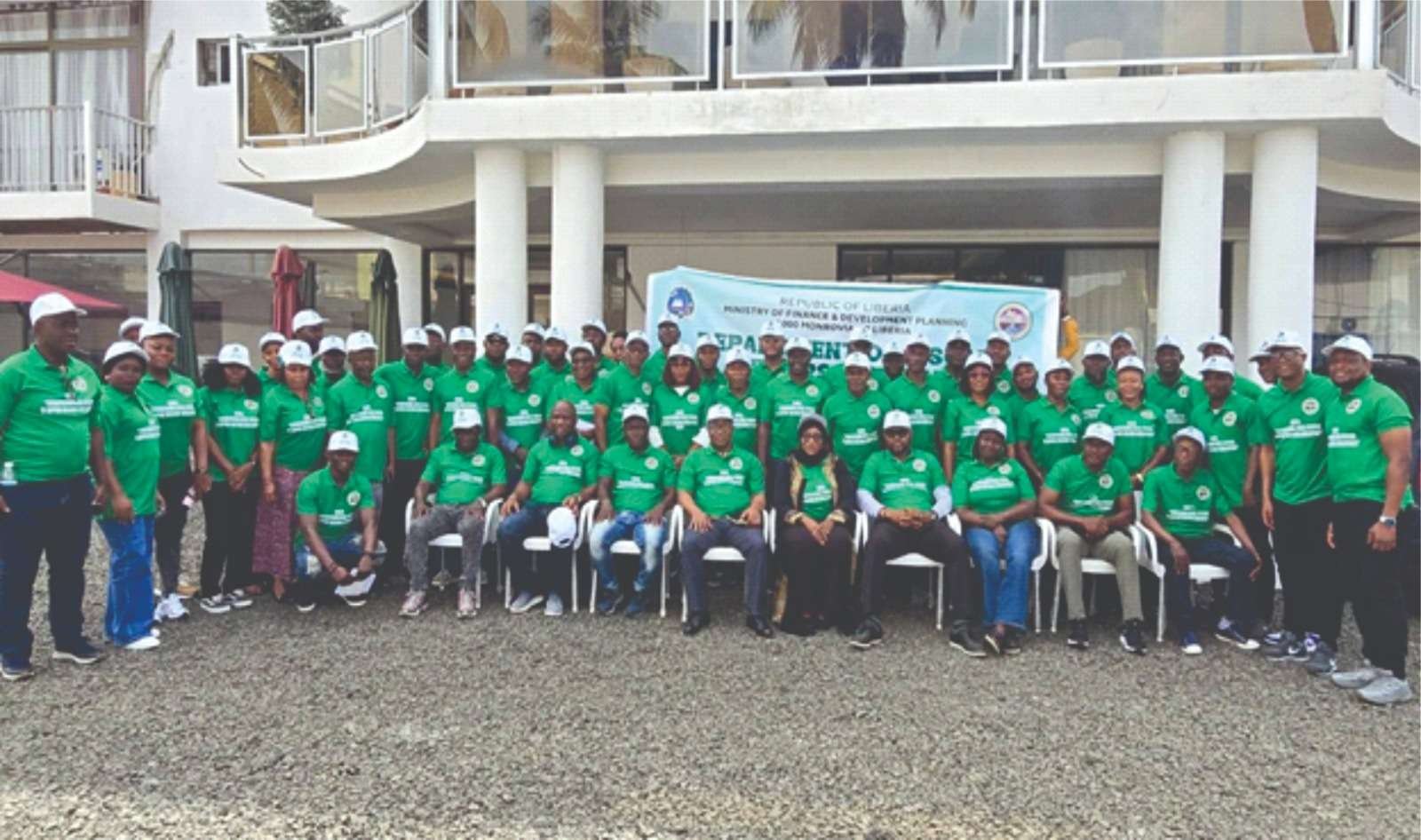
The Ministry of Finance and Development Planning (MFDP) has launched a high-level strategic retreat in Marshall, Margibi County, convening senior managers and technical personnel from its Department of Fiscal Affairs to reinforce public financial management systems in support of inclusive national development.
The two-day retreat, which opened Friday under the theme “Strengthening Fiscal Systems to Support Inclusive Development,” is focused on reviewing internal operations, addressing systemic weaknesses, and aligning departmental priorities with the government’s decentralization agenda.
Delivering the keynote address, Deputy Minister for Fiscal Affairs Anthony G. Myers stressed that effective management extends beyond top leadership and must be embraced at every level of the institution.
“Management is not the preserve of ministers and directors alone,” Myers told participants. “Whether you serve as a desk officer or a senior official, you are part of the system. You influence management, and management influences you.”
He outlined five pillars of effective institutional management, beginning with strategic planning. According to Myers, clear long-term direction is essential to ensuring that policies, decisions, and day-to-day activities are aligned with the Ministry’s broader fiscal reform objectives.
“When we speak of strategy, we are referring to long-term direction,” he said. “If we are committed to strengthening the fiscal system, then our actions must consistently reflect that commitment.”
Addressing Revenue Reporting Gaps
A significant portion of the discussions centered on persistent discrepancies between reported revenues and consolidated government accounts.
Myers called for stronger coordination between fiscal authorities and revenue-generating agencies, emphasizing that closing reporting gaps is crucial to enhancing transparency and public accountability.
“We must move away from the idea that some challenges belong to one institution alone,” he said. “As stewards of revenue and expenditure policy, we share collective responsibility for eliminating the recurring gaps in our fiscal system.”
The Deputy Minister also highlighted the need to improve organizational structures and ensure adequate resources-including infrastructure, equipment, and skilled personnel-to advance fiscal decentralization. He disclosed that plans are underway to construct and renovate county treasury facilities to strengthen local financial management systems.
Promoting Inclusive Development
Myers underscored that decentralization must translate into meaningful citizen participation in development planning and implementation.
“Inclusive development means communities are involved at every stage -from planning to execution. Nothing for us without us,” he noted.
Providing an overview of the retreat, the Director of the Financial Decentralization Unit, Romeo D. N. Gbartea, emphasized the importance of discipline, institutional memory, and professional experience in sustaining reforms within public financial management.
Dr. Gbartea described humility as a critical driver of productivity within institutions. He commended the leadership of Augustine Kpehe Ngafuan, noting his hands-on approach and engagement with staff, and also acknowledged Deputy Minister Myers for guiding the Department of Fiscal Affairs through ongoing reforms.
Throughout the retreat, participants are assessing the Department’s structure, staffing levels, and operational procedures.
Deliberations are focused on identifying weaknesses, recommending reforms, and proposing practical measures to enhance fiscal oversight and coordination at both national and county levels.
The retreat forms part of the Ministry’s broader effort to build a resilient, transparent, and accountable fiscal framework capable of supporting Liberia’s decentralization policy and advancing long-term economic development objectives.