


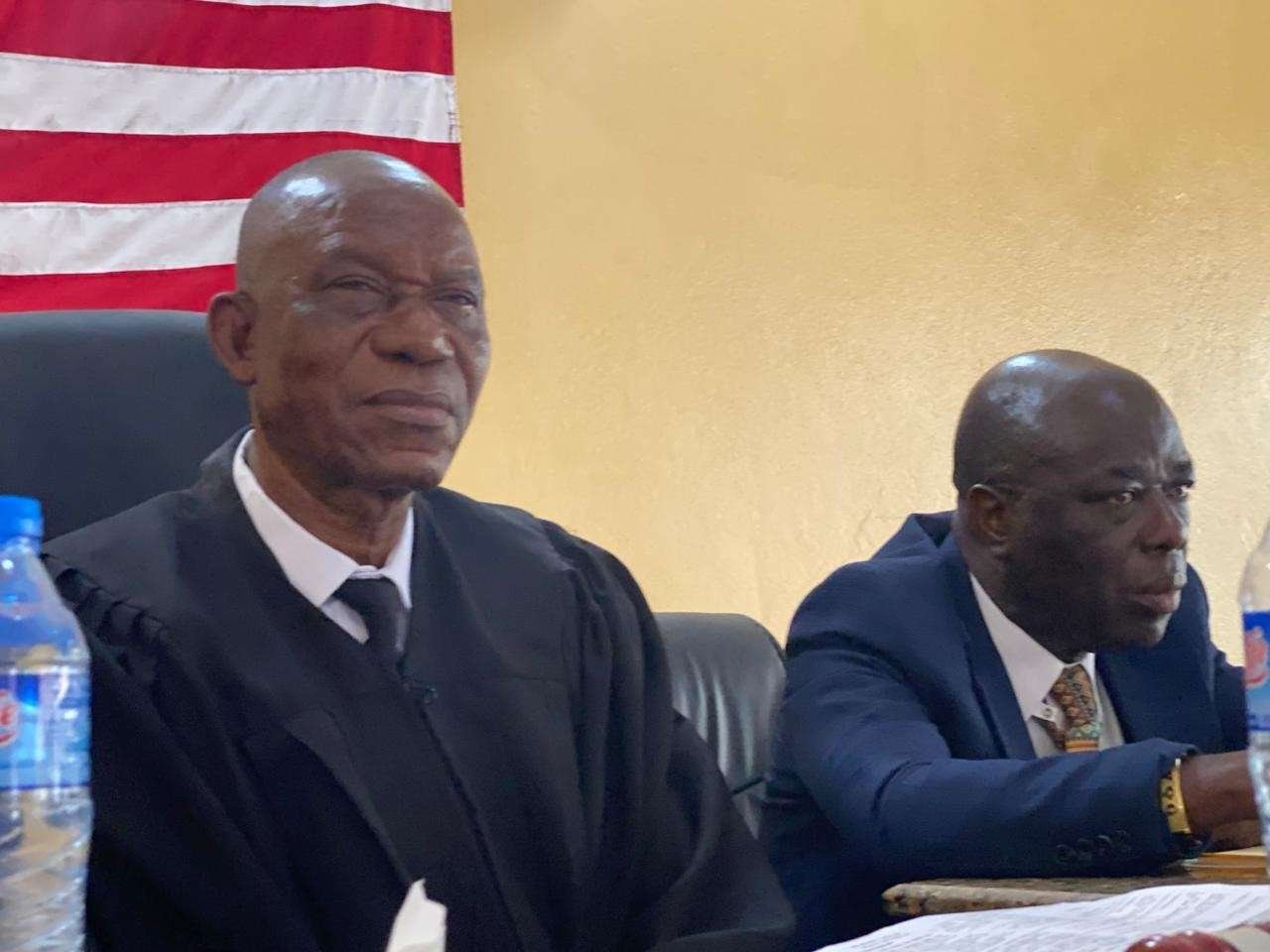
The presiding Judge of the Sixth Judicial Circuit, Civil Law Court Peter W. Gbeneweleh has underscored the weight of judicial authority, warning that the power symbolized by the gavel must be exercised with restraint, integrity, and unwavering impartiality.
Delivering his charge during the official opening of the March Term A.D 2026, of the Sixth Judicial Circuit, Civil Law Court and its Annex, Judge Gbeneweleh described the gavel as far more than a ceremonial object, portraying it instead as a visible embodiment of justice and public trust.
“Though small in form, it represents the immense authority of the court and the solemn duty of the judge to administer justice according to law, free from fear, favor, or prejudice,” he said.
A Symbol of Authority and Duty
Centering his remarks on the theme “The Judge’s Gavel: The Symbol of Authority and Impartiality,” Judge Gbeneweleh explored the balance between judicial power and discipline, emphasizing that authority in the courtroom is rooted in law-not personality.
“When the gavel strikes, it signifies the commencement of judicial proceedings and reminds all present that the authority of the law is now in session,” he noted.
He outlined the gavel’s practical role in maintaining order, managing proceedings, and signaling key judicial actions, particularly in moments of tension where courtroom decorum is essential.
The Civil Law Court Judge stressed that misuse of authority, no matter how subtle-undermines confidence in the judiciary.
“The gavel should never be used as a display of temper or personal frustration. It must remain a measured instrument of judicial control rather than an expression of emotion,” Gbeneweleh cautioned.
He added that the true dignity of the court lies not in the assertion of power, but in the fairness and wisdom with which justice is delivered.
Impartiality at the Core
Judge Gbeneweleh placed strong emphasis on impartiality as the cornerstone of judicial conduct, urging judges to remain neutral and independent in all circumstances.
“Impartiality requires that a judge must approach every matter with an open mind, free from preconceived opinions or personal interests,” he said.
He reinforced the principle of equality before the law, stressing that status, wealth, or influence must never affect judicial outcomes.
“The wealthy and the poor, the powerful and the powerless… all stand on equal footing before the law.”
Public Confidence and the Rule of Law
Linking judicial behavior to public trust, Gbeneweleh highlighted the broader implications of courtroom conduct for the legitimacy of the justice system.
“Each time the gavel falls upon the bench, it reminds us that justice must not only be done but must be seen to be done,” he stated.
The ceremony brought together representatives of the Liberia National Bar Association, the National Association of Trial Judges of Liberia, alongside prosecutors, public defenders, and other stakeholders.
A Renewed Call to Duty
In closing, Judge Gbeneweleh called on judicial officers and legal practitioners to uphold the highest standards of professionalism and ethical conduct.
“May the gavel in our courtrooms always fall in the service of justice; may authority always be tempered by wisdom; and may impartiality remain the guiding light of every decision rendered.”
The March 2026 Term of the Civil Law Court was formally declared open, setting the tone for proceedings grounded in discipline, fairness, and respect for the rule of law.