


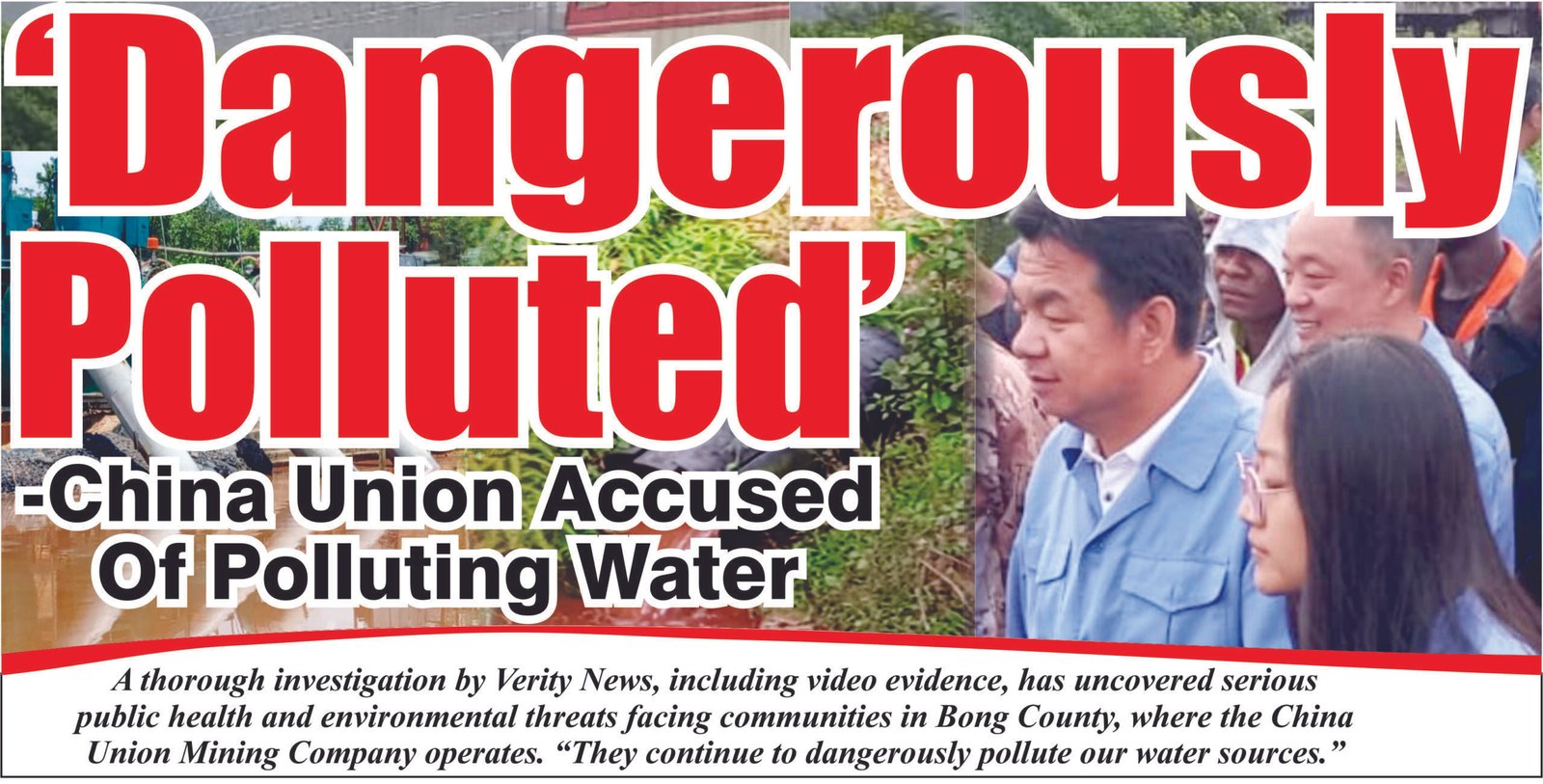
A thorough investigation by Verity News, including video evidence, has uncovered serious public health and environmental threats facing communities in Bong County, where the China Union Mining Company operates. “They continue to dangerously pollute our water sources.”
Residents of several communities surrounding the mining site in Lower Bong County told Verity investigation that their primary sources of water have become dangerously polluted.
The situation has raised urgent health concerns and intensified scrutiny of the company’s environmental and labor practices.
Villagers in Sekou, Bemu, Gena Base, and Sackie Town describe a worsening crisis in which rivers once relied upon for drinking, cooking, and bathing are now visibly contaminated.
According to local residents, wastewater from iron ore processing facilities is discharged directly into these waterways through large pipes connected to a nearby pump station located behind Sekou village.
“We are tired of not having access to clean and safe drinking water. The pollution from the mining activities has made our water unusable,” one resident told this paper on condition of anonymity.
According to them, there is a pipe system reportedly channeling industrial waste from ore processing plants into a river used daily by surrounding communities where the company operates.
They further alleged that this infrastructure-linked to what workers refer to as the “loading bay,” where iron ore is prepared for rail shipment-discharges untreated or poorly treated wastewater.
The pump station, situated within the mining concession area, is said to be dangerously close to key community water access points.
Video evidence in the position of this paper showed the pipe directly empting into a river, raising fears of chemical contamination and long-term environmental damage.
This discharge, if confirmed, by the Environmental Protection Agency (EPA) could violate international standards governing mining operations, particularly those related to wastewater management and community safety.
Local residents of surrounding communities are reporting growing anxiety over potential health risks, including waterborne diseases and exposure to toxic substances.
According to them, with limited access to alternative water sources for drinking, they have no choice but to continue using the contaminated river.
“Our health and livelihoods are at stake. We cannot stand by while our communities suffer,” another resident said.
Despite repeated complaints to local authorities, residents say little meaningful action has been taken. The perceived lack of urgency has deepened frustration and mistrust among affected communities.
In addition to environmental concerns, workers have raised allegations of discriminatory labor practices within the mining operation.
According to multiple accounts, local employees are required to assemble each morning to receive instructions from Chinese supervisors, with strict penalties-including immediate dismissal-for non-compliance.
Workers further allege that there are no Black Liberians in leadership or supervisory roles, pointing to what they describe as a systemic exclusion from decision-making positions within the company and its subcontractors, including Bangli Iron Ore.
“These are our lands, yet we have no voice in how things are run,” one worker said.
Residents are demanding immediate action from both the company and government authorities. Their demands include the cleanup of polluted water sources, the provision of safe drinking water, and a transparent investigation into environmental and labor practices at the site.
The situation highlights broader challenges in balancing foreign investment with environmental protection and workers’ rights in developing economies.
As pressure mounts, attention is turning to regulators and the management of the China Union Mining Company to respond to what communities warns is no longer just an environmental issue, but a matter of survival.