


By G. Watson Richards
For decades, poor road conditions and limited agricultural support constrained economic growth in rural parts of Liberia. Today, a combination of infrastructure upgrades and farmer training led by the Liberian Agricultural Company (LAC) is transforming livelihoods across communities in Grand Bassa County.
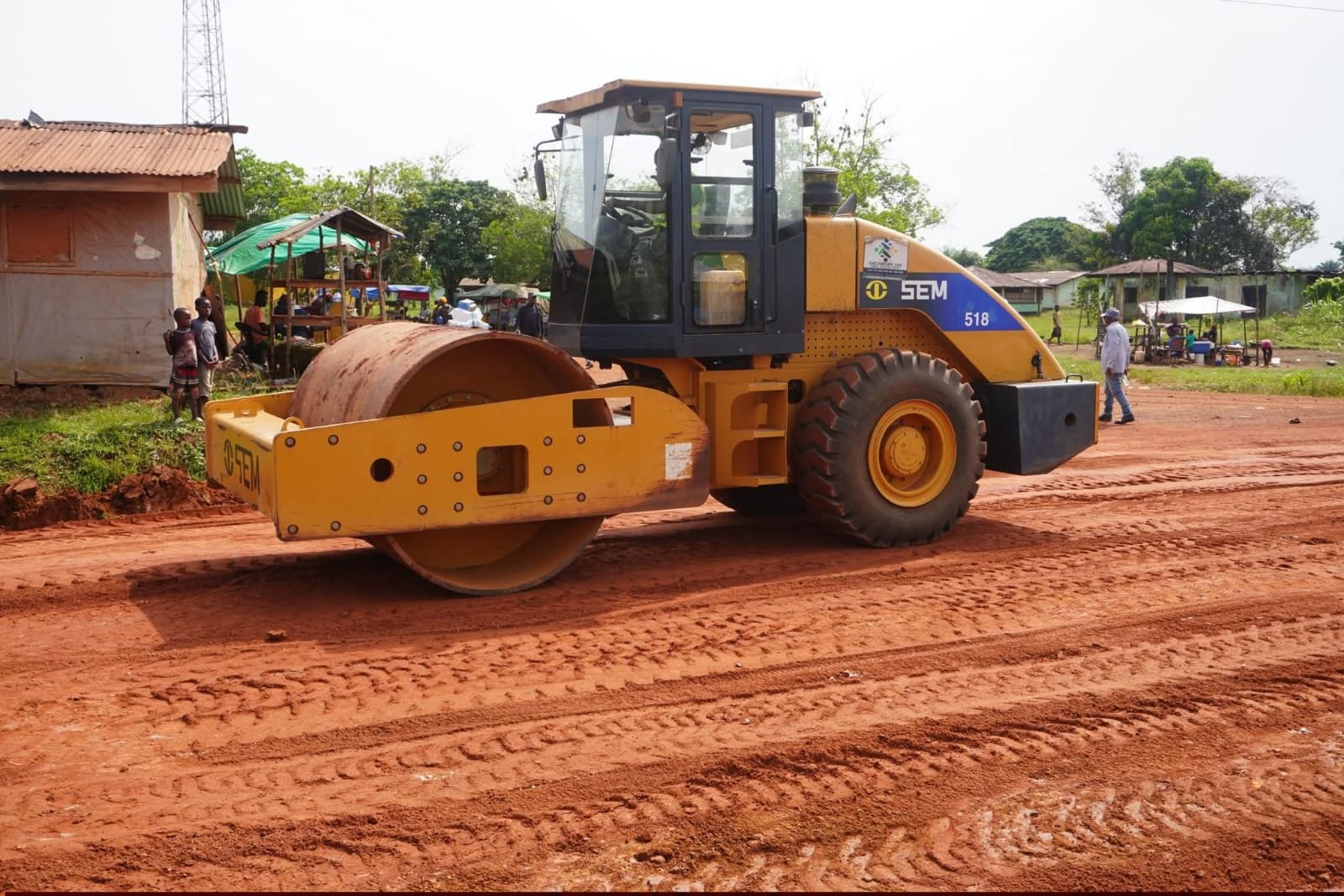
At the center of this shift is a major road rehabilitation effort connecting Buchanan to LAC’s operational hub at Compound 3. Once plagued by flooding, erosion, and impassable terrain during the rainy season, the 38-kilometer stretch has undergone extensive upgrades under LAC’s Sustainable Road Repair Strategy, launched in 2024.
According to LAC local rubber purchase (LRP) and road maintenance (RM) manager, Deepak Divaran, the project moved beyond routine maintenance to full structural rehabilitation.
Divaran noted that more than 50 aging culverts were repaired or replaced, alongside the installation of reinforced drainage systems to ensure durability and year-round access. These improvements have significantly reduced travel time and enhanced safety for both transport operators and rural residents.
He further stated that the initiative expanded in 2025 through a partnership with the Rubber Development Fund Incorporated (RDFI), extending works toward the St. John Highway and reconnecting previously isolated communities. Key areas such as Jentro Hill and Saturdays Town have seen slope stabilization, new culverts, and safer road diversions.
Transporters Report Major Improvements
Motorcyclists who rely on the road daily say the difference is dramatic.
Samuel K. Doe, a commercial rider, told this paper that the Bassa-Gio road was very terrible, especially during the rainy reason, stating that it used to take hours before getting to Compound 3 market.
“Before, this road was terrible. During rainy season, you could spend hours in the mud or even sleep on the road. Now I can carry passengers safely and reach faster. We thank LAC for this work,” Doe said.
Peter N. Zleh, another motorcyclist plying the road emphasized that their endings have improved since the rehabilitation of the road by the management of LAC.
According to him, their bikes used to break down often because of the bad road conditions.
“Our bikes used to break down often because of the bad road. Now business is better-we can make more trips in one day,” he said while his bike was overloaded with local produces.
Emmanuel Tarr, another commercial motorcyclist plying the road daily highlighted safety gains: “Accidents were common before because of deep holes and flooding. Now the road is smoother, and we feel safer riding.”
James Bedell could not hold back his thanks and appreciations for the management of LAC for reconditioning the deplorable road. “Even at night, movement is easier. This road has helped all of us. LAC really tried,” he said.
Truck drivers transporting goods along the corridor also praised the upgrades.
A commercial truck driver only identified as Trokon carrying goods from St. to Buchanan expressed similar sentiment: “Before, carrying goods from the interior was very difficult. Trucks could get stuck for days. Now we move without delay, and business is improving.”
Daniel S. Johnson noted reduced operating costs: “We used to spend more on fuel and repairs because of the road condition. Now everything is smoother. We appreciate LAC for making this possible.”
Farmers See Progress, Seek More Support
Beyond infrastructure, LAC’s farmer training programs are improving agricultural practices. In Wesseh Town, farmers say they now better understand rubber production, though challenges remain.
Oreath Jones, the second dux of the taping training program for over twenty-two residents of the expressed thanks and appreciation to LAC for the training opportunity, while pleading on other farmers’ behalf. “We thank God and LAC, but the training came during farming season, so many people missed it. More than twenty farmers still want to learn. We need the training to come again.”
She also stressed the need for equipment: “Some of our farms are not equipped. We don’t have materials, so we are struggling. We need support to improve production.”
Farmer Moses Paygar said the training changed their approach:
“Before, we were tapping without understanding. Now we know how to care for the trees and improve quality. We want LAC to continue.”
Town leader Josiah G. Jacobs linked the road and training to broader development:
“Since 2018, vehicles could not reach this town easily. Today, we see cars coming here. What used to take one hour and thirty minutes now takes just minutes.”
He added: “We realized we were damaging our farms before. Now we know how to protect them for the next generation.”
Toward a Sustainable Rubber Economy
LAC officials say their strategy integrates infrastructure, training, and market access to build a sustainable agricultural system. Extension workers regularly monitor farmers to ensure compliance with environmental and labor standards.
“We are focused on long-term relationships,” one supervisor said. “We monitor practices, conduct audits, and ensure transparency. Farmers are currently preparing their trees for production. They will begin collecting rubber by the end of May. Right now, they are opening panels,” the supervisor explained.
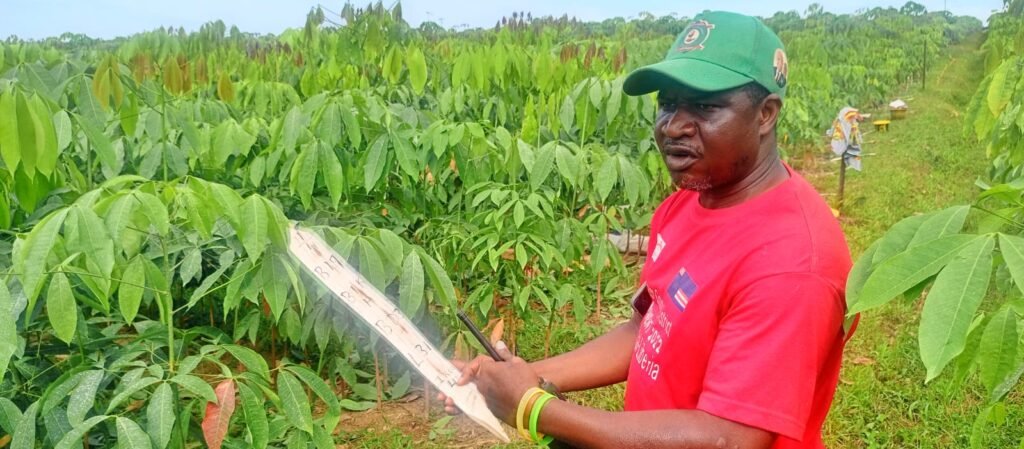
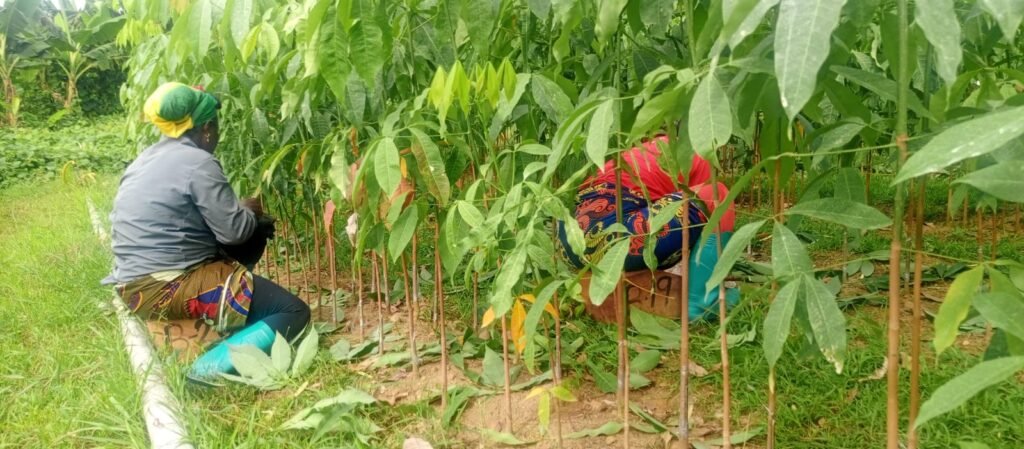
To support them, LAC offers farming materials on credit, with repayment tied to future sales. The company is also distributing approximately 140,000 improved rubber plants to smallholders this year.
Farmers are now calling for advanced training in techniques such as bud grafting, which LAC says will be introduced through organized cooperatives.
A Growing Regional Impact
The District Superintendent of Compound #3 Morris Neasain asserted that the combined investments by LAC are strengthening regional trade and boosting incomes.
He described the transformation as critical to the economic development for the people of Grand Bassa County.
He noted: “Had it not been for LAC, that road would have been very deplorable by now. LAC has continued maintaining it, even though it is not part of their concession agreement. They are acting as good corporate citizens.”
Continuing, he added: “Today, people can move freely. What used to take hours now takes minutes. The entire district is benefiting. The economy here is rubber-driven. Some farmers are earning between $500 and $2,000 monthly. That is changing lives,” Superintendent Neasain said.
According to him, LAC is not only focused on profit-they are investing in people and the future of this district.”
Despite the progress, communities say continued support is essential.
“LAC has helped us a lot,” Jacobs said. “But we still need more training, equipment, and support to fully succeed.”
As improved roads reconnect communities and better farming practices take root, the transformation underway in Grand Bassa underscores a broader reality: strategic investment in infrastructure and agriculture can drive lasting rural development.
For many residents, the journey continues, but for the first time in years, the road ahead is clear.