


By Archie A. Boan
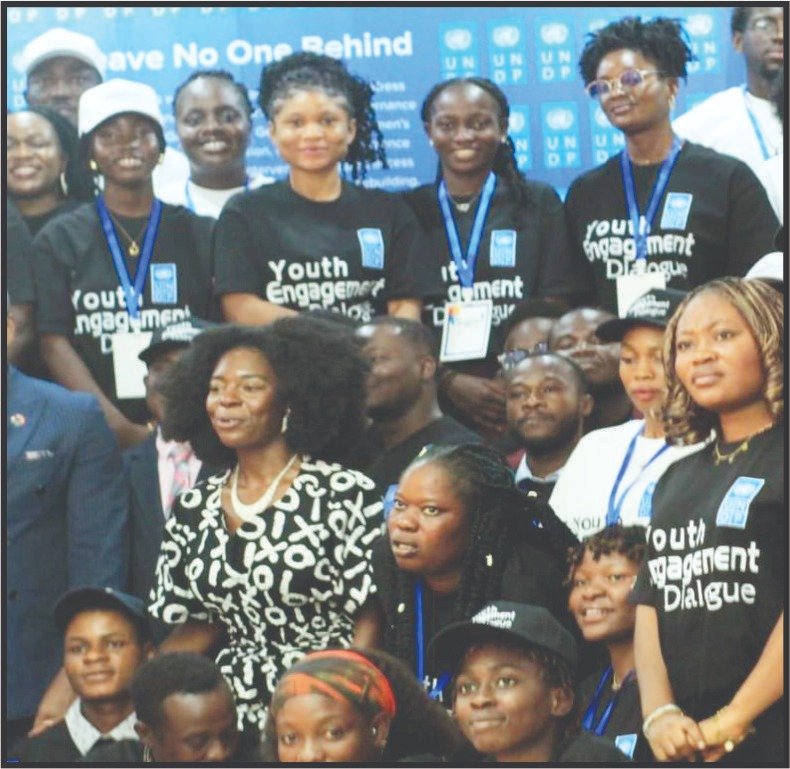
On a warm Wednesday morning in Monrovia, the corridors of Sinkor Palace filled with conversation, laughter, and urgency. More than fifty young people from across Liberia, students, farmers, artists, athletes, entrepreneurs, and climate advocates-gathered with a shared message: they are ready to be heard, and ready to lead.
The event, a youth dialogue organized by the United Nations Development Programme (UNDP), brought together young people, government officials, and development partners to discuss Liberia’s future-from jobs and education to climate change and governance.
What stood out was not only the diversity in the room, but the tone: direct, grounded, and increasingly impatient with promises that fail to translate into opportunity.
At the center of the discussion, Mamadou Aliou Dia stressed that development efforts cannot succeed without meaningful youth participation.
“Young people are full of ideas. But too often, they don’t have the space or opportunity to bring those ideas into decision-making,” he said.
He acknowledged that previous youth-focused programmes have not always delivered the expected impact, adding that institutions must be more honest in assessing their effectiveness.
“If young people are not feeling change in their lives; then we have to ask what we are really achieving,” he noted.
The dialogue also reflected a shift in approach. Dia noted that UNDP is increasingly focusing on youth-led initiatives, including funding mechanisms designed to support young innovators directly, with an emphasis on moving from consultation to implementation.
For many participants, that shift felt long overdue.
Stanley N. Karama underscored the importance of sustained engagement, noting that youth perspectives are increasingly shaping UNDP programming in governance, digital development, and economic growth.
He also highlighted sectors such as the creative industry and tourism, which remain underdeveloped despite strong youth interest and potential.
Throughout the discussions, young participants repeatedly raised familiar concerns: unemployment, lack of skills training, weak support systems, and limited access to finance and mentorship.
“These are not abstract issues for us. They affect our daily lives,” one participant said.
Government representatives also responded to these concerns.
Laraamand Shenkin Nyonton reaffirmed the government’s commitment to youth inclusion, pointing to the establishment of a Youth Advisory Council under President Joseph Boakai as a step toward integrating young voices into national decision-making.
He also urged participants to remain vocal and engaged. “Speak up about unemployment. Speak up about skills gaps. Speak up about the issues affecting your communities. Your voices are necessary,” he said.
He emphasized the need to expand technical and vocational education across the country, encouraging young people to focus on skills development, productivity, and entrepreneurship.
From the education sector, Medina A. Wesseh commended the initiative, describing such spaces as essential for building trust between institutions and young people. She encouraged participants to turn ideas into action through persistence and collaboration.
For several attendees, the dialogue carried personal significance. Young entrepreneurs, farmers, and activists spoke of both frustration and renewed motivation, frustration over limited opportunities, and motivation from being heard in a formal national setting.
As the day drew to a close, there was no sense that the conversation had ended-only that it had entered a new phase.
Outside Sinkor Palace, participants lingered in small groups, continuing discussions that had begun inside. The challenges remained large and complex, but so did the resolve in the room.
Liberia’s young people are no longer waiting on the sidelines. They are pressing forward, demanding a role in shaping the decisions that will define their future-and insisting that their voices matter in the process.