


By G. Watson Richards
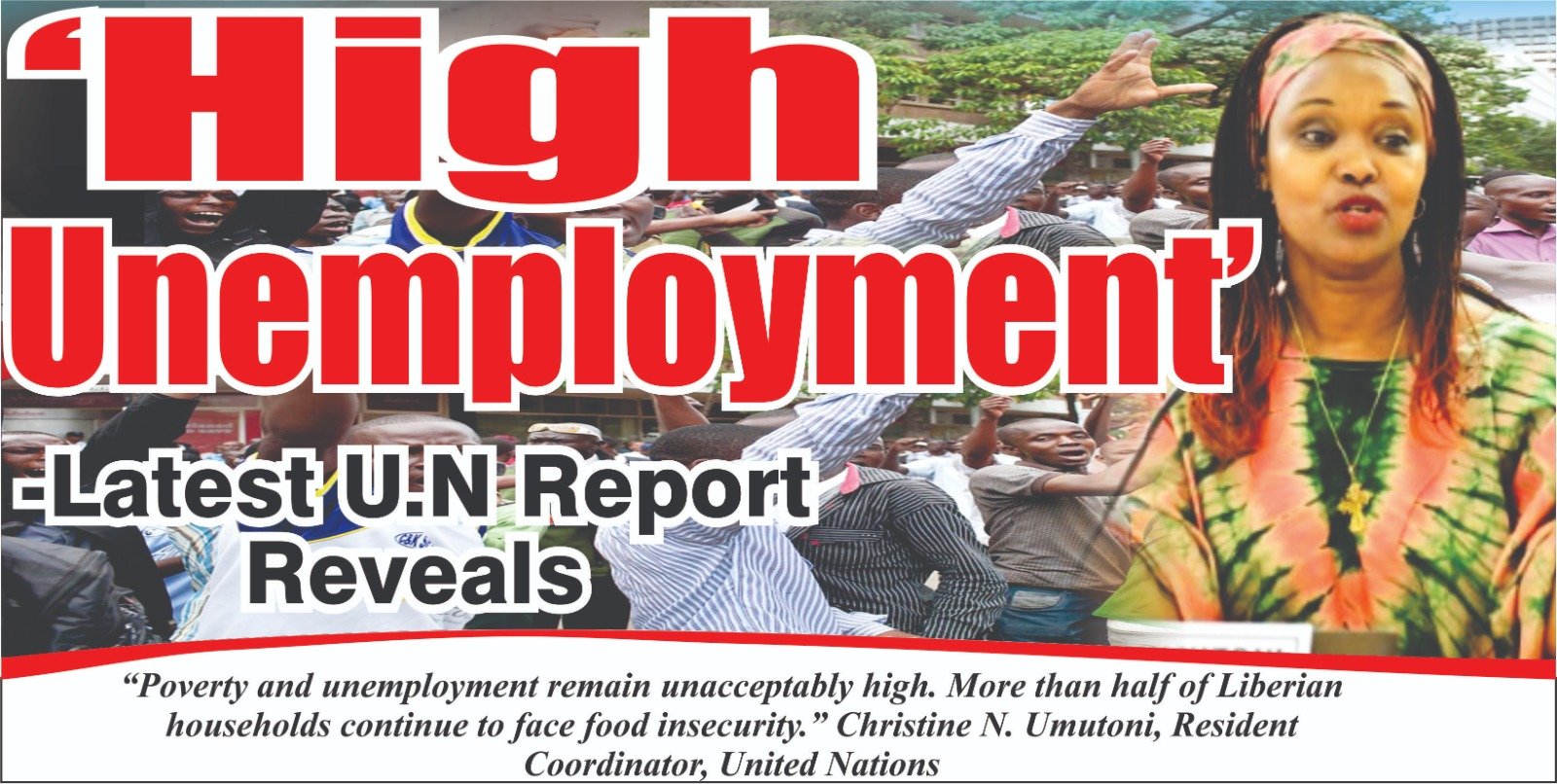
“Poverty and unemployment remain unacceptably high. More than half of Liberian households continue to face food insecurity.” Christine N. Umutoni, Resident Coordinator, United Nations.
According to the UN latest report, more than half of Liberian households continue to face food insecurity, as poverty and unemployment remain unacceptably high, according to the latest United Nations report on Liberia’s development outlook.
“More than half of Liberian households continue to face food in security; poverty and unemployment remain unacceptably high; and maternal and child mortality, though declining-still exceeds global averages. Heavy dependence on external financing continues to expose Liberia to global shocks,” the report stated.
The report further warned that while governance challenges persist, rising public concern around corruption, cost of living, unemployment, and overall governance performance has contributed to periodic civic mobilization and renewed calls for reform across the country.
“These realities call not for incremental action, but for bold, transformative change. As we enter the 2026–2030 Cooperation Framework periods, the UN in Liberia is repositioning itself to support that transformation. We are shifting from service delivery to capacity-building, from project-based interventions to integrated systems strengthening, as well as promoting innovative financing for development. The UN’s joint pro grammes-mobilizing over USD 52 million-demonstrate what is possible through collective action and strategic partnerships.”
The report, among other things noted that government-led anti-corruption measures, including enforcement of asset declaration requirements-signal ongoing efforts to strengthen transparency and accountability. Institutional reforms are also continuing across key public agencies, reflecting broader attempts to consolidate democratic governance.
However, the UN cautions that these improvements are unfolding against a backdrop of deep structural vulnerabilities.
Youth unemployment and underemployment remain major socio-economic concerns, particularly in a context where Liberia’s rapidly growing young population is placing increasing pressure on an already fragile labor market.
The report further warns of “potential social tensions driven by unemployment, high living costs, and governance concerns,” underscoring the risks of instability if economic conditions fail to improve in tangible ways for ordinary citizens.
According to the report, Liberia continues to face some of the lowest human capital outcomes globally, with a Human Capital Index of 0.32-meaning a child born today is expected to reach only 32% of their potential productivity compared to global benchmarks.
At the core of the country’s development challenges are interconnected issues including low literacy levels (48.3% according to UNESCO; 58.6% from the Liberia Household Poverty Census), unemployment at 5.9% (ILO), and multidimensional poverty affecting 45% of the population (Liberia Poverty Headcount), UN report noted.
These conditions reflect widespread deprivation in access to basic services and opportunities.
The report emphasizes that these challenges disproportionately affect vulnerable groups, including women, girls, and persons with disabilities, who continue to face systemic barriers to education, healthcare, and employment.
It also highlights that maternal and child mortality rates-while declining-remain above global averages, further underscoring persistent gaps in health outcomes.
In addition, Liberia’s heavy dependence on external financing continues to expose the economy to global shocks, raising concerns about long-term fiscal resilience.
Against this backdrop, the United Nations argues that incremental change is no longer sufficient. It calls instead for “bold, transformative change,” particularly as it enters the 2026–2030 Cooperation Framework periods.
The UN says it is repositioning its approach in Liberia, shifting from direct service delivery toward capacity-building, from isolated projects to integrated systems strengthening, and promoting innovative financing for development.
Through joint programmes mobilizing over US$52 million, the UN highlights what it describes as the potential of coordinated action and strategic partnerships.
Looking ahead, the organization reaffirms its commitment to supporting a “reconciled, resilient, and prosperous Liberia,” where development gains are shared equitably across all counties and “no one is left behind.”