
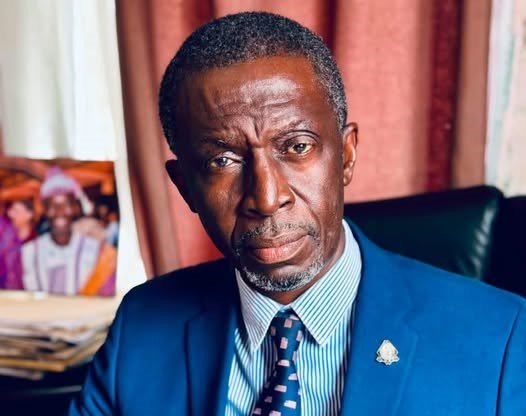
By Tiawan Saye Gongloe, SCL
My fellow Liberians,
Today, I speak to you not merely as a lawyer. I speak as a Liberian citizen, as an educator, as a parent, and as a political leader who believes deeply that the survival and prosperity of the Liberian Republic depend upon the supremacy of the Constitution, the rule of law, accountable government, and institutions that serve the people rather than powerful individuals.
Liberia is confronting a moment that we must not underestimate. What is unfolding following the discovery of enormous quantities of cocaine in our country is not simply a law-enforcement matter. It is not simply an LDEA matter, a police matter, or an airport-security matter. It is a national-security crisis, and if we fail to confront it comprehensively, it could become a threat to the very survival of the Liberian state.
Let us first appreciate the scale of what has happened. In June, Liberian authorities seized approximately 237.6 kilograms of cocaine at Roberts International Airport, reportedly valued at more than US$19 million. Then came the discovery of approximately 3,971 kilograms—nearly four metric tons—of cocaine in the Duazon area, with authorities estimating its value at approximately US$317 million. Reuters described the seizure as one of the largest recorded drug busts in Liberia.
My fellow Liberians, this is not the work of a few young people selling drugs on a street corner. The sheer volume and value point to an organized and well-financed international criminal enterprise. We therefore have to ask who brought the drugs into Liberia, who received them, who transported them, who protected them, who knew about them, who facilitated their movement, who was paid, and, most importantly, whether anyone within the Liberian state helped make the operation possible.
These questions are no longer merely questions raised by ordinary citizens. They arise from statements made by officials within Liberia’s own security establishment. The Inspector General of Police has reportedly said that the cocaine operation was sanctioned at a very senior level of government and has referred to senior government officials in connection with the matter, without publicly identifying them. That is an extraordinarily serious statement. If the Inspector General has evidence that senior government officials were involved, the Liberian people deserve to know what the evidence establishes. If the evidence is not yet sufficient to identify anyone publicly, then those persons should be investigated through a process capable of establishing the truth.
Let me make one thing absolutely clear. I am not accusing any individual who has not been proven guilty. Every person accused of a crime is entitled to due process, and every accused person is presumed innocent until proven guilty. That is the rule of law, and because I believe in the rule of law, I will not abandon it simply because the allegations before us are frightening.
But the rule of law does not mean that government should remain silent when credible allegations of criminal conduct reach into the highest levels of government. The rule of law requires a fearless, impartial and professional investigation. It requires evidence. It requires accountability. And where the evidence establishes criminal responsibility, it requires prosecution.
Indeed, the seriousness of this matter is demonstrated by the fact that senior police personnel have themselves come under scrutiny. Reports indicate that police officials and an NSA operative were detained or interrogated in connection with the investigation, while a senior police officer was removed from his position following an allegation that he accepted US$10,000 in connection with suspects in the cocaine case. Importantly, allegations remain allegations, and those accused are entitled to due process. But the involvement of personnel from institutions responsible for combating crime makes one thing clear: public confidence in Liberia’s security architecture is at stake.
I therefore want to acknowledge what President Joseph Nyuma Boakai has done so far. His administration has taken administrative and law-enforcement measures, including suspensions, dismissals, arrests, charges and detentions involving persons connected to the investigation. Senior security personnel have come under scrutiny, and the administration has demonstrated publicly that it intends to take the matter seriously.
For those actions, Mr. President, I say thank you. When a government takes action in the right direction, responsible citizens should acknowledge it.
But I must also say respectfully and firmly: Mr. President, this is not enough.
The scale of this crisis requires something more comprehensive. I therefore call upon President Boakai to establish a truly independent Commission of Inquiry into Liberia’s cocaine crisis and the broader narcotics-trafficking threat to the Republic.
I emphasize the word independent because if senior officials within the police, intelligence services, airport security, drug-enforcement institutions or other security agencies are themselves implicated or under investigation, the Liberian people cannot reasonably be expected to have complete confidence in an investigation conducted exclusively within the same institutional structures.
The Commission should include persons with expertise in criminal investigation, narcotics trafficking, financial intelligence, forensic accounting, money laundering, international organized crime, constitutional and criminal law, cybersecurity, border security and asset tracing. It should have appropriate legal authority to obtain documents and testimony, trace financial transactions, examine communications and movements relevant to the investigation, identify facilitators and beneficiaries, and make recommendations for criminal prosecution. Its findings should be made public, subject only to legitimate national-security limitations.
The central principle must be simple: follow the money.
Cocaine is the commodity. Money is the motive. Corruption is often the bridge between criminal money and legitimate institutions. Therefore, the investigation cannot stop with the cocaine itself. We must ask where the money went, who received it, who deposited it, who acquired property, who acquired businesses, who suddenly accumulated unexplained wealth, who provided protection, who made the critical telephone calls, who intervened, who gave instructions, and whether proceeds of narcotics trafficking entered Liberia’s legitimate economy or political system.
These questions should not be answered through rumor, political speculation or government propaganda. They must be answered through evidence.
My fellow Liberians, the cocaine crisis did not arrive in a vacuum. It has emerged in an environment in which corruption, weak institutions, impunity, unexplained wealth, allegations of illegal exploitation of natural resources, and disregard for accountability rules have repeatedly challenged the rule of law.
This is why I regard the cocaine crisis as a manifestation of a deeper governance crisis.
During an earlier Unity Party administration, the government itself described corruption as a vampire. The metaphor was appropriate. A vampire feeds quietly and survives by draining the life out of its victim. But look at what has happened since. The vampire did not die. Corruption became worse under the Coalition for Democratic Change, and today, under the Unity Party again, many Liberians have the perception that the vampire has become even more powerful.
This is not merely a political slogan. It is a question of the rule of law.
Consider, for example, the controversy surrounding the approximately US$10 million project in Foya, Lofa County. The government has explained that the structure is intended to serve as the Mano River Union Center for Regional Peace and Development rather than as a private presidential residence. But civil-society organizations and others have raised questions concerning its financing, procurement and transparency. The Center for Transparency and Accountability in Liberia has specifically called for full disclosure regarding the project.
The Liberian people therefore have legitimate questions. Was the project properly appropriated? Was it included in the national budget? Under what legal authority was the contract awarded? Was the procurement process consistent with the Public Procurement and Concessions Act? Was competitive procurement followed? Who financed the project? Where did the money come from? Who authorized the expenditure? Who contracted the project? And who will ultimately benefit?
I want to be absolutely clear: I am not saying that the Foya project is financed with drug money. I have no basis to make such an accusation without evidence. But in the midst of the largest narcotics investigation in Liberia’s history, the government should have no difficulty providing a complete and transparent account of the source of funds for a multimillion-dollar public project.
If the money is legitimate, transparency should establish that fact. If the procurement was lawful, the records should establish it. If the expenditure was properly authorized, the government should be able to demonstrate it.
And given the extraordinary cocaine investigation now before the country, Liberians are entitled to ask a broader question: could any unexplained source of money entering Liberia’s economy be drug money? That is not an accusation against the Foya project or any individual. It is a question that responsible government should answer through transparency and evidence.
The same principle applies to the troubling developments along the Liberia-Guinea border.
There have been reports and allegations concerning activities along the Makona River and claims relating to mineral extraction. The International Federation of Red Cross and Red Crescent Societies has documented reports surrounding a border incident in which soldiers alleged that a company was extracting minerals, including gold and diamonds. Other reporting has raised allegations concerning illegal mining along the Makona River.
Again, I am not declaring those allegations to be established facts. But they deserve serious investigation.
Who is mining? Who owns the equipment? Who has the legal authority or concession? Who is exporting the minerals? Who is paying whom? Who is protecting the operations? Are Liberian minerals being illegally transported across the border? Are politically connected persons involved? And are any security personnel facilitating these activities?
These are legitimate questions because illegal mining is not simply an environmental problem. It can become a revenue problem, a corruption problem, a border-security problem and a national-security problem.
The government itself has recognized the seriousness of illicit mining and has moved toward stronger enforcement and interagency coordination. That is welcome. But the same principle applies here as in the cocaine investigation: follow the money and follow the evidence.
My fellow Liberians, there is another political issue that deserves reflection.
During the 2023 presidential campaign, President Boakai, then a presidential candidate, was reported to have said that he could “dance with the devil” if doing so would help him win the presidency.
I raise that statement today not because I am suggesting that President Boakai literally made a pact with the devil. I am certainly not suggesting that anything supernatural caused the cocaine crisis. I raise it because political language sometimes contains a warning that becomes more meaningful with time.
The “devil” in that statement can be understood as a metaphor for political compromise with people or forces whose conduct or values may be inconsistent with the principles of good governance.
There is an old warning: the devil never dances for free.
Every compromise with corruption has a price. Every accommodation with criminality has a price. Every political alliance built without regard to principle eventually sends the bill to somebody, and sometimes the bill is sent to the nation.
So today, I ask: What compromises were made in the pursuit of political power? Who were the people with whom political leaders had to dance? What did those people expect in return? What access did they receive? And is Liberia now paying the price for political compromises that should never have been made?
I am not accusing President Boakai of making any agreement with drug traffickers. I am not saying that the cocaine crisis is the consequence of his campaign statement. That would be irresponsible. I am asking a broader political question: When political expediency becomes more important than principle, who ultimately pays the price?
Because the real devil in Liberia is not a supernatural being. The real devil is corruption. The real devil is greed. The real devil is impunity. The real devil is political patronage. The real devil is the abuse of public office. The real devil is the belief that political connections are more powerful than the law. And if we allow those forces to become normalized, they will eventually threaten the Republic itself.
My fellow Liberians, this crisis is also fundamentally about our young people.
Liberia has a youthful population confronted by unemployment, poverty, limited opportunities and, in many communities, hopelessness. Into that environment comes an international narcotics industry with enormous financial resources. Drug traffickers can recruit, pay, corrupt and intimidate. They can offer young people money that legitimate employment cannot provide. That is dangerous. What happens when a young Liberian begins to believe that a drug dealer has more opportunities than a university graduate? What happens when legitimate work becomes less attractive than criminal enterprise? What happens when the young person begins to believe that the fastest route to wealth is through drugs, corruption or political connections?
That is how a nation loses its moral compass. We cannot allow that to happen.
The drug crisis must therefore be treated as an issue of education, employment, public health, youth development, criminal justice, border security and national security. Arrests alone will not solve it. We must destroy the economic ecosystem that makes narcotics profitable.
And this brings me to Haiti.
My fellow Liberians, I want to say something uncomfortable but necessary: Liberia must learn from Haiti.
Haiti is the first Black republic in the modern era. Liberia occupies a unique place in the history of Black statehood. Our histories are not identical, and I am not suggesting that Liberia is Haiti. But Haiti provides Liberia with a warning about what can happen when criminal organizations become stronger than state institutions.
Today, Haiti is experiencing a devastating crisis involving armed criminal groups, territorial control, trafficking, violence and weakened state authority. Liberia must never travel that road.
A country does not wake up one morning and discover that gangs control its streets. Institutional deterioration occurs gradually. Corruption becomes normal. Criminals purchase protection. Criminal networks penetrate institutions. Security officers become compromised. Young people are recruited. Criminal organizations acquire weapons and money. Political influence follows. Citizens lose confidence in government. And eventually, the state begins losing control.
That is the road Liberia must refuse to travel.
This is why the cocaine crisis must be understood as a national-security emergency.
Let me also speak politically.
For more than two decades, Liberians have watched the Unity Party and the Coalition for Democratic Change dominate national politics at different times. Different administrations have offered different slogans and different promises, but many of the same fundamental problems continue to return: corruption, impunity, weak institutions, political patronage, poverty and unemployment. Now we face the possibility that international narcotics networks have penetrated parts of Liberia’s security architecture.
I am not saying that every member of the Unity Party is corrupt. I am not saying that every member of the CDC is corrupt. That would be unfair and untrue. But political parties must accept responsibility for the systems that operate under their governments.
When corruption persists across successive administrations, it ceases to be merely an individual problem. It becomes a governance problem.
And the cocaine crisis is another manifestation of what has become normalized in Liberia: uncontrollable greed and endemic corruption.
Too many people have come to believe that public office is a pathway to personal enrichment. Too many believe government is a marketplace where influence can be purchased. Too many believe political connections can protect them from the law. That culture must end.
Government is a place to serve, not to steal. Governance is for the people, not the pockets.
My fellow Liberians, let us connect the issues. Corruption is a rule-of-law issue. Narcotics trafficking is a rule-of-law issue. Money laundering is a rule-of-law issue. Illegal mining is a rule-of-law issue. Procurement violations are a rule-of-law issue. Border insecurity is a national-security issue. The compromise of security officers is a national-security issue.
When these things begin appearing together, we must ask whether the institutions of the Republic themselves are being weakened.
That is why this crisis cannot be allowed to become another headline that eventually disappears.
The cocaine may be destroyed. The suspects may eventually be convicted or acquitted. But the system that allowed such an enormous criminal enterprise to operate in Liberia must be examined.
Mr. President, follow the money.
Follow the cocaine money. Follow suspicious financial transactions. Follow unexplained wealth. Follow properties and businesses. Follow bank accounts. Follow airport records. Follow immigration records. Follow shipping records. Follow relevant communications. Follow political relationships. Follow the chain of command. And follow the evidence wherever it leads.
If the evidence leads to a poor man, investigate him. If it leads to a police officer, investigate him. If it leads to a businessman, investigate him. If it leads to a minister, investigate him. If it leads to a legislator, investigate him. If it leads to a presidential appointee, investigate him. And if the evidence leads to someone close to the President, investigate him.
No one should be above the law.
Not because we want to destroy people, but because we want to save Liberia.
And after investigation must come prosecution where the evidence warrants it.
The purpose of an investigation is not to generate headlines. It is to establish facts. Once the facts are established, the law must follow. If the evidence establishes trafficking, prosecute. If it establishes money laundering, prosecute. If it establishes corruption, prosecute. If it establishes obstruction of justice, prosecute. If it establishes abuse of public office to facilitate criminal conduct, prosecute.
And if the evidence establishes innocence, clear the innocent. That is justice.
To the Liberian people, I say: do not allow this crisis to become merely another partisan argument. Do not ask first whether the matter involves the Unity Party, the CDC or the LPP. Ask whether Liberia is safe. Ask whether our children are safe. Ask whether our institutions are safe. Ask whether our security institutions can be trusted. Ask who is protecting the drug traffickers. Ask where the money is going. And ask who benefits.
This is not merely a political question.
It is a Liberian question.
The Liberian People’s Party must stand on the side of Liberia. We will not defend criminals because they belong to our party. We will not condemn innocent people because they belong to another party. We will defend one fundamental principle: every person is equal before the law.
To the young people of Liberia, I say: do not allow drug traffickers to purchase your future. Do not become couriers. Do not become distributors. Do not become protectors of criminal enterprises. Do not allow someone else’s greed to destroy your life.
There is nothing glamorous about cocaine. There is nothing heroic about addiction. There is nothing powerful about destroying another person’s future.
The real power is education. The real power is discipline. The real power is honest work. The real power is building a Liberia where a young person does not have to become a criminal to become successful.
And government has an obligation to build that Liberia.
Mr. President, you came to office promising integrity. You promised accountability. You promised to fight corruption. You promised to restore confidence in government. You now have an historic opportunity to demonstrate that those promises mean something.
Do not allow this crisis to become another scandal that disappears when the headlines disappear. Do not allow a few low-level actors to be sacrificed while powerful actors remain untouched. Do not allow Liberia to become a country where the small fish go to prison while the big fish negotiate their freedom.
Establish the independent Commission of Inquiry.
Make it genuinely independent.
Give it the necessary authority.
Give it access to the evidence.
Let it follow the money.
Let it identify the facilitators.
Let it identify the protectors.
Let it identify the beneficiaries.
Let it expose the networks.
And let the courts do their constitutional duty.
If the evidence proves guilt, prosecute.
If the evidence proves innocence, clear the innocent.
But do not hide the truth.
Liberia deserves the truth. Our children deserve the truth. Our security institutions deserve the truth. And the Republic of Liberia deserves nothing less than the truth.
My fellow Liberians, this cocaine crisis is a test. It is a test of President Boakai. It is a test of the Liberia National Police. It is a test of the LDEA. It is a test of the National Security Agency. It is a test of the Ministry of Justice. It is a test of our courts. It is a test of the Legislature. It is a test of our political parties. But above all, it is a test of the Liberian nation.
We survived civil war. We survived Ebola. We survived political instability. We must not now lose Liberia to organized crime.
We must not wait until criminals become stronger than the institutions of the Republic. We must not wait until our young people become the foot soldiers of international drug cartels. We must not wait until corruption destroys the remaining moral authority of government. And we must not wait until Liberia begins resembling countries where criminal organizations control communities and governments struggle to reclaim their own territory.
Liberia must not become Haiti.
The warning signs must be confronted while they are still warning signs.
Mr. President, establish the independent Commission of Inquiry. Let the investigation be independent, professional and comprehensive. Let it follow the money. Let it follow the evidence. Let it identify the networks, the protectors and the beneficiaries. And let justice follow wherever the evidence leads.
If the evidence proves guilt, prosecute. If the evidence proves innocence, clear the innocent. But do not hide the truth.
The cocaine may be seized. The cocaine may be destroyed. But the lesson must not be destroyed with it.
Let us destroy the cocaine, but let us also destroy the culture of impunity that permits criminal enterprises to flourish. Let us destroy the belief that public office is personal property. Let us destroy the belief that political connections place anyone above the law. Let us confront greed and endemic corruption. Let us restore the rule of law.
Because the real national emergency is not merely the cocaine we have discovered.
It is the system that made it possible for nearly four metric tons of cocaine to be found in Liberia.
And the question before us is therefore not simply, “Who brought the drugs?”
The deeper questions are: Who opened the door? Who protected the door? Who benefited from the door being open? And who has the power to close it permanently?
Liberia must answer those questions, and Liberia must answer them now.
If we do not control the criminals, the criminals may eventually control us. If we do not defeat corruption, corruption may eventually defeat the Republic. And if we do not protect our young people, we will lose the future of Liberia.
Government is a place to serve, not to steal. Governance is for the people, not the pockets. Let us sweep corruption away, defend the rule of law, protect our children, protect our Republic, and build a better Liberia.
Thank you.
May God bless the Republic of Liberia, and may God protect the Liberian people.
A Better Liberia is possible