

CESTOS CITY, Rivercess County: As women sang in their local dialect and danced to celebrate their progress under the Liberia Women Empowerment Project (LWEP), Felecia Zokpo joined the celebration. The single mother of four had her own story to share: a rice-selling business strengthened by financial support and a better opportunity to provide for her children.
For Felecia, who lives with a disability, keeping her business going means meeting the needs of four children who depend on her. She said the assistance received through LWEP has improved her business and strengthened her ability to care for them.
Her account brings a personal dimension to the project’s livelihood support. For a mother managing a business and raising children alone, access to capital can affect both the goods she sells and the household she supports.
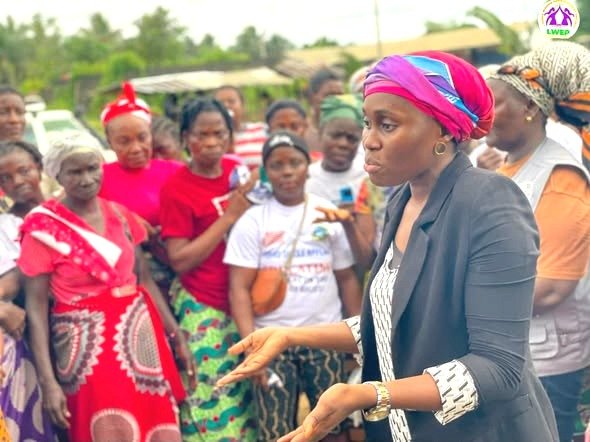
Speaking during the Deputy Minister for Gender of the Ministry of Gender, Children and Social Protection’s engagement with beneficiaries in Cestos City, Felecia also described the rejection she has experienced in her personal life, which she attributes to her disability.
“I am a single mother. No man wants me because I am sick, so I am alone and focusing on my life and my children,” she said.
Her words reflected a painful experience, but her focus remained on earning a living and caring for her family. She expressed appreciation to the Government of Liberia and the Ministry of Gender, Children and Social Protection (MGCSP) saying the project’s support had made a difference in her livelihood.
That connection between a woman’s business and her family’s well-being is central to LWEP’s approach. Implemented by the Ministry of Gender, Children and Social Protection, the project combines livelihood grants and business training with interventions addressing gender-based violence, harmful social norms and barriers to health and education services. It was approved with US$44.6 million in World Bank financing through a combination of credit and grant funding.
Addressing the body Deputy Minister for the Ministry of Gender, Children and Social Protection, Attorney Laura Golakeh, has called on women and communities in Rivercess County to take advantage of government empowerment initiatives while emphasizing the importance of investing in girls’ education to secure a better future.
Deputy Minister Golakeh said the government remains committed to working directly with communities, listening to their concerns, and developing programs that address their needs.
She emphasized that the government’s approach is centered on community engagement and collaboration, noting that local voices are essential to designing effective development programs.
“Rivercess County is a special county,” Golakeh said, highlighting the importance of ongoing government interventions, including the Liberia Women Empowerment Project and cash transfer initiatives.
According to the Deputy Minister, the Liberia Women Empowerment Project was established through collaboration between the government and the World Bank to provide women, particularly those in rural communities, with opportunities to improve their livelihoods and engage in productive activities.
She said President Joseph Nyuma Boakai and Gender Minister Gbeme Horace Kollie have demonstrated commitment to ensuring that women across Liberia benefit from empowerment programs.
Golakeh stressed that the initiative is intended to help women, especially young women, acquire the means and opportunities to become economically productive and independent.
The Deputy Minister also shared her personal background, identifying herself as the daughter of a market woman, and said her journey to leadership underscores the importance of education and opportunity.
She urged parents and communities to invest in the education of their daughters, noting that young women have the potential to achieve even greater success when provided with adequate support.
“Your daughters can be more than us, but the only way is when we invest in their education and make sure they have all the opportunities they need to become better versions of themselves,” she emphasized.
LWEP operates across 498 communities in six counties and aims to support 36,000 women with livelihood and business development services. These are intended targets, while accounts such as Felecia’s offer individual perspectives on how the assistance is being used.
For Felecia, the impact she described is practical: support for the rice business through which she provides for her children. Her experience also highlights why women with disabilities must be included in economic opportunities and heard during assessments of development programs.
The November 2 engagement formed part of the ministry’s multi-county tour to review project implementation, strengthen county structures and improve service delivery. The exercise covers LWEP, the REALISE Project and the Spotlight Initiative 2.0.
The ministry said officials are examining livelihood activities, the use of grants, changes in household incomes and the sustainability of the interventions. They are also identifying implementation challenges and assessing whether county offices have the equipment needed to perform their duties.
For Felecia and other beneficiaries, the lasting measure of that support will be whether their businesses continue to grow and help them meet their families’ needs. In Cestos City, her testimony offered an encouraging account of progress, grounded in the daily responsibility of providing for four children.