


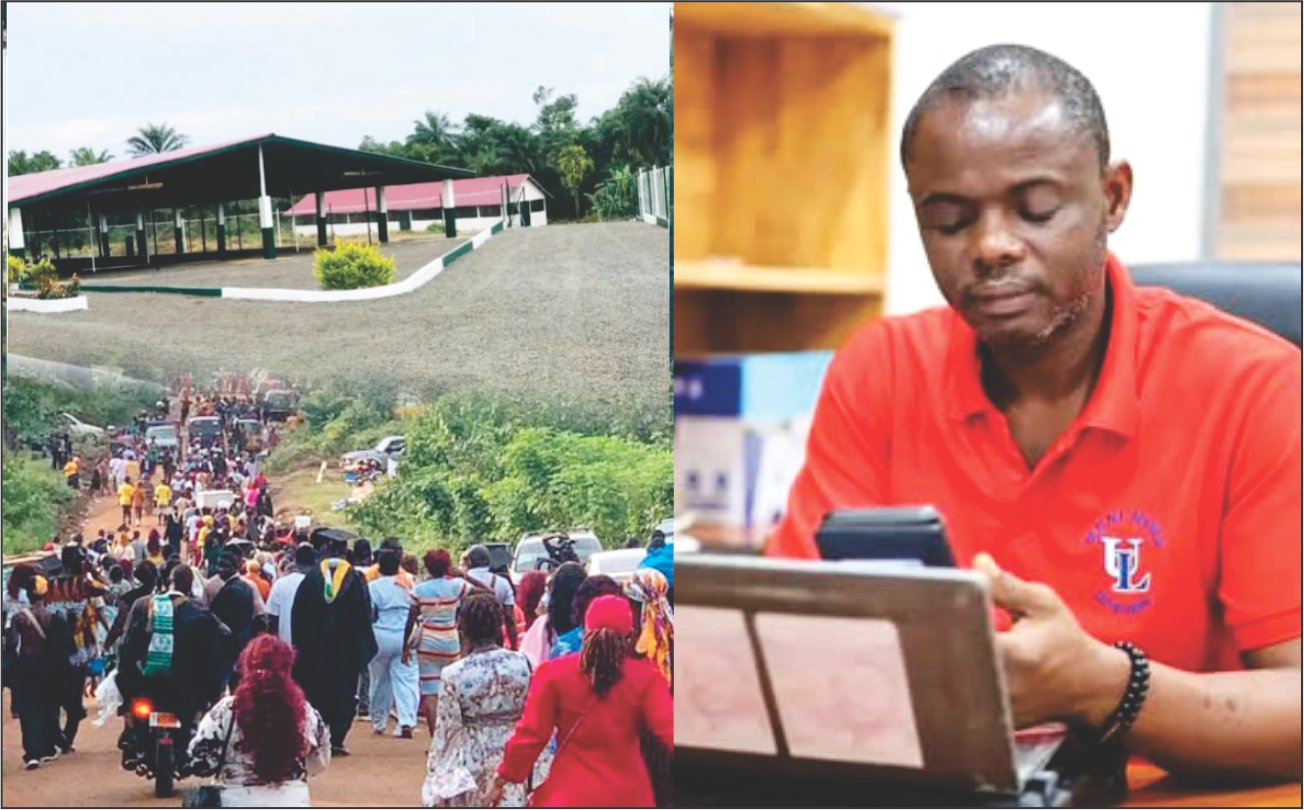
The African Methodist Episcopal University (AMEU) is facing questions over its infrastructure priorities following concerns about the lack of basic sanitation facilities at its Royesville Agriculture Center, where the institution hosted its 26th Commencement Convocation.
More than 1,000 graduates attended the ceremony, but according to education advocate Titus W. Tokpah Sr., the facility lacks proper washrooms and toilet facilities to accommodate graduates and guests, forcing some attendees to resort to nearby bushes to answer nature’s call.
In a commentary titled “School Administration Is Innovation – A Moment on the Sidelines of the AMEU Graduation – Part 2,” Tokpah questioned why the university has yet to construct modern toilet facilities at the center, despite using the location for its commencement ceremonies for approximately four to five years.
His concerns come after the university’s president disclosed that AMEU raised more than US$4 million during the 2025/2026 academic year, in addition to other institutional support.
Tokpah argued that the reported revenue should prompt serious conversations about the university’s investment in infrastructure and the provision of basic facilities for students and visitors.
Beyond sanitation, he also highlighted the poor road conditions leading to Royesville, unreliable GSM network coverage, and limited internet connectivity, describing them as challenges requiring urgent administrative attention.
He proposed relocating AMEU’s undergraduate programmes to the Royesville center while maintaining graduate programmes at the Camp Johnson Road campus, suggesting that such a move could accelerate infrastructure development and transform the community into an educational and economic hub.
Tokpah further called on the university to engage Lonestar Cell MTN and Orange Liberia to explore improving telecommunications services in the area.
Drawing comparisons with Cuttington University in Suakoko, Bong County, he maintained that strategic investment and effective administration could position Royesville as a major academic center.
While acknowledging the potential of the institution’s agricultural center, Tokpah stressed that university leadership must move beyond speeches and ambitious plans to address practical challenges affecting the learning environment.
“AMEU must do better,” he emphasized, arguing that school administration should be driven by innovation, critical thinking, sound decisions, and visible results.