
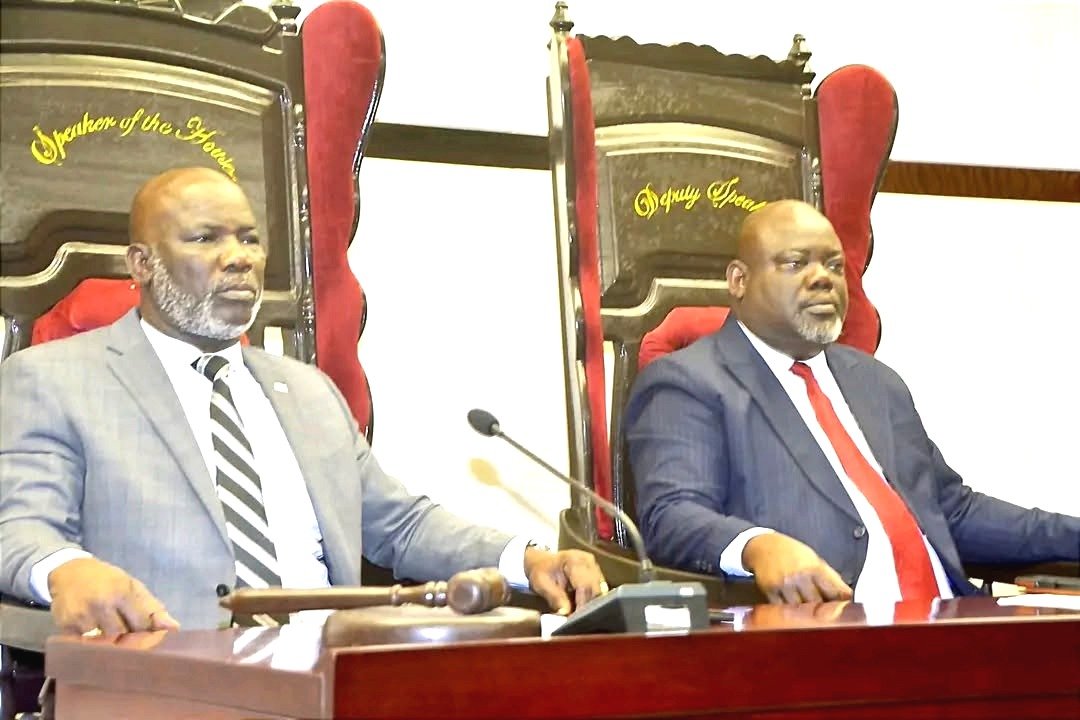
Growing constitutional dispute between the 55th House of Representatives and the Liberian Senate over who has the authority to initiate Liberia’s National Budget process is heading to the Supreme Court, following a decision by the House to seek judicial interpretation of the 1986 Constitution.
During its 13th Day Sitting of the Third Session on Thursday, November 26, 2026, the House Plenary voted to seek clarification from the Supreme Court on the constitutional powers of both chambers in the national budget-making process.
The decision followed a communication from Montserrado County District #12 Representative Jerry K. Yogboh, requesting deliberations on the responsibilities of the House and Senate under Article 34(d)(i) of the Constitution.
The controversy emerged after the House Committee on Ways, Means and Finance commenced expenditure hearings on the National Budget, while the Senate simultaneously opened its own hearings, raising questions about overlapping responsibilities and constitutional authority.
The House argues that the National Budget must originate in the lower chamber, relying on Article 34(d)(i), which provides that all revenue and other financial bills shall originate in the House of Representatives, while the Senate may propose or concur with amendments.
However, the Senate’s position has centered on its constitutional role in reviewing and scrutinizing legislation, including financial matters.
Through its latest resolution, the House wants the Supreme Court to determine whether it has exclusive authority to initiate expenditure hearings, whether the Senate can participate at the initial stage of the budget process, and whether conducting parallel hearings violates the Constitution.
Lawmakers are also seeking clarity on whether the National Budget qualifies as a financial bill under Article 34(d)(i), and whether a budget processed through Senate-first hearings would be constitutionally valid.
The dispute is not without precedent. In 2021–2022, both chambers disagreed over the controversial Bao Chico Mineral Development Agreement, with the House arguing that the agreement should have originated in the lower chamber.
However, in its February 18, 2022 opinion, the Supreme Court ruled that the Bao Chico agreement was not a revenue-generating bill within the meaning of Article 34(d)(i), concluding that the Senate had not violated the Constitution.
That decision did not conclusively resolve the constitutional status of the National Budget, leaving the latest dispute open to fresh judicial interpretation.
The Supreme Court’s anticipated intervention could establish clearer boundaries between the two chambers and determine how future national budgets are initiated, scrutinized, and processed in Liberia.