

African nations are taking sharply different paths in response to a new model of U.S. health cooperation, highlighting both the promise and the political sensitivity surrounding Washington’s revamped foreign aid framework.
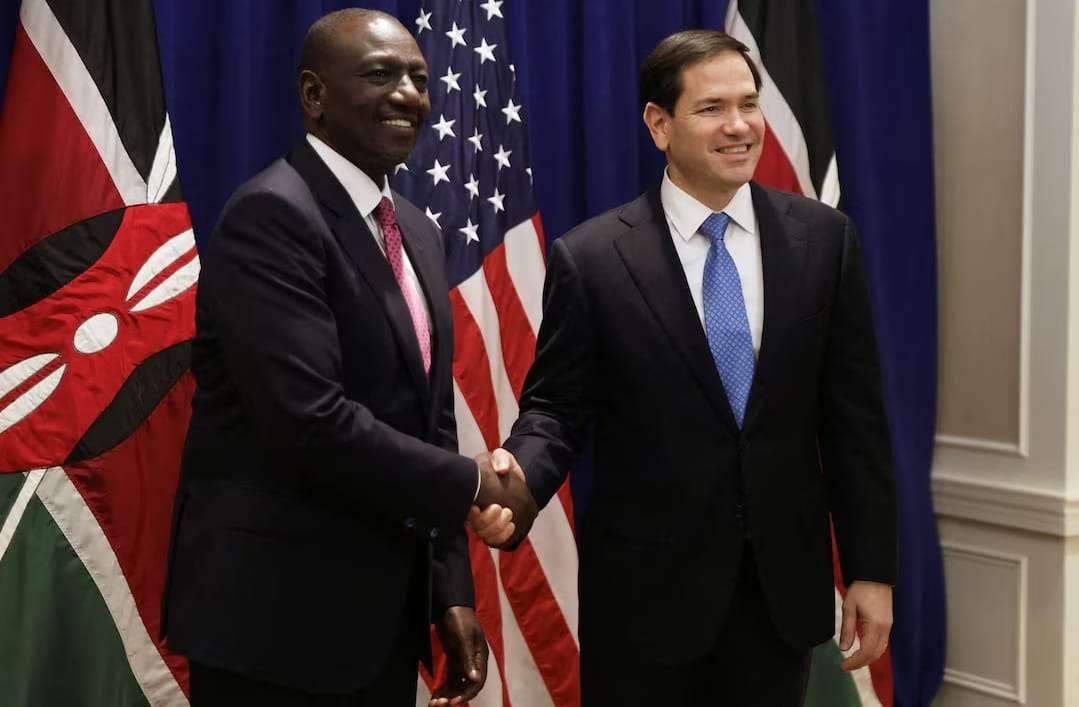
In Kenya, the High Court on Wednesday, December 11, 2025, suspended a $1.6 billion health cooperation pact signed with the United States on December 4, halting implementation until judges hear a petition over data privacy concerns.
The Consumers Federation of Kenya argues the agreement exposes citizens’ health information to insufficient safeguards and demands that decision-making based on health data be “public, auditable and jointly supervised” with consumer representation.
Justice Bahati Mwamuye issued the conservatory order, temporarily barring the government from giving effect to the Health Cooperation Framework.
President William Ruto has defended the pact, saying the Attorney General scrutinized it “with a tooth comb” to ensure Kenyan data remains protected under Kenyan law.
The agreement, hailed by Washington as a flagship product of the Trump-era overhaul of U.S. foreign assistance-requires partner governments to boost domestic health spending while receiving U.S. funding through a more direct, government-to-government model. Rwanda and Uganda have already adopted similar frameworks.
Liberia Becomes First in West Africa to Sign On
While Kenya’s pact faces legal scrutiny, Liberia has moved decisively in the opposite direction.
The West African nation this week became the region’s first to sign the U.S. health cooperation MOU, joining Kenya and Rwanda as early adopters of the model.
Liberia’s agreement, worth more than $124 million over five years, was signed in Washington by Foreign Minister Sara Beysolow Nyanti and Jeremy P. Lewin, the U.S. under Secretary for Foreign Assistance, Humanitarian Affairs, and Religious Freedom.
The deal commits significant funding to disease surveillance, outbreak response, laboratory capacity, digital health systems, supply chain modernization, and the expansion of Liberia’s frontline health workforce.
Lewin said the partnership represented a deepening of U.S.–Liberia relations and a shared commitment to “health security, innovation in disease response, and long-term systems resilience.”
Minister Nyanti, speaking on behalf of President Joseph Boakai, described the MOU as a “historic partnership,” crediting Liberia’s Ministry of Health for its technical work.
A Model under Scrutiny-and Under Expansion
The contrasting developments in Kenya and Liberia underscore both the appeal and the challenges of the United States’ new foreign aid architecture.
Countries that sign the agreements stand to gain substantial long-term investment in public health systems. But civil society groups in Kenya argue that the model places unprecedented emphasis on data-driven decision-making without adequate transparency or citizen oversight.
How the Kenyan High Court rules could influence how other African countries approach similar negotiations with Washington-either validating concerns about data protection or clearing the path for wider adoption.
For now, the U.S. health cooperation model continues to expand across the continent, even as judges in Nairobi prepare to weigh the first major legal challenge to its implementation.