


By: Archie Boan
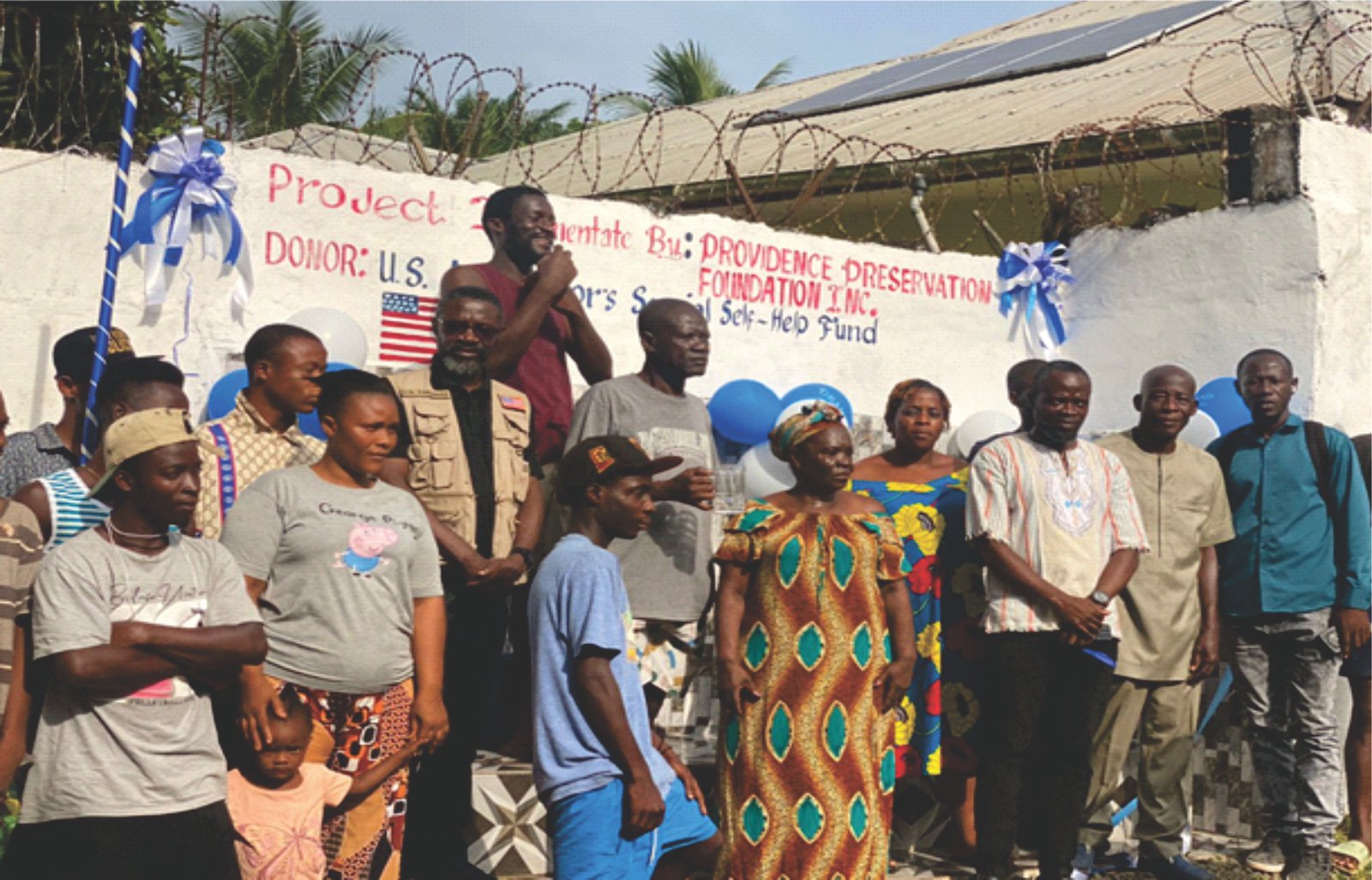
A solar-powered safe drinking water project has been formally dedicated to the residents of the Pagos Island Community in Congo Town, marking a significant milestone in efforts to address the community’s long-standing water access challenges.
The project was implemented by Providence Preservation Foundation Inc. with funding support from the United States Ambassador’s Special Self-Help Fund, a U.S. Government community-based initiative designed to support small-scale, high-impact development projects.
Madam Benetta Behnzukeh, who applied for the grant through Providence Preservation Foundation Inc., disclosed that the initiative was inspired by her personal observation of the community’s hardship. She explained that during a visit to Liberia two years ago for her father’s funeral, she noticed the acute difficulty residents faced in accessing clean water, prompting her decision to seek grant assistance to support the community.
Providing an overview of the funding, Blamo Nimely, Coordinator of the Ambassador’s Special Self-Help Fund Project, stated that the community received US$4,000 from the fund. He added that the residents of Pagos Island made additional contributions to cover remaining costs, ensuring the successful completion of the project.
Speaking on behalf of the community, Mr. Morris F. Wuelleh, Block D Chairman of the Pagos Island Community, extended sincere appreciation to the Providence Preservation Foundation Inc. and the United States Government for their timely intervention. He noted that access to water had been a persistent challenge for the community and urged residents to make responsible use of the facility. Mr. Wuelleh also emphasized the importance of proper maintenance to guarantee the sustainability of the project.
The initiative aims to provide sustainable access to clean and safe drinking water through the drilling of a borehole and the installation of a solar-powered pumping system. Phase I of the project, which involved borehole drilling to a depth of 180 feet, installation of UPVC pipes, and sea gravel filtration, was completed without geological difficulties. Subsequent water quality testing confirmed that the water is safe for human consumption.
Phase II, which focuses on the installation of the solar pump, solar panels, and plumbing system, is progressing as scheduled. Procurement of materials commenced in mid-December 2024, with installation expected to be completed by early January 2025. Community training activities have been advanced to enhance local ownership and sustainability through the establishment of a community water management committee.
Financially, approximately 75 percent of the total project cost of US$6,998 was received and effectively utilized for drilling, pipe installation, and procurement of solar pumping equipment. The remaining funds was allocated for final installations and workmanship.
Despite challenges such as poor road infrastructure, limited local technical capacity, and long-term maintenance financing concerns, the project has recorded significant achievements.