


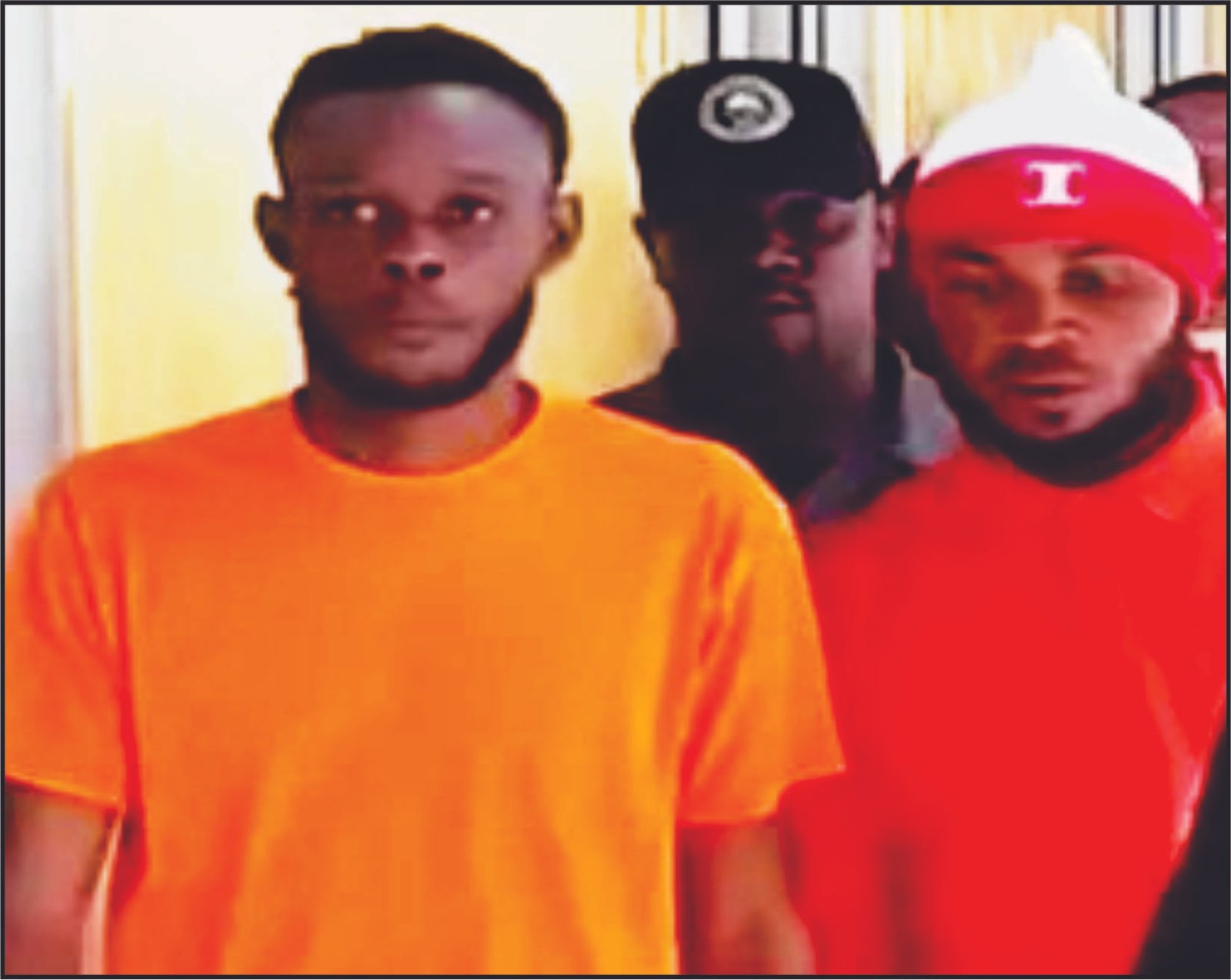
The high-profile arson case before Criminal Court “A” in Monrovia intensified this week after the court admitted a series of contested police statements into evidence, overruling fierce objections from defense lawyers who argued the documents were coerced, altered, and procedurally defective.
Defense attorneys argued that the statements submitted by prosecutors were neither written nor voluntarily provided by the accused, and that many lacked mandatory signatures from both the defendants and their lawyers.
They also alleged that the statements currently before the court differ significantly from the versions shared during the discovery process.
According to the defense team, several defendants’ names were misspelled, and some statements-purportedly from individuals such as Gabriel Fansieh and Robert W. Anderson, should not be considered at all since the individuals are not defendants in the case.
Defendants Disown Statements
A number of defendants, including John Nyantee, Jerry Pokai, and Eric Susay, denied ever making the statements attributed to them.
Nyantee maintained he was not in detention on June 7, 2025, the date prosecutors claim he provided a statement. Pokai alleged his fingerprint was forcibly taken through torture, adding that his name appears as “Pokaina” on the documents.
The defense further argued that missing signatures from the investigating officer and counsel, combined with discrepancies between the discovery materials and the statements now offered as evidence, demonstrate that the documents were unlawfully tampered with.
Quoting Articles 20 and 21 of the 1987 Constitution and the Supreme Court’s decision in Kolleh v. Republic, defense lawyers insisted that confessions extracted through coercion or violence cannot be admitted into evidence.
Medical Report Points to Torture
Defense lawyers also emphasized that medical evaluations confirm the defendants suffered torture while in custody.
However, presiding Judge Roosevelt Z. Willie countered that the defendants had legal representation during questioning and argued that any mistreatment would have been immediately challenged by their lawyers.
He also noted that the defendants told medical personnel they had not been sexually assaulted, which he suggested undermined parts of their torture claims.
Court Denies Defense Motion to Exclude Evidence
Despite assertions that the statements were involuntary and improperly authenticated, Judge Willie ruled that documents already identified and marked by a witness must be sent to the jury for the continuation of the trial.
He cited Section 25.2 of the Civil Procedure Law, which allows courts to take judicial notice of widely recognized facts, as part of his justification for admitting the statements.
The judge added that while all evidence must be accessible to defense counsel, documents already introduced cannot be rejected solely because the defense alleges they were not properly submitted earlier.
Only Statements of Defendants Will Be Considered
Judge Willie ordered that only statements belonging to defendants currently on trial will be used as evidence. Statements from individuals not facing charges were excluded.
Defense lawyers maintain that the prosecution’s evidence remains deeply compromised and violates constitutional protections against forced self-incrimination. The dispute over the statements is expected to fuel further legal battles as the closely watched arson trial moves forward.