
The Chief Investigator of the Liberia National Police (LNP) Crime Services Department, Reafeal Wilson, on Tuesday resumed testimony under cross-examination in the Capitol Building arson trial, as sharp disagreements emerged between the defense and prosecution over the integrity of the fire investigation and the reliability of audio evidence presented by the state.
During questioning by defense lawyers, Wilson was pressed on the involvement of an international fire expert said to have assisted the Liberia National Fire Service (LNFS).
When asked to identify the expert, Wilson told the court he could not remember the individual’s name, a response that drew noticeable attention in the courtroom.
The defense also sought details on the expert’s conclusions, but prosecutors objected, arguing that Wilson was not qualified to testify on expert findings and that the state intended to call the expert as a witness.
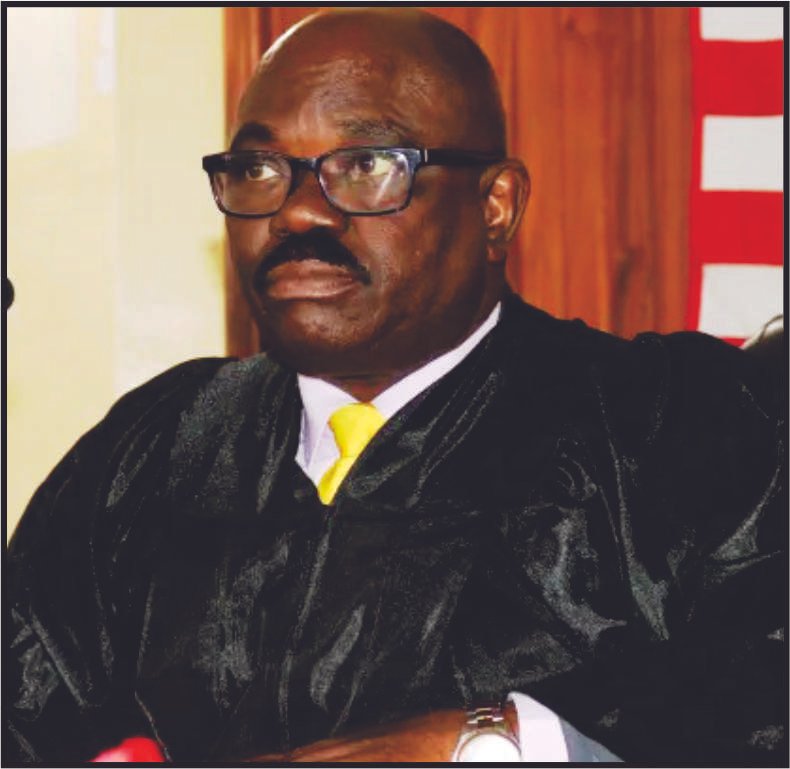
Judge Roosevelt Willie upheld the objection.
Courtroom tension escalated when the prosecution asked the court to prevent the defense from referencing an international fire expert’s report.
Defense counsel countered that the report exposed major shortcomings in the LNFS investigation, including factual errors, inconsistencies, and conclusions not supported by accepted fire science or standard investigative methods.
Sections of the report read into the record reportedly criticized the LNFS for failing to include basic information, such as the identities of responding personnel and detailed accounts of actions taken at the scene.
The report stated that given the magnitude of the fire, the investigation should have been thorough and detailed, but fell short of that expectation.
Defense lawyer Cllr. Arthur T. Johnson cited the report as concluding that the LNFS lacked the necessary training, experience, and equipment to properly collect, preserve, and store evidence. The report also faulted the Liberia National Police for inadequate documentation of investigative activities and personnel deployed at the scene.
Prosecutors objected to the line of questioning, describing it as the introduction of “unusual practices” into the trial. The defense rejected the claim, insisting that cross-examination is meant to test evidence and reveal the truth.
The proceedings later turned to an audio recording allegedly connected to defendant Dixon Seboe. Defense counsel questioned Wilson on whether he could definitively identify the voice on the recording as Seboe’s. Wilson conceded that he is not a voice expert and that the recording did not clearly identify the speaker, noting that the individual referred to himself only as “Seboe.”
Wilson testified that the National Security Agency (NSA) provided technical assistance in analyzing the audio and that investigators concluded it implicated Seboe. However, the defense highlighted the absence of a formal voice analysis report and the lack of testimony from a qualified voice identification expert.
When pressed on how he reached his conclusion, Wilson said a voice expert would later be presented to testify and explain the analysis.
Defense lawyers also questioned Wilson about his interrogation of Seboe, noting that the defendant denied involvement in the Capitol fire and claimed he only learned of the incident after waking up. Seboe reportedly told investigators that he went to the Capitol Building after other government officials were already present.
Wilson confirmed that Seboe denied any role in the incident, that his statement was given without coercion, and that these details were reflected in his investigative report.
The trial continues as the court considers mounting challenges to the credibility of the fire investigation, the handling of expert evidence, and the reliability of the audio recording relied upon by the prosecution.