


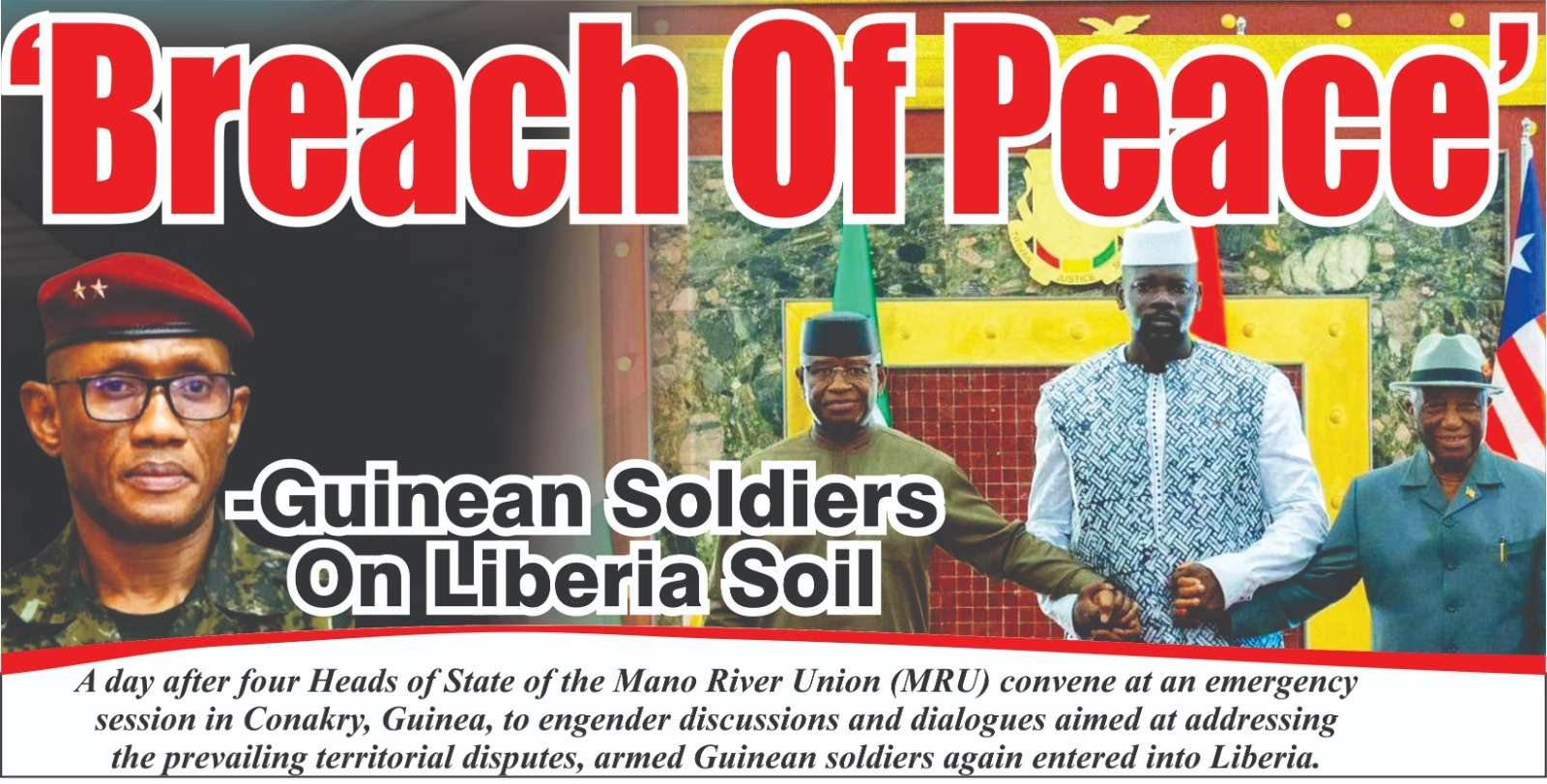
A day after four Heads of State of the Mano River Union (MRU) convene at an emergency session in Conakry, Guinea, to engender discussions and dialogues aimed at addressing the prevailing territorial disputes, armed Guinean soldiers again entered into Liberia.
What appears to be a negotiation amid prevailing territorial disputes is now ongoing at Liberia-Guinea border.
Liberian security officials were on Tuesday, March 17, 2026, engaged in tense but peaceful negotiations with armed Guinean soldiers who reportedly crossed into Liberian territory earlier in the day, raising fresh concerns over border stability in the Mano River region.
The incident is said to have occurred near the Makona River, a recognized boundary between the two countries.
According to accounts and footage from the scene, Liberian security forces maintained a calm and diplomatic posture while engaging their Guinean counterparts in dialogue aimed at de-escalating the situation. The atmosphere has remained largely peaceful, with no reports of violence as both sides continue discussions to ease tensions.
However, the situation remains fluid, with reports indicating that additional Guinean troops have continued to arrive on Liberian soil even as negotiations are ongoing. In the footage, some Guinean soldiers are heard stating that they are acting on orders from higher authorities to occupy the area and would only withdraw upon receiving direct instructions to do so.
The development comes just hours after a high-level regional summit in Conakry, where leaders reaffirmed their commitment to resolving such disputes through peaceful and diplomatic means.
His Excellency Joseph Nyuma Boakai Sr., President of the Republic of Liberia, alongside His Excellency Mamadi Doumbouya of the Republic of Guinea, and His Excellency Julius Maada Bio of the Republic of Sierra Leone, concluded consultations under the framework of the Mano River Union (MRU), agreeing to pursue a peaceful resolution to ongoing border tensions.
The meeting, described as cordial and frank, ended with the adoption of a joint communiqué emphasizing dialogue over the use of force in addressing border-related concerns. The three leaders agreed to maintain the status quo ante regarding current border positions while negotiations continue toward an amicable, acceptable, and lasting solution.
They underscored the importance of preserving longstanding trade, commerce, and cultural ties among border communities, while reaffirming their commitment to sovereignty, territorial integrity, and peaceful coexistence as guiding principles of regional relations.
The presidents also committed to strengthening collective security through joint border patrols, intelligence sharing, and improved communication among defense and security institutions. They further pledged to intensify efforts to combat terrorism, transnational organized crime, and trafficking across the region.
In addition, the leaders emphasized the need to promote economic cooperation and regional integration, particularly in trade, infrastructure, energy, environmental management, and the free movement of people and goods. They directed relevant agencies to urgently engage in dialogue to prevent and manage border incidents and to advance technical work on border clarification and demarcation.
As part of ongoing efforts to sustain peace and cooperation, the Heads of State agreed to convene another MRU summit within one month to revitalize the union and enhance regular dialogue on peace, security, and development. They also indicated plans for reciprocal working visits to strengthen fraternity and good neighborliness.
Many Liberians have stressed concerned that while the outcome of the Conakry consultations is expected to ease tensions and restore confidence among affected communities, the latest reported incursion highlights the fragility of the situation and the urgent need for swift implementation of agreed measures.
President Boakai and President Bio have since returned to their respective countries following the successful conclusion of the meeting, as regional authorities continue to monitor developments along the Liberia–Guinea border.