


By Gareyson Y. Neufville
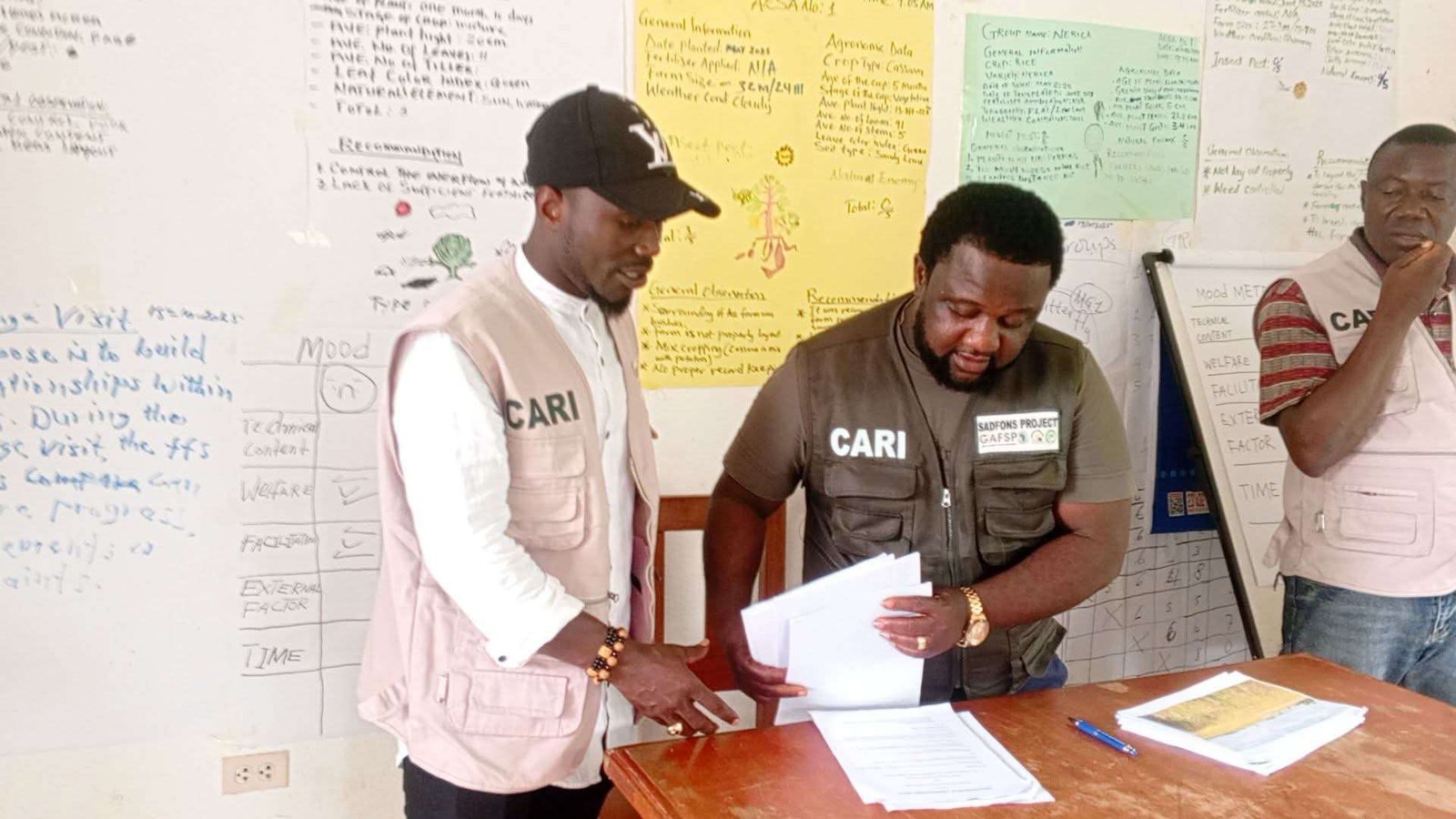
About thirty smallholder farmers from communities across Maryland County have completed a two-day intensive training in vegetable production, improved agronomic practices, and modern farm management techniques.
The capacity-building initiative—implemented under the Smallholder Agriculture Development for Food and Nutrition Security Project (SADFONS)—was facilitated by the Central Agricultural Research Institute (CARI). The program forms part of ongoing national efforts to strengthen food systems, boost rural incomes, and enhance household nutrition across Liberia.
Over the two-day period, participants were introduced to a range of research-based farming methods intended to increase crop productivity and promote sustainable agriculture. Training sessions covered soil testing and preparation, proper seed selection, nursery establishment and management, integrated pest and disease control, irrigation practices, and post-harvest handling aimed at reducing losses and improving produce quality.
Farmers also engaged in hands-on demonstrations covering compost preparation, climate-smart agriculture, and low-cost soil fertility restoration techniques—topics they described as essential to overcoming long-standing challenges within their communities.
According to CARI facilitator Mr. Joseph Woah, SADFONS aims to address rural poverty by equipping farmers with the technical skills needed to increase sustainable food production while improving nutrition at the household level. He noted that the project places particular emphasis on high-value vegetable crops such as pepper, bitterball, cabbage, and okra, which provide farmers with quick income and help diversify local diets.
Participants expressed gratitude for what many called timely and transformative training. Several farmers said the sessions offered practical solutions to persistent issues including pest infestation, declining soil fertility, and limited access to expert guidance.
“We have learned new methods that will help us improve our farms,” one participant said. “We are going back to apply these techniques because they will help us grow more food and earn more for our families.”
Speaking at the closing ceremony, Maryland County Agricultural Coordinator Mr. Peter Clark praised CARI for delivering a well-targeted intervention. He said the training comes at a time when farmers are increasingly eager for practical, science-based knowledge to strengthen their production activities.
Mr. Clark added that the involvement of seasoned agricultural specialists provided farmers with valuable firsthand guidance, helping them better organize their groups, adopt improved management practices, and increase productivity countywide. He pledged his office’s continued collaboration with CARI and other development partners to ensure that the goals of smallholder farmers in Maryland County are fully realized.
The completion of the training marks another significant step toward improving agricultural resilience, increasing food availability, and enhancing the livelihoods of smallholder farmers across Liberia’s southeastern region.