
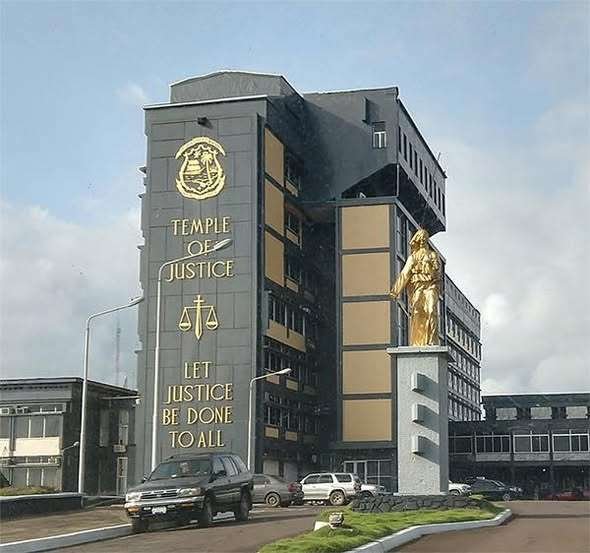
Jury selection in the high-stakes Capitol Building arson trial involving former House Speaker J. Fonati Koffa and four co-defendants stalled again on Wednesday, November 19, after several summoned jurors failed to appear.
Their absence prompted the court to issue contempt citations and order two repeat absentees jailed at the Monrovia Central Prison.
Despite the setbacks, four new jurors were seated on Wednesday, bringing the total to 11, following the selection of seven the previous day.
The court must empanel 15 jurors—12 regular and three alternates—before the trial can proceed.
Progress has been hampered not only by absenteeism but by frequent dismissals from both sides.
According to court records, the defense exercised six peremptory challenges, while prosecutors removed several jurors who disclosed personal or professional ties to lawyers in the case or familiarity with some defendants, including Representative Dixon Seboe, whom multiple prospects said they knew from his New Kru Town community.
Judge Roosevelt Z. Willie revealed that five prospective jurors were absent on Wednesday—two of whom have not appeared since Tuesday, November 18. Three additional jurors missed Wednesday’s session without notice.
“With the jury panel still incomplete,” Judge Willie announced, “all prospective jurors will be assembled on Thursday, November 20, 2025, to ensure completion of the panel.”
He ordered the three Wednesday absentees to appear and explain why they should not be held in contempt, while the two jurors who missed both days were sentenced to 14 days’ detention for contempt of court.
The judge’s firm response reflects the mounting strain that the case has placed on Liberia’s jury administration system.
A Trial Under Intense Public Scrutiny
The case arises from the December 2024 arson attack on the Capitol Building, which destroyed key legislative offices, document archives, and vital administrative equipment.
The incident ignited fierce political debate amid allegations that the fire was intended to obstruct legislative oversight during a sensitive period.
A Montserrado County Grand Jury later indicted Koffa and four others on charges including arson, criminal conspiracy, criminal mischief, and economic sabotage. Prosecutors claim the former Speaker either participated in or enabled the attack, a claim his supporters dismiss as politically charged and unsupported by evidence.
Tensions in recent hearings have been high.
Defense attorneys have filed multiple challenges contesting the legality of the indictment and questioning the impartiality of the prosecution team.
The government insists that the rule of law applies to all—including high-ranking political figures.
Judge Willie has repeatedly stressed that the proceedings will remain free of political influence. Still, the slow and contentious juror selection process has heightened concerns about the judiciary’s ability to handle a case of such magnitude fairly and efficiently.
A Test of Judicial Integrity
The wave of absences and dismissals—often tied to personal relationships with defendants or legal familiarity—highlights longstanding flaws in Liberia’s jury vetting system. In a case widely viewed through a political lens, the justice system’s credibility is under equal scrutiny.
As Criminal Court “A” resumes jury selection on Thursday, November 20, it faces a defining challenge: to ensure that proceedings in the Capitol Building arson case move forward with transparency, impartiality, and unwavering adherence to the rule of law.