

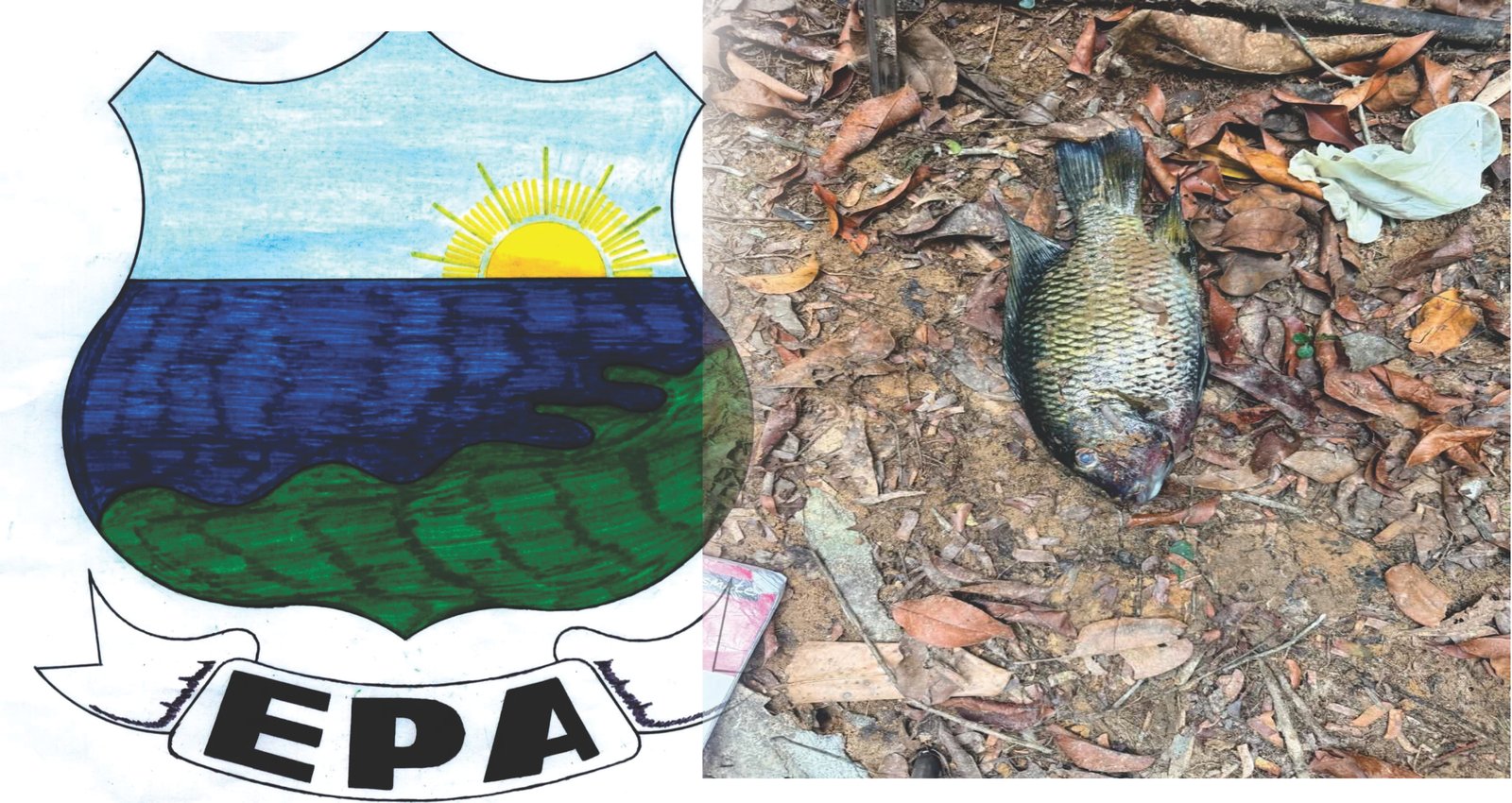
Monrovia, Liberia — The Environmental Protection Agency of Liberia has launched an urgent investigation following reports of dead fish discovered at Marvoe Creek in Grand Cape Mount County.
According to the Agency, management of Bea Mountain Mining Corporation (BMMC) notified authorities on Tuesday that technicians conducting routine water sampling observed several dead fish at a monitoring site along Marvoe Creek, a tributary of the Mafa River.
In response, the EPA immediately dispatched a team of environmental technicians and inspectors to conduct an on-site assessment of the affected area.
The team is currently carrying out a comprehensive investigation, including visual inspections, the collection of water, sediment, and fish samples for laboratory analysis, and in-situ measurement of key water quality parameters. EPA officials are also engaging with relevant stakeholders to gather preliminary information about the incident.
The Agency said the primary objective of the investigation is to determine the cause and extent of the reported fish mortality and to assess any potential environmental or public health risks.
As a precautionary measure, the EPA has strongly advised residents to refrain from harvesting, handling, selling, or consuming any dead fish or other aquatic species from Marvoe Creek and nearby water bodies until further notice.
“This precaution is necessary to safeguard public health while investigations are ongoing,” the Agency stated.
The EPA emphasized that it is treating the situation with urgency and in accordance with Liberia’s environmental protection laws and established monitoring protocols. A detailed technical report will be issued upon completion of field investigations and laboratory analyses.
Authorities assured the public that updates will be provided as more information becomes available, including any regulatory actions deemed necessary.
The EPA reaffirmed its commitment to protecting Liberia’s water resources, aquatic ecosystems, and the health and livelihoods of communities potentially affected by the incident.