


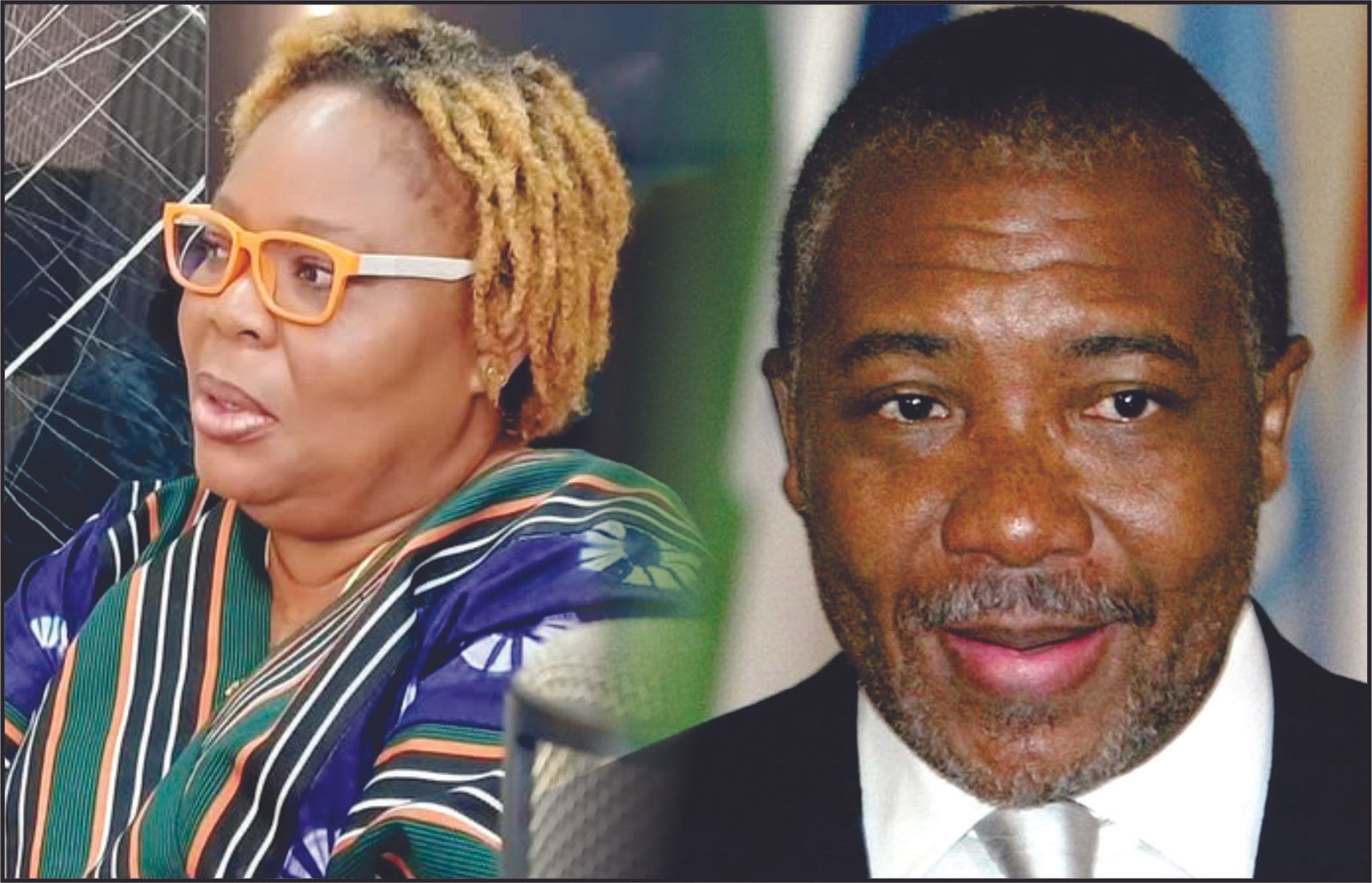
Monrovia — Nobel Peace Prize laureate Leymah Gbowee has described the administration of former Liberian president Charles Taylor as a “gangster regime,” saying the period was marked by authoritarian rule, intimidation and the absence of a functioning system of governance.
Speaking during a live broadcast on Truth 96.1 FM in Monrovia, Gbowee made the remarks while reflecting on Liberia’s past and contrasting it with the country’s current level of freedom of expression.
“O’Neal, what do you call a system? The Taylor regime was a gangster regime,” Gbowee said. She rejected suggestions that the period offered order or stability, arguing instead that power was exercised through fear rather than institutions. “There was no system,” she said. “It was a gangster regime.”
Gbowee, who rose to international prominence for her role in Liberia’s women-led peace movement, recalled the climate of intimidation that prevailed at the time, particularly at checkpoints and during encounters with security forces. She said ordinary actions could provoke violent responses, underscoring how dangerous daily life was for civilians.
She also emphasized that public dissent was virtually impossible. According to Gbowee, protesting against the government during the Taylor era amounted to open defiance of both the president and the state. “We lived under an authoritarian regime,” she said, warning younger Liberians not to underestimate the severity of that period.
In contrasting the past with the present, Gbowee said one of Liberia’s major gains since the end of the war has been freedom of expression. She noted that her ability to speak openly on radio today without fear of retaliation reflects progress made since the transitional period following Taylor’s departure, beginning with the interim government and continuing through subsequent administrations.
“The mere fact that I can sit here and express my thoughts and not fear being attacked says a lot,” she said, urging Liberians not to take such freedoms for granted. Drawing on her international experience, Gbowee added that even in some developed countries, criticizing a sitting president publicly can carry serious consequences.
Beyond politics, Gbowee highlighted what she described as enduring strengths in Liberian society, including a strong sense of community and generosity despite widespread poverty. She also criticized the pursuit of power and wealth by political elites, arguing that history has shown such gains to be fleeting.
Referencing the current state of properties once associated with powerful figures, Gbowee said material wealth accumulated through abuse of power does not last. She urged leaders to act with integrity and compassion, particularly toward the poor, noting that exploitation ultimately leads to ruin.
Gbowee’s comments have renewed public discussion about Liberia’s past and the importance of safeguarding democratic freedoms, as the country continues to grapple with governance challenges more than two decades after the end of its civil war.