


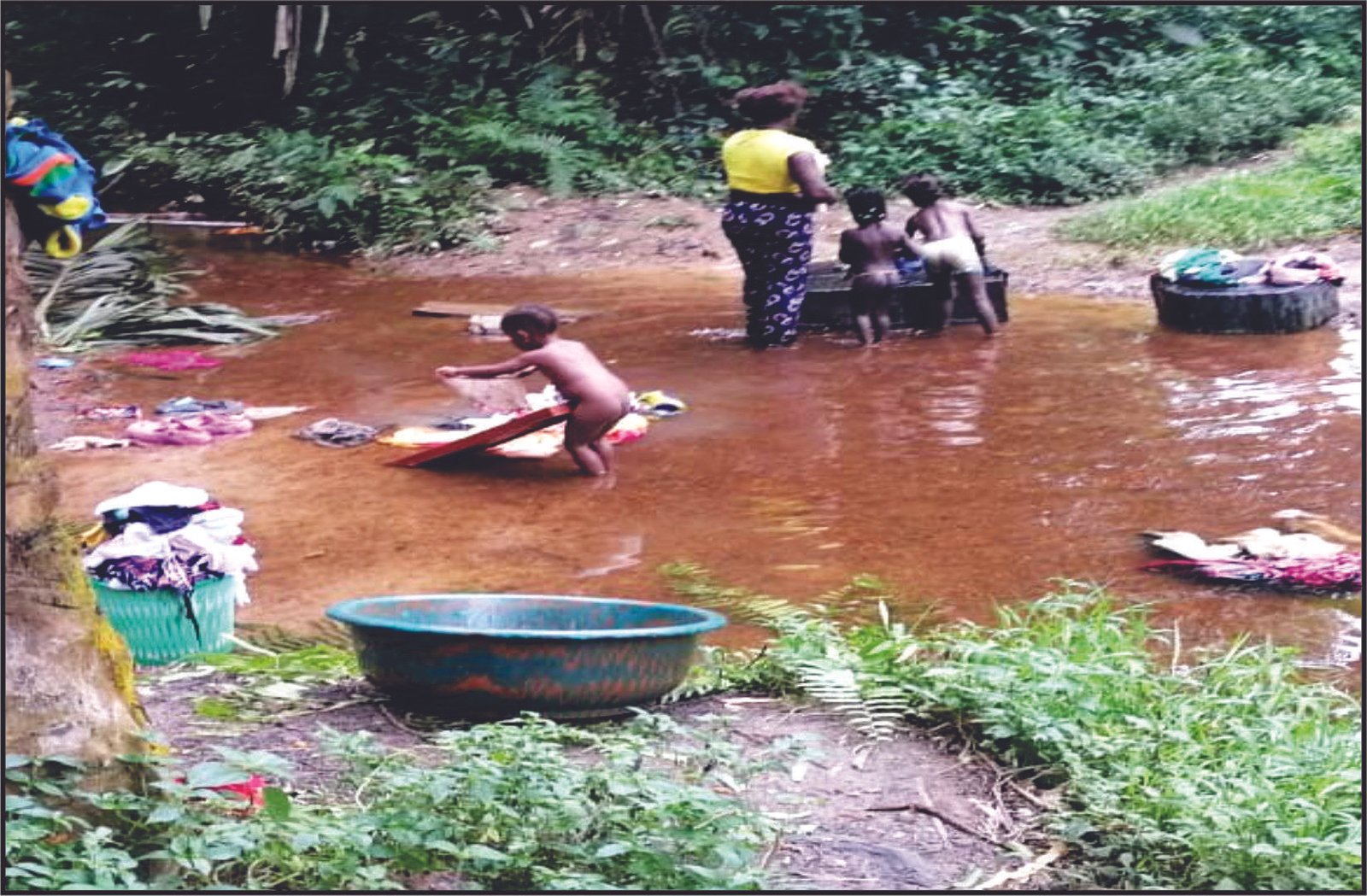
GORZOHN TOWN — Residents of Gorzohn Town in Rivercess County are grappling with a deepening public health crisis as they continue to rely on a polluted creek for drinking and household use, despite the community earning steady income from forest-related activities.
Three hand pumps constructed by non-governmental organizations stand visibly across the town, but all have been nonfunctional for more than one year and eight months. With no alternative source of safe water, residents say they are left with no choice but to drink and bathe from a creek running through the center of the community.
Community elder Mechach Toe described the situation as dire.
“We don’t have anything right now. For one year, eight months all our pumps have been damaged. We are drinking and washing from a creek almost in the center of the town,” Toe told Verity News.
According to residents, several attempts were made to repair the hand pumps, but the efforts reportedly worsened the damage. Eventually, the community abandoned the repairs altogether.
At the same time, a town-appointed committee continues to collect tolls from plank dealers operating in the Gorzohn Community Forest. Toe disclosed that in previous years, the community spent more than L$15,000 repairing two of the three pumps, but both broke down again within the same year.
Under the current system, the committee charges L$20 for every piece of plank harvested from the forest. A single truck reportedly carries between 400 and 500 planks, generating thousands of Liberian dollars per trip for the community.
Despite this consistent flow of revenue, residents say little has been done to address the water crisis. The impact on public health is already evident. Parents report frequent cases of diarrhea among children, forcing families to seek treatment at the Neezuin Town Clinic.
Community members are now questioning why proceeds from forest resources cannot be redirected toward restoring access to clean and safe drinking water.
As Gorzohn continues to benefit financially from its forest, its residents remain exposed to preventable illness, depending on unsafe creek water for survival — a contradiction many fear is steadily pushing the town toward avoidable disease and suffering.