

Liberia has become the first country in West Africa—and the third in Africa after Kenya and Rwanda—to sign a groundbreaking health cooperation agreement with the United States, marking a major milestone in the nations’ long-standing diplomatic and development partnership.
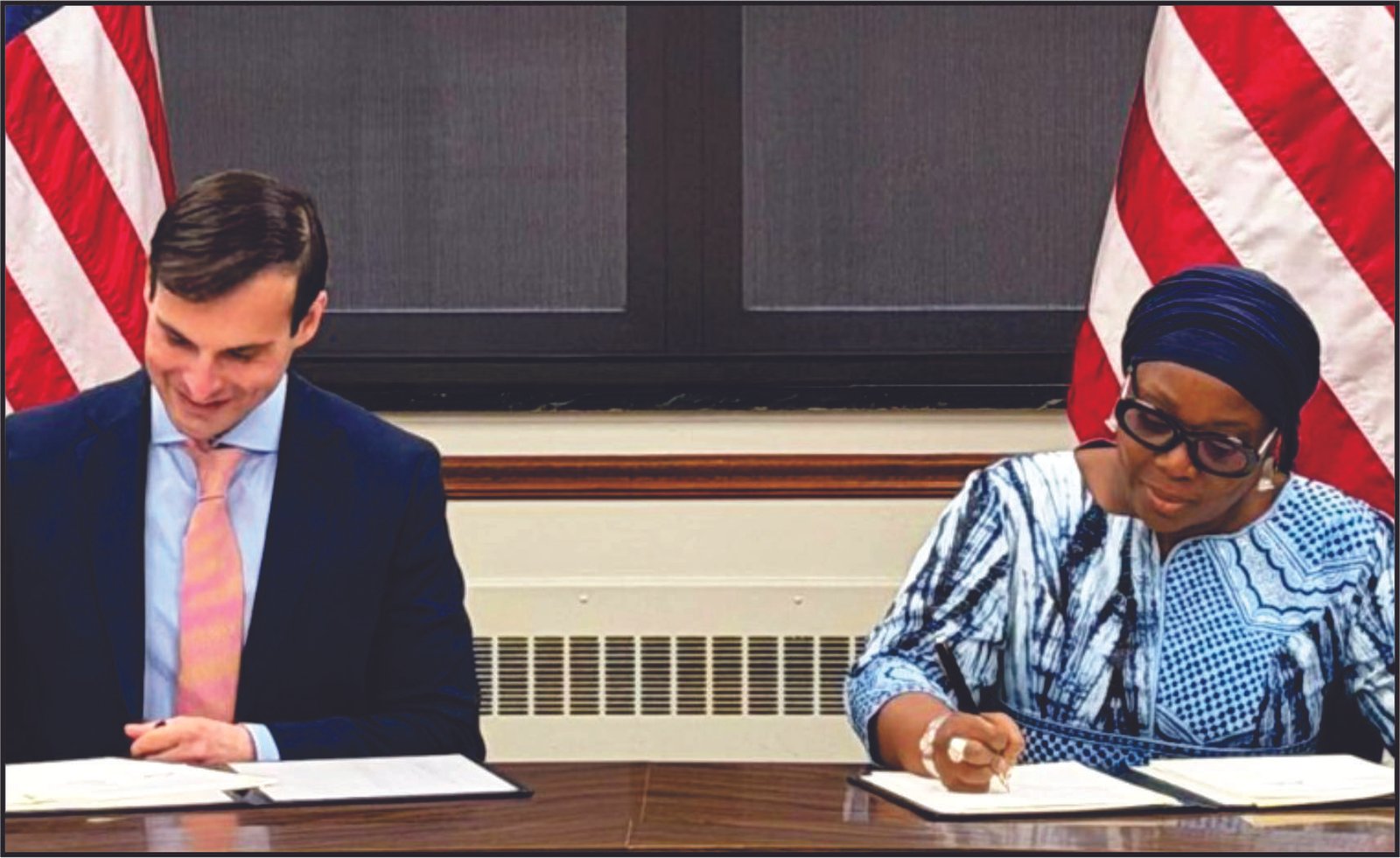
The Government of Liberia, through the Ministry of Foreign Affairs, and the U.S. Department of State formalized the Memorandum of Understanding (MOU) during a signing ceremony in Washington, D.C. Foreign Minister Sara Beysolow Nyanti signed on behalf of Liberia, while Jeremy P. Lewin, U.S. Under Secretary for Foreign Assistance, Humanitarian Affairs, and Religious Freedom, represented the United States.
Under the MOU, the U.S. Government commits more than US$124 million in planned assistance over the next five years to reinforce Liberia’s public health systems.
The initiative focuses on strengthening disease surveillance, improving rapid outbreak response capabilities, expanding national and regional laboratory capacity, and investing in a stronger frontline health workforce.
The funding will also support the modernization of medical supply chains and the development of integrated digital health information systems, while further bolstering maternal, child, and infectious disease services.
Speaking at the ceremony, Under Secretary Lewin praised Liberia’s leadership and commitment to health security, noting that the agreement marks a deepening of bilateral ties and symbolizes new levels of cooperation in global health.
He highlighted Liberia’s pioneering steps in the region, calling the MOU an example of innovative government-to-government collaboration.
Foreign Minister Nyanti expressed Liberia’s appreciation for the partnership, extending thanks on behalf of President Joseph Nyuma Boakai, Sr.
She also recognized the Ministry of Health, led by Dr. Louise Kpoto, for its technical work in shaping the agreement.
The five-year pact is expected to provide a significant boost to Liberia’s long-term efforts to build a resilient health sector, improve emergency response readiness, and safeguard public health nationwide.