

Liberia and the United Nations have formalized a new five-year Cooperation Framework valued at approximately US$883 million, setting the course for development assistance aimed at promoting inclusive growth, institutional strengthening, and long-term resilience from 2026 to 2030.
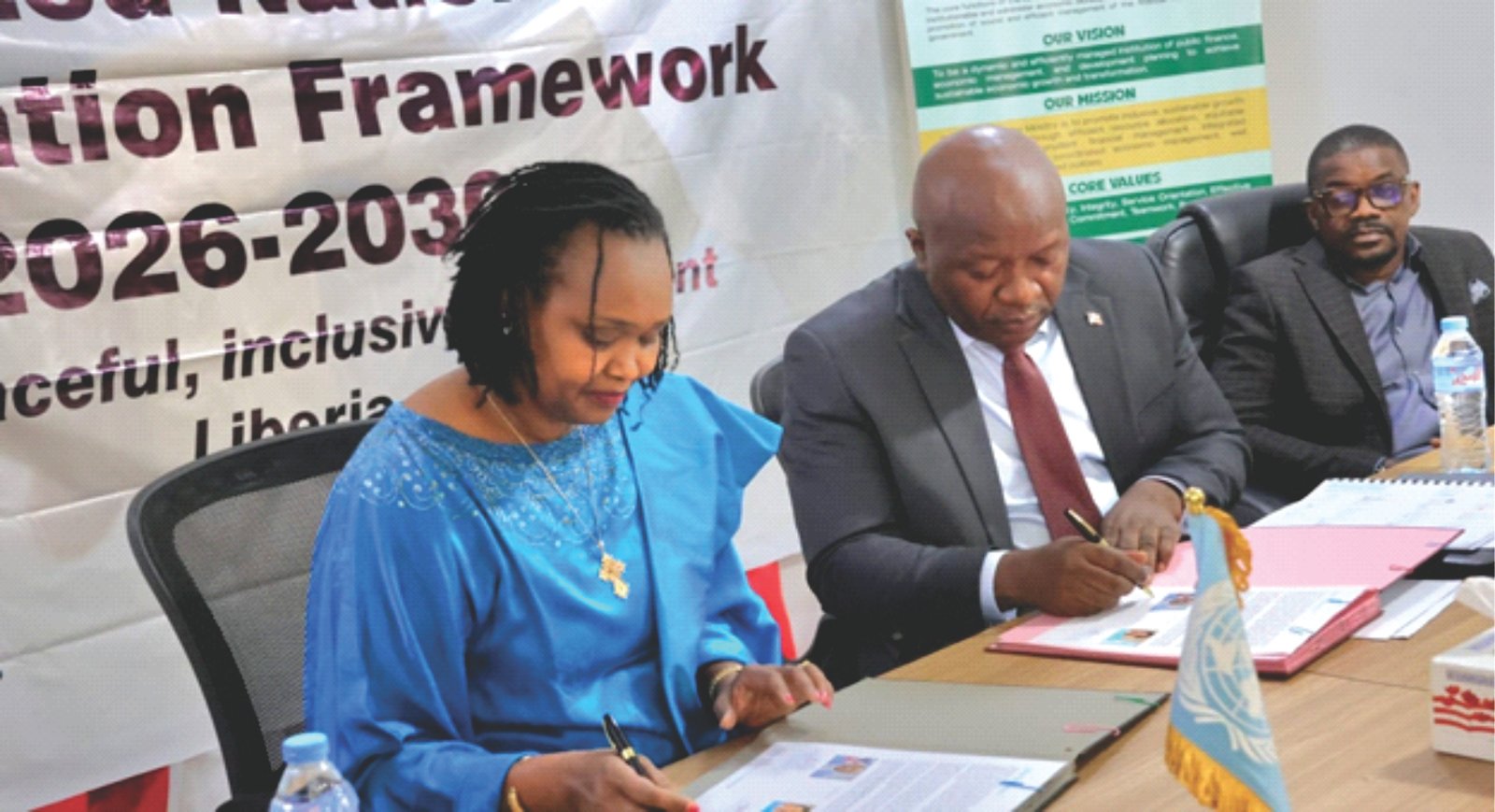
The agreement was signed Tuesday at the Ministry of Finance and Development Planning, bringing together senior government officials, members of the UN Country Team, and development partners, and reaffirming the longstanding partnership between Liberia and the UN system.
Finance and Development Planning Minister Augustine Kpehe Ngafuan described the UN as a dependable partner during a period marked by global economic uncertainty and shifting development financing.
“This has been a difficult year, with major changes in the development architecture and strong headwinds for Liberia,” Minister Ngafuan said. “When some partners pulled back, the United Nations stepped forward. That is how you recognize true partnerships.”
He noted that while the framework reflects significant financial commitments, its success will ultimately depend on effective implementation and measurable results.
The US$883 million resource envelope includes funds already committed, with additional resources expected to be mobilized over the implementation period.
“A good building begins with a solid plan,” Ngafuan said. “But planning alone is not enough. This phase is about performance, execution, and delivering results that our people can see and feel.”
Earlier, United Nations Resident Coordinator Ms. Christine Umutoni said the signing marks a critical transition as the current Cooperation Framework concludes in 2025 and the new one comes into force in January 2026.
“This framework reflects our shared commitment to a peaceful, inclusive, and prosperous Liberia,” she said, “where children, youth, women, and the most vulnerable are empowered to reach their full potential.”
Ms. Umutoni emphasized that the framework is grounded in national ownership and mutual accountability, aligning UN support with Liberia’s ARREST Agenda for Inclusive Development, Vision 2030, Agenda 2063, and the Sustainable Development Goals.
She explained that the framework focuses on three strategic pillars: human capital development; good governance and the rule of law; and sustainable economic transformation.
These priorities aim to expand access to quality social services, strengthen public institutions, and promote inclusive and climate-resilient growth.
The Cooperation Framework also introduces flagship initiatives designed to accelerate impact, including education and skills development for employment, empowerment of adolescent girls, digital governance reforms, and climate-smart agriculture and resilient food systems.
Implementation will be guided by a high-level steering committee co-chaired by the Minister of Finance and the UN Resident Coordinator, with support from technical working groups to ensure coordination and accountability.
Acknowledging a tightening global aid environment, both parties said the framework places increased emphasis on innovative financing, domestic resource mobilization, and stronger partnerships to sustain development gains.
The Government of Liberia and the United Nations pledged to engage closely with civil society, local governments, the private sector, the media, and local communities to ensure the framework translates into tangible improvements in the lives of Liberians.
“As we sign this framework,” Ms. Umutoni said, “the United Nations stands ready to walk this journey with Liberia and turn shared commitments into real progress.”
The new Cooperation Framework will guide UN-supported development efforts in Liberia from 2026 through 2030, deepening collaboration and accelerating progress toward national priorities.