


By: Archie Boan
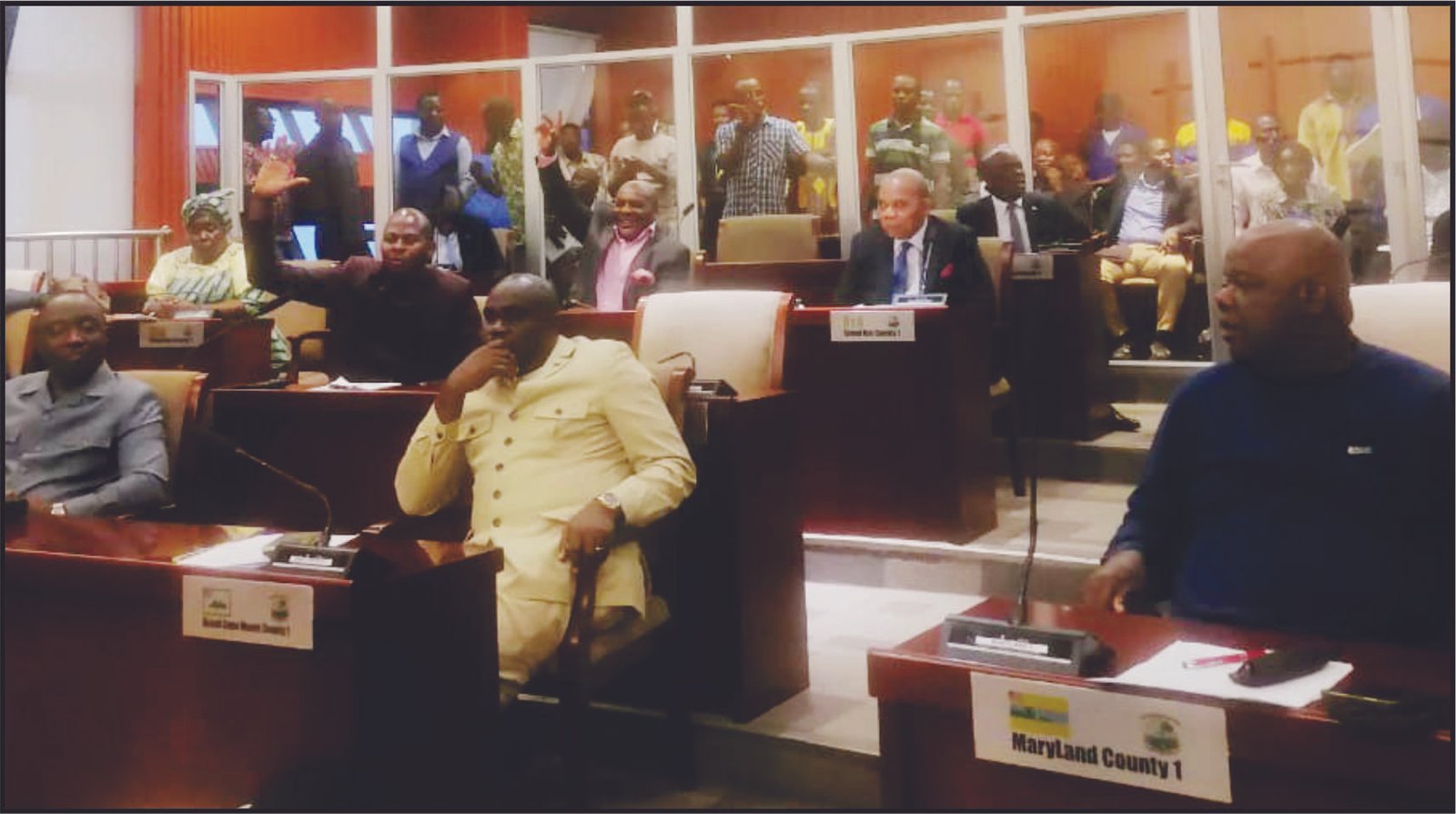
The Liberian Senate has concurred with the 55th Legislature of the House of Representatives on the passage of multiple offshore oil block agreements involving international energy giants TotalEnergies and Oranto Petroleum, a decision taken amid sharp divisions and concerns over limited debate.
In Thursday’s vote, the Senate approved the TotalEnergies production sharing contracts by a narrow margin of 21 votes, while the Oranto Petroleum agreements secured 20 votes, underscoring the fragile consensus surrounding the deals.
Plenary acted on a consolidated report from the Joint Committee on Hydrocarbon, Energy & Environment; Judiciary, Human Rights, Claims & Petitions; Ways, Means, Finance & Budget; and Concession & Investment, covering the House’s Engrossed Bills Nos. 10 through 19.
The approved instruments include production sharing contracts between the Republic of Liberia and TotalEnergies EP Liberia LLC for Offshore Blocks LB-06, LB-17, LB-29, and LB-11, as well as agreements between the government and Oranto Petroleum Liberia Limited for Offshore Blocks LB-24, LB-22, LB-15, and LB-16.
Among senators voting in favor of both the TotalEnergies and Oranto Petroleum agreements were Edwin Snowe, Darius Dillon, Zoe Pennue, and Botoe Kanneh Bartekwa, among others. However, cracks within the pro-deal bloc were evident, as Senators Nathaniel McGill and Amara Konneh supported the TotalEnergies contracts but voted against concurring with the Oranto Petroleum agreements.
Opposition came from Senator Glebo Brown of Maryland County; Gbehzohngar Findley of Grand Bassa County; and Senators Wellington Geevon Smith and Bill Twehway of River Cess County, all of whom voted against the oil block deals, citing concerns over transparency, environmental risks, and long-term national benefits.
The passage followed weeks of intense scrutiny and internal consultations, during which senators clashed over whether the agreements should undergo full debate on the Senate floor. Several lawmakers argued that the scale and potential impact of the contracts demanded comprehensive deliberation. Others countered that extended debate would delay a decision on a matter already examined at committee level.
Senator Albert Chie objected strongly to reopening debate, noting that senators had earlier agreed, prior to the session, that the oil block agreements would not be debated on the floor. He said the decision was based on time constraints and the belief that the chamber could not adequately address the complex issues within the remaining sitting period.
Behind the scenes, high-level consultations were held involving Vice President Jeremiah Koung, Senator Albert Chie, and Senate Pro Tempore Nyonblee Karnga Lawrence in a bid to forge consensus.
Those discussions ultimately led to an agreement that senators would register their positions solely through their votes.
With concurrence now secured, the controversial oil block agreements advance to the Executive for onward actions.