


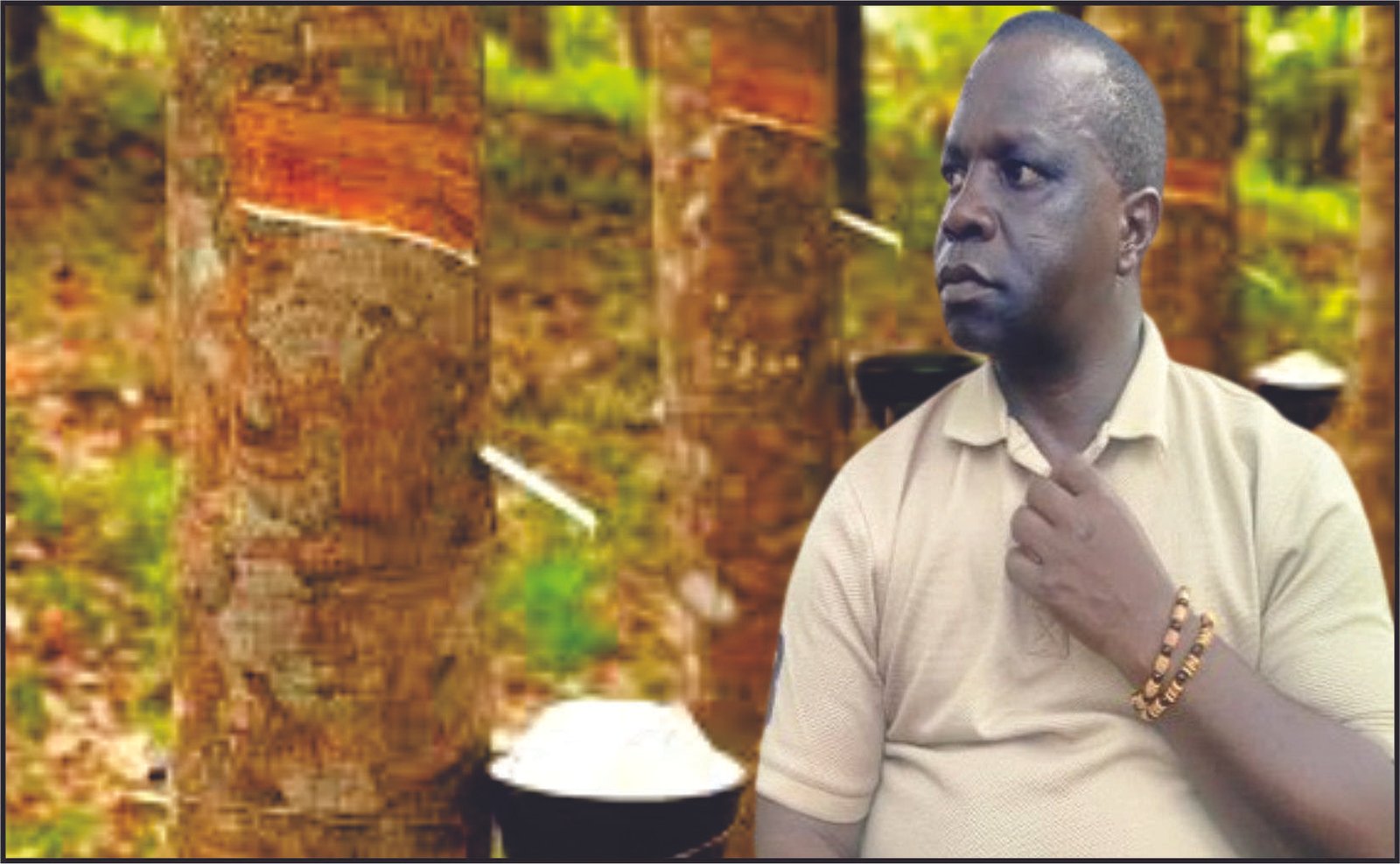
The National Rubber Brokers and Farmers Union of Liberia (NARBFUL) has petitioned the 55th National Legislature, warning that continued enforcement of restrictive government policies could collapse the livelihoods of more than 300,000 smallholder rubber farmers, brokers, and exporters nationwide.
In a strongly worded petition submitted following an emergency stakeholders’ meeting in Gbarnga, NARBFUL accused key state institutions and industry bodies of marginalizing smallholder rubber actors through what it described as “draconic, unrealistic, and unconstitutional” measures that favor large rubber buying companies at the expense of Liberian-owned enterprises.
Sector under Mounting Pressure
NARBFUL stated that the natural rubber industry remains a cornerstone of Liberia’s economy, contributing significantly to national revenue and employment.
The Union cited figures showing that rubber exports generated approximately US$195 million in 2023, representing about 115,000 metric tons, making Liberia one of the world’s leading rubber exporters.
Despite these contributions, the Union warned that the sector has been in steady decline due to persistent executive orders, limited market competition, and weak institutional oversight.
According to the petition, these conditions have forced many smallholder farmers to abandon rubber production altogether, while others have resorted to cutting down rubber trees for charcoal, a trend NARBFUL says threatens both environmental sustainability and national economic stability.
Executive Order #151 Sparks Outcry
At the center of the dispute is Executive Order #151, which imposes a surcharge of US$150 per metric ton and US$3,000 per 20-foot container on the export of unprocessed rubber.
NARBFUL argues that the policy has placed unbearable financial pressure on smallholder farmers and local entrepreneurs who rely on rubber exports for survival.
The Union is urging the government to repeal or amend the order and instead grant a three-year grace period to allow Liberian investors to establish domestic rubber processing facilities, in line with the government’s industrialization agenda.
Calls for Audit, Reforms, and Representation
The petition also calls for the review or repeal of the Act establishing the Rubber Development Fund Incorporated (RDFI), accusing the institution of operating as a private entity rather than serving as a technical arm of the Ministry of Agriculture.
NARBFUL further demanded an immediate stay order on the collection of US$3.17 per metric ton from smallholder rubber actors until RDFI undergoes a full audit by the General Auditing Commission.
Similar concerns were raised against the Rubber Planters Association of Liberia (RPAL), which NARBFUL claims has failed to comply with legal requirements governing rubber sector associations.
The Union is seeking legislative action to suspend RPAL’s US$2.00 per metric ton levy pending an audit of funds collected over the past 25 years.
Warning of Non-Compliance
NARBFUL warned that failure by the Legislature to act on its recommendations could prompt the Union to advise its members to discontinue payment of all RDFI and RPAL fees.
The Union is also demanding representation on the Rubber Pricing Board, which it claims is discriminatory and unresponsive to the realities facing smallholder producers.
In an escalation of its demands, NARBFUL called for the resignation of the Minister of Agriculture and the Chairman of RDFI, citing alleged incompetence, apathy, and dereliction of duty.
Legislature Yet to Respond
The petition was approved and signed by NARBFUL’s Board of Directors and authenticated by a notarial certificate. As of press time, the 55th National Legislature, the Ministry of Agriculture, RDFI, and RPAL had not issued official responses to the allegations.
NARBFUL reaffirmed its position that smallholder rubber farmers, who reportedly produce 65–70 percent of Liberia’s natural rubber-must, be included in decision-making processes affecting the sector.
The Union’s motto, “Rubber, the Unseasonal Income Earner,” was echoed throughout the petition as a reminder of the crop’s role in sustaining thousands of rural Liberian families.