

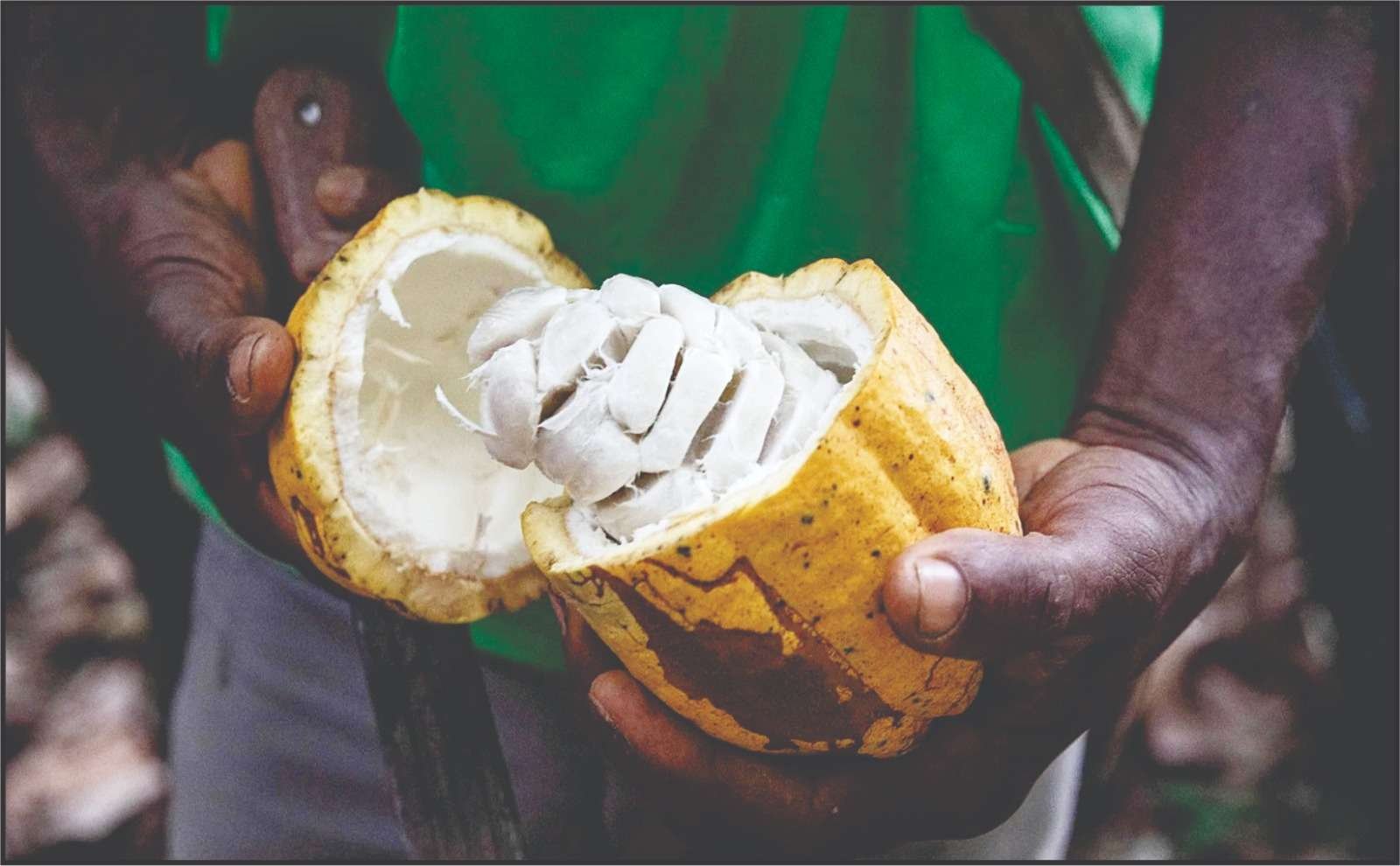
Cocoa production is taking a heavy toll on Liberia’s forests, according to a new investigation that warns of widespread environmental damage and calls on Europe to act.
A report by the Initiatives for Community Development and Forest (IDEF) Conservation Association, an Ivorian non-profit organization, documents extensive deforestation linked to the expansion of cocoa plantations in Liberia. The findings come as the European Union, the world’s largest importer of cocoa, faces criticism for delays in enforcing new rules designed to curb forest loss.
Cocoa farming often involves clearing tropical forests to plant new trees, a practice that has already caused severe environmental degradation in neighboring Ivory Coast, the world’s largest exporter of cacao beans. Decades of intensive farming, deforestation and the use of chemical fertilizers have weakened soils there, prompting producers to seek new land across the border in Liberia.
Although deforestation is illegal under Liberian law, the report suggests the ban has done little to deter plantation expansion. Since 2020, more than 38,000 people have reportedly been registered in Liberia’s Grand Gedeh region, which borders Ivory Coast, as cocoa production has surged.
Data from Global Forest Watch show that Liberia lost 162,000 hectares of natural forest in 2024 alone.
IDEF describes the scale of forest loss as “massive”. In Grand Gedeh, investigators estimate that nearly 500,000 hectares of primary forest have been cleared and converted into cocoa plantations since 2020.
“The scale of deforestation is colossal,” said IDEF executive director Bakary Traoré in a statement. “In the localities we visited, families had handed over forest plots ranging from 50 to 300 hectares, compared with just eight or 10 hectares noted in our previous report last year.”
Beyond environmental damage, the report also raises concerns about social abuses linked to the cocoa boom. Investigators documented growing cases of human trafficking, exploitation and child labour, with young people being brought in to clear land and work on plantations.
Campaigners argue that Europe has a critical role to play. The EU is not only the largest importer of cocoa but also a major producer of finished chocolate products.
In 2023, the bloc adopted the EU Deforestation Regulation (EUDR), which bans the sale in Europe of products linked to deforestation, including cocoa, coffee, palm oil, rubber, soy, beef and timber
In principle, the law could significantly reduce cocoa-driven forest loss by blocking exports produced on deforested land.
However, implementation of the regulation has been postponed until December 2026, a delay the report’s authors describe as “extremely worrying”.
“Even though Europe could play a key role in saving these forests and supporting local communities through its deforestation regulations, it is failing to do so because of constant procrastination,” Traoré said in the release.