


By G. Watson Richards
Judicial Reporter, Verity News
Testimony in the ongoing 6.2 million economic sabotage case involving former Finance Minister Samuel Tweah and other top former officials intensified on Tuesday as a prosecution witness alleged that more than US$500,000 and over L$1 billion were transferred from government accounts without proper authorization and remain unaccounted for.
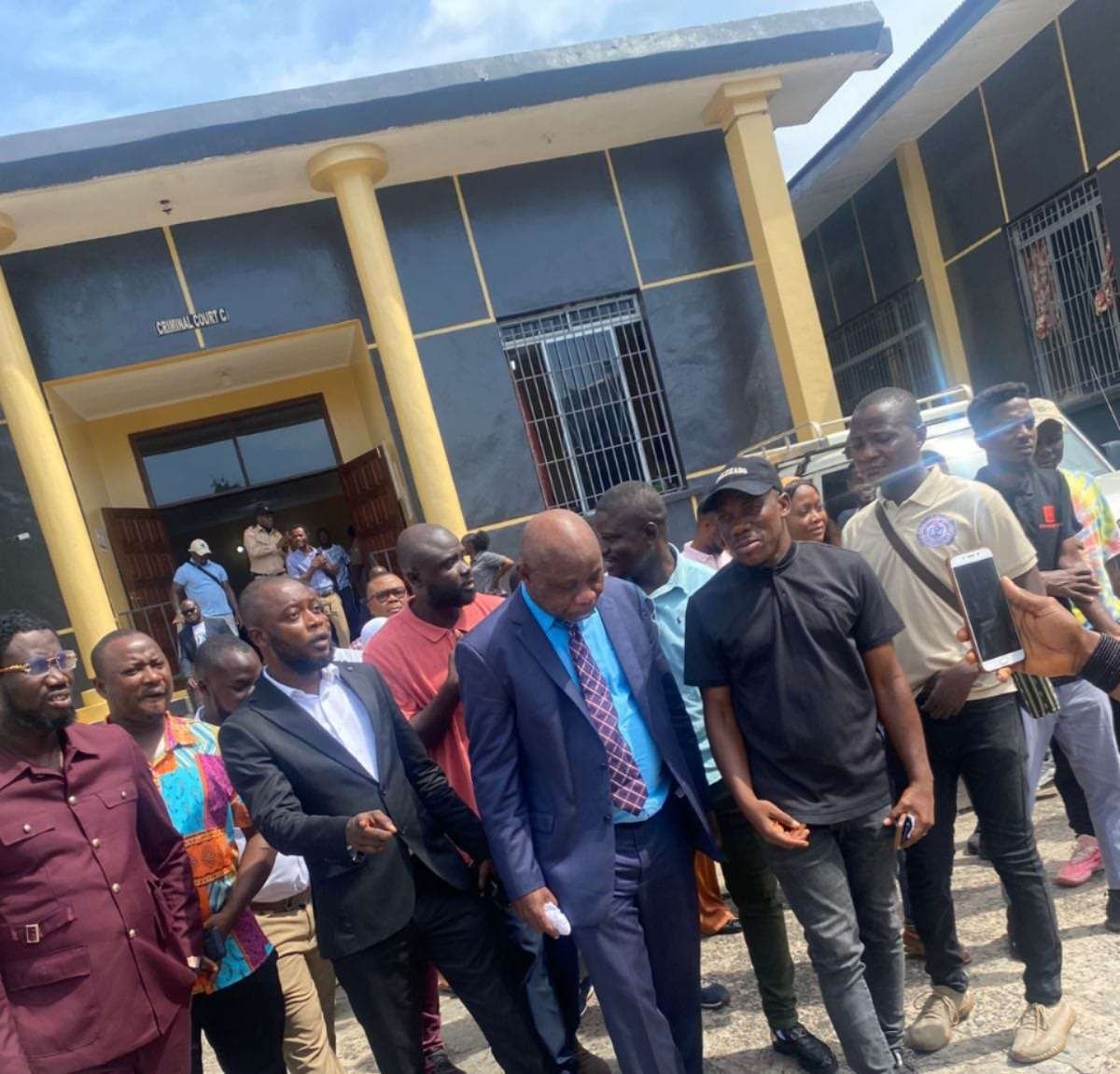
Under cross-examination in Criminal Court ‘C’ at the Temple of Justice, Liberia Anti-Corruption Commission (LACC) lead investigator Baba Mohammed Boika told the court that the funds, purportedly intended to support “joint security operations” during the 2023 elections, were neither approved by the National Legislature nor processed through established national security channels.
“The money was never appropriated or deposited into any official National Security Council account,” he said, adding that investigators found no evidence the funds reached recognized security institutions.
The case involves several former senior officials, including ex-Finance Minister Samuel D. Tweh, Cllr. Nyanti Tuan, former acting Justice Minister, Stanley S. Ford of the Financial Intelligence Agency (FIA), former Comptroller D. Moses P. Cooper, and former National Security Advisor Jefferson Karmoh.
They facing charges ranging from economic sabotage and theft of public funds to money laundering and criminal conspiracy.
According to the prosecution, the FIA, traditionally outside the joint security framework, was used in 2023 as a conduit for transferring funds from government accounts.
Boika described a series of transactions in September of that year, during which money was allegedly moved from operational and health sector accounts into the FIA without legislative approval.
He testified that the funds were later withdrawn by FIA officials, who claimed they were distributed to security personnel but failed to identify recipients or provide documentation.
“There is no evidence showing who received the money,” he told the court.
Defense lawyers argued that national security expenditures are often classified and subject to special audit procedures, questioning why no formal audit preceded the investigation.
In response, prosecution witness maintained that anti-corruption laws allow investigations based on probable cause, including information derived from media reports.
Tuesday proceedings were marked by repeated objections from both sides, with the presiding judge Osuman F. Feikai reminding counselors that determining the weight and credibility of the evidence rests with the jury.
A central issue in the trial is whether the transactions constitute money laundering.
Prosecutors argue that the movement and withdrawal of funds without documentation meet the legal threshold, while the defense maintains there is no proof of concealment or personal gain.
The trial adjourned late Tuesday and is scheduled to resume on Thursday, April 2, 2026.