


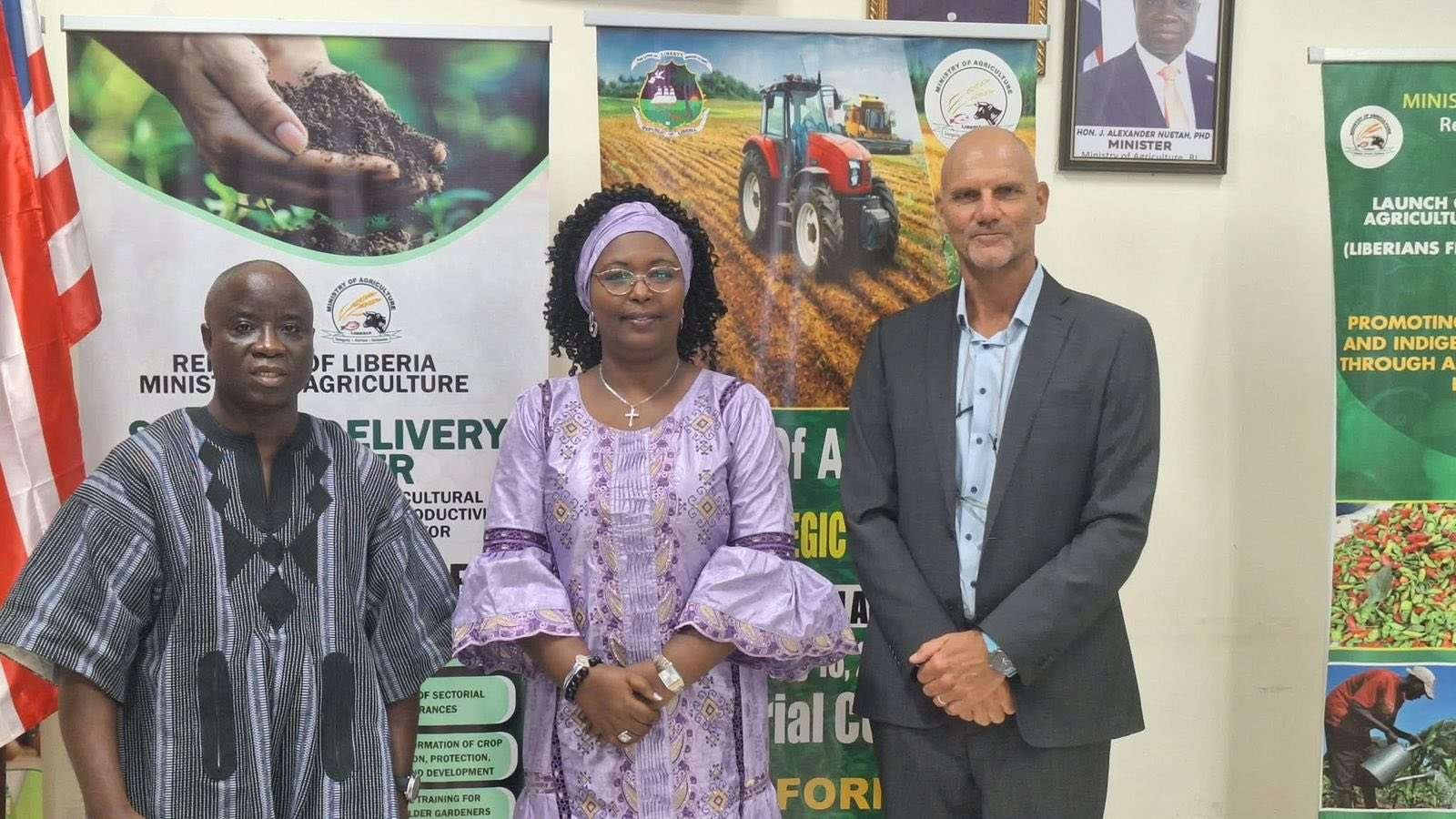
Monrovia, Liberia – In a decisive move to strengthen food security and reduce the country’s reliance on imported food, the Ministry of Agriculture has officially launched its Corporate Strategic Plan (2025–2030), outlining a bold roadmap to transform Liberia’s agriculture into a modern, productive, and resilient sector.
Speaking at the launch, Minister of Agriculture, Hon. J. Alexander Nuetah, described the plan as a turning point for the sector—one that shifts the focus from policy formulation to implementation, accountability, and measurable results.
“This launch represents a national commitment to ensure that Liberia feeds itself, creates opportunities for wealth creation, and builds a resilient agricultural economy for future generations,” Minister Nuetah said.
The Minister emphasized that Liberia’s agricultural challenge is not a lack of natural potential, but the need for stronger coordination, increased investment, and improved performance across the sector.
“Our challenge is not potential. Our challenge is implementation, coordination, investment, and accountability. Resources committed to agriculture must translate into real results for our farmers and our economy,” he stressed.
Supported by the International Fund for Agricultural Development (IFAD), the Strategic Plan prioritizes key interventions, including:
* Increasing domestic food production
* Expanding access to mechanization
* Promoting agribusiness and private sector investment
* Empowering youth and women in agriculture
* Strengthening climate resilience
* Reforming agricultural institutions to improve service delivery
The five-year framework is aligned with Liberia’s national development agenda and positions agriculture as a major driver of economic growth, job creation, and rural transformation.
Minister Nuetah called on development partners, the private sector, civil society, and farmers to align their efforts with the national strategy, emphasizing that agricultural transformation requires collective ownership.
“This plan will only succeed if it is owned by all of us—government, development partners, the private sector, and farmers alike. Agriculture is not just a sector; it is the foundation of Liberia’s economic prosperity,” he noted.
IFAD Country Director, Pascaline Barankeba, reaffirmed the institution’s strong partnership with Liberia and its commitment to supporting inclusive and climate-resilient agricultural development.
“IFAD is proud to have supported the development of this Strategic Plan and remains committed to working with the Government of Liberia to deliver results that benefit smallholder farmers, women, and youth,” she said.
Other development partners, including the Food and Agriculture Organization (FAO) and the European Union, also pledged continued support for the implementation of the plan, signaling strong international confidence in Liberia’s agricultural transformation agenda.
The Ministry of Agriculture noted that successful implementation of the Strategic Plan will lead to increased productivity, reduced food imports, expanded employment opportunities, and improved livelihoods for rural communities.
As Liberia moves from planning to action, the message from the launch was clear: a stronger agriculture sector will drive stronger communities, more jobs, and a more food-secure nation.