

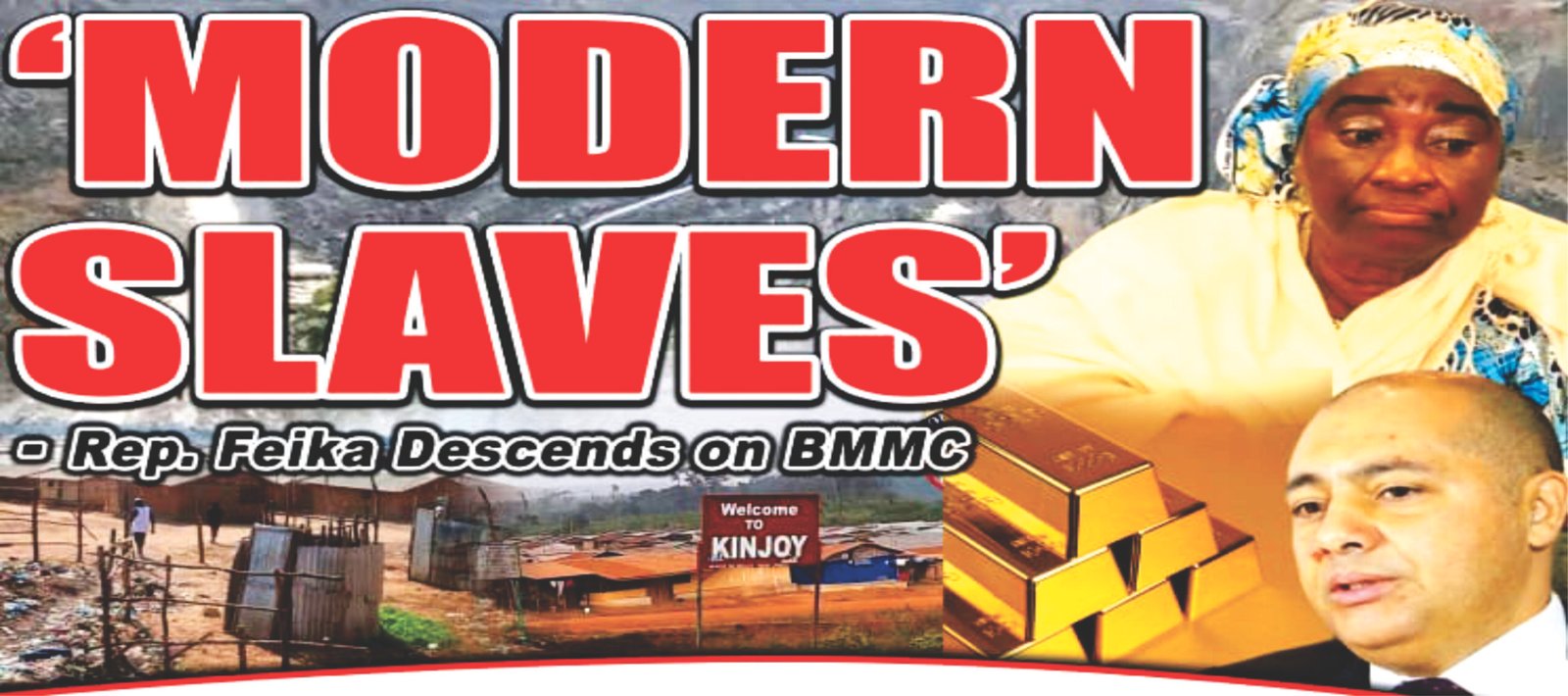
Grand Cape Mount County District #3 Representative Gbessie Sonni Feika has accused Bea Mountain Mining Corporation (BMMC) of subjecting residents of mining-affected communities to what she described as “modern slavery,” citing alleged environmental destruction, health risks, property damage and limited economic opportunities for local people.
Speaking on the floor of the House of Representatives, Feika called for immediate legislative intervention into the impact of the company’s mining operations, particularly its repeated blasting activities, which she alleges have damaged residential structures, threatened public health and disrupted the lives of communities across the county.
“I am speaking on behalf of my district and the entire Grand Cape Mount County. As I mentioned earlier, Cape Mount has gone back to the dark days of slavery. Bea Mountain has turned our people into modern slaves,” Feika told lawmakers.
The lawmaker accused the company of prioritizing its operations while neglecting the welfare of host communities, alleging that residents continue to suffer the consequences of mining activities without receiving meaningful employment and development opportunities.
She expressed particular concern over the company’s blasting activities, claiming that the intensity of the explosions has affected residential properties and the health of people living near mining sites.
According to Feika, the situation has also created frustration among young people, many of whom she said have lost confidence in the possibility of securing employment or other opportunities from the mining company.
“Day in and day out, Bea Mountain is blasting, and the structures of our people are affected. Their health is affected. Our communities are damaged and have been abandoned. No jobs for our people,” she alleged.
Feika further accused BMMC of failing to respond adequately to concerns raised by local lawmakers, claiming that the company has repeatedly dismissed their interventions and indicated that it would deal directly with the Executive Branch of Government.
Beyond the alleged blasting-related damages, the lawmaker raised concerns about environmental pollution, claiming that Bea Mountain’s operations had polluted a river serving 35 communities in Grand Cape Mount County, with residents continuing to experience the effects.
She maintained that her latest communication to the House was not the first time she had raised concerns about the company’s operations, insisting that repeated complaints have yet to produce the necessary intervention.
The mining company, which commenced operations in Liberia on November 28, 2001, under a Mineral Development Agreement (MDA), has operated in Grand Cape Mount County for approximately 25 years.
Despite the company’s longstanding presence in the county, Feika questioned the level of benefits reaching host communities, arguing that Grand Cape Mount continues to struggle with poverty and underdevelopment despite its significant mining activities.
Following her communication, the Plenary of the House of Representatives mandated its Committee on Lands, Mines and Energy to travel to Grand Cape Mount County, investigate the allegations and report its findings and recommendations to Plenary for further legislative action.
The committee’s investigation is expected to establish the extent of the alleged damage to residential properties, the impact of blasting activities on surrounding communities, environmental concerns and the benefits accruing to residents of mining-affected areas.
The investigation could also provide lawmakers an opportunity to assess whether the company’s operations and community development obligations are being adequately fulfilled.
Feika has called for immediate intervention, insisting that residents of Grand Cape Mount should not continue bearing the consequences of mining operations without adequate protection, accountability and tangible development benefits.