


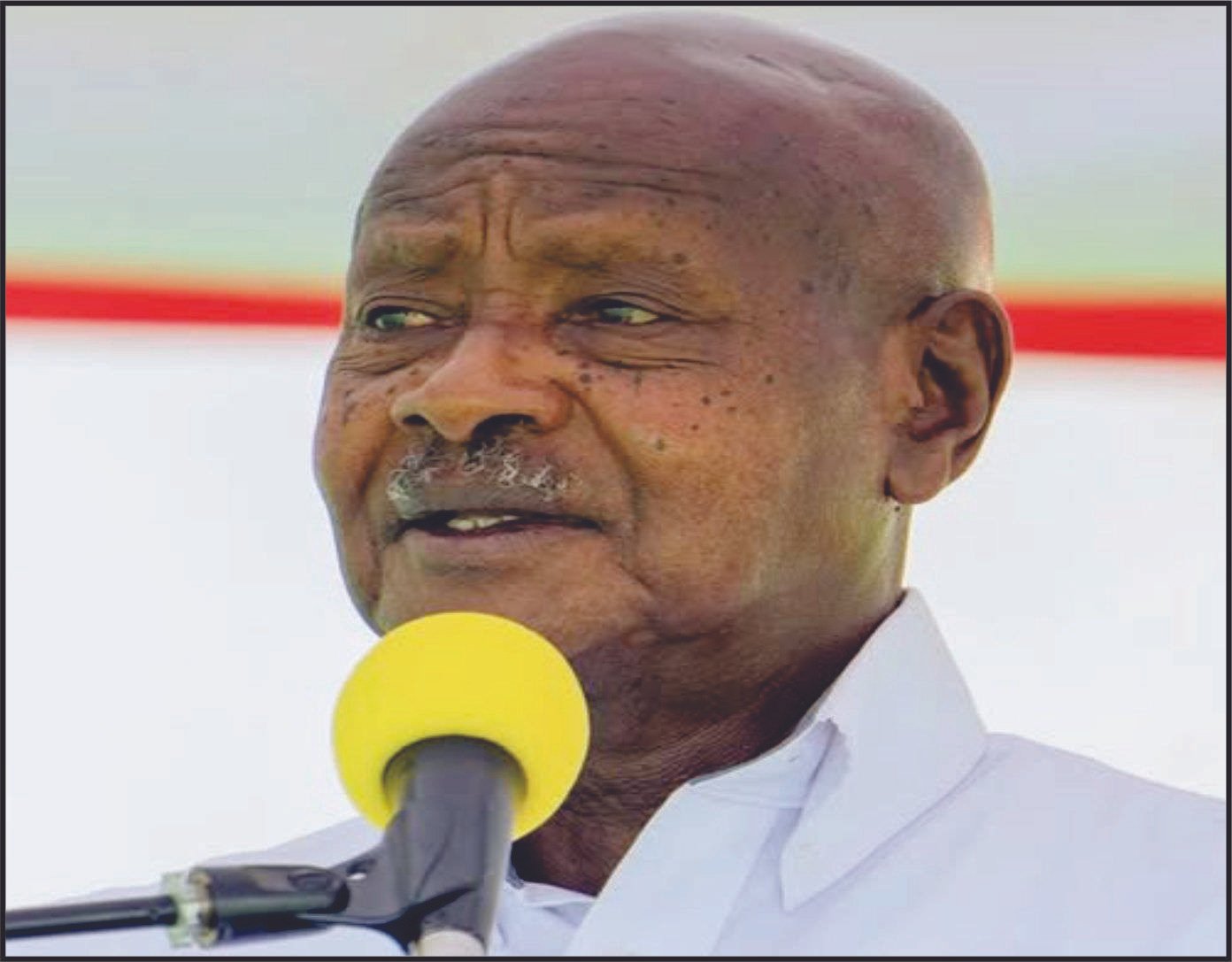
Ugandan President, Yoweri Kaguta Museveni Tibuhaburwa, has been declared the winner of the January 15, 2026. His latest win extends his grip on power for more than four decades.
Mr Museveni, a former rebel leader who came to power in 1986 after a five-year bush war, was on Saturday announced as the winner of the tense polls, which were held under a countrywide internet blackout.
The Electoral Commission chairperson, Justice Simon Byabakama, said Mr Museveni, 81, polled 7,944,772 votes, representing 71.65 per cent of the valid votes cast.
Justice Byabakama added that at least 11,366,201 Ugandans cast their ballots, representing a voter turnout of 52.5 per cent. Mr Museveni’s closest challenger, Mr Robert Kyagulanyi of the National Unity Platform (NUP), trailed with 2,741,238 votes, representing 24.72 per cent of the total ballots cast.
Other candidates shared the remaining votes, each polling single-digit percentages, according to the final tally released by the Commission. The results followed days of heightened security across the country, with heavy deployment of police and military personnel in major towns and opposition strongholds.
The election was conducted amid a nationwide internet shutdown imposed on the eve of polling, a move the government said was necessary to maintain public order. Critics, however, argued that the blackout curtailed communication, limited independent reporting, and hampered the opposition’s ability to mobilise supporters and monitor the vote.
In his victory address, Mr Museveni thanked Ugandans for what he described as a “clear mandate to continue securing peace, stability, and economic transformation.” He pledged to focus on industrialisation, job creation for the youth, and expanding regional trade. “The people of Uganda have once again chosen stability and progress,” he said.
Opposition leaders rejected the results, alleging widespread irregularities, including voter intimidation, arrests of opposition activists, and restrictions on election observers. Mr Kyagulanyi, popularly known as Bobi Wine, said the outcome did not reflect the will of the people and called on his supporters to remain calm as the party considers its legal options.
International reaction was mixed. While some regional leaders congratulated Mr Museveni on his victory, several Western governments and election observer groups expressed concern over the electoral environment, particularly the internet blackout and reports of security force involvement in the process.
Mr Museveni’s latest victory cements his status as one of Africa’s longest-serving leaders. Having ruled Uganda since 1986, he has overseen significant changes in the country’s political and economic landscape, while also facing persistent criticism over governance, human rights, and democratic space.
As Uganda prepares for another term under Mr Museveni’s leadership, attention is expected to turn to post-election challenges, including national reconciliation, economic pressures, and the demands of a youthful population seeking greater political inclusion and opportunities.