
Proceedings at Criminal Court “A” grew increasingly tense on Friday, December 12, 2025, as the defense in the Capitol Building arson case intensified its challenge to the prosecution’s key audio evidence, prompting a major concession from a state witness.
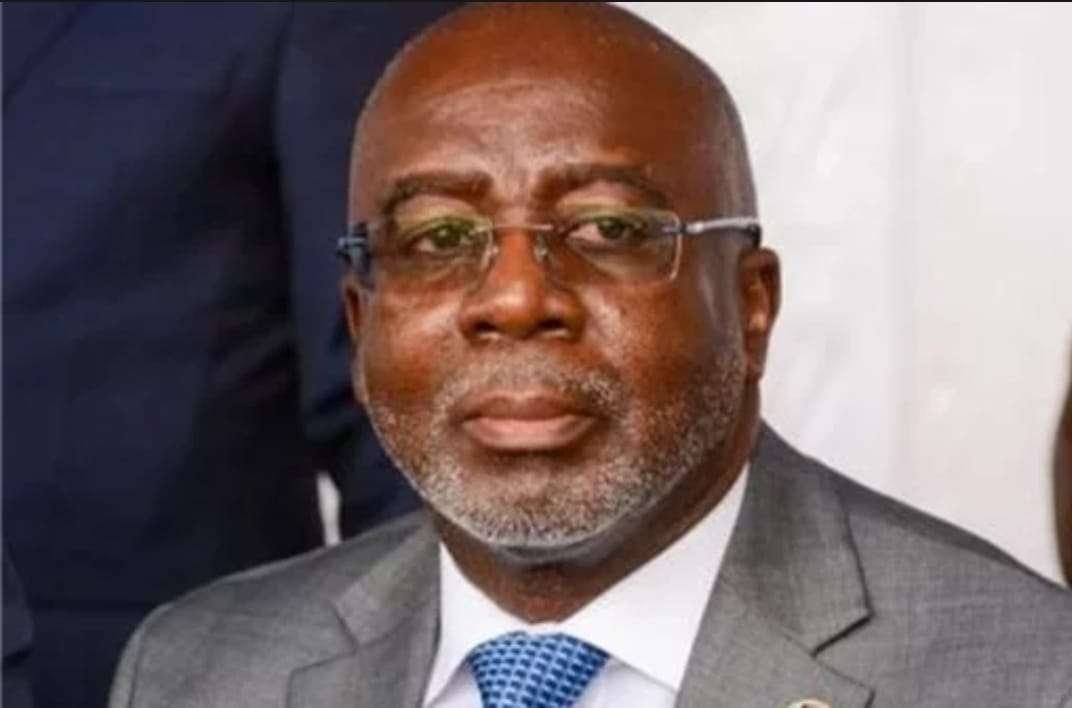
Under cross-examination, Liberia National Police (LNP) chief investigator Rafael Wilson acknowledged that most of the audio recordings relied upon by the prosecution are not directly related to the alleged burning of the Capitol Building and instead focus largely on political conversations.
Leading the defense, Cllr. Arthur T. Johnson argued that the recordings fail to establish any clear link between the defendants and the alleged arson.
He questioned Wilson about a particular audio clip the state claims implicates the accused, noting that the only relevant line in the recording is a vague question:
“Did you see the fire already,” with no reference to the Capitol Building or any identifiable location?
Wilson testified that the recordings were extracted from the mobile phone of Thomas, one of the defendants.
He admitted that investigators found much of the content irrelevant to the arson allegation but still submitted the files as part of the state’s evidence package.
Pressed further, Wilson conceded that the investigation relied heavily on witness statements and that he could not independently confirm whether some of those statements were written by the defendants themselves.
The defense also raised concerns about the integrity of the recordings, alleging they were altered and dated December 17, a day when President Joseph Y. Boakai was reportedly at the Capitol, which was under heavy security from the LNP and the Executive Protection Service (EPS).
The trial took a dramatic turn when the defense accused the LNP and the National Security Agency (NSA) of torturing defendant Eric Susay to force a confession implicating former Speaker J. Fonati Koffa.
Cllr. Johnson alleged that Susay was beaten for several days, restrained to a mattress, and assaulted by individuals allegedly linked to the former warlord known as “General Butt Naked.”
According to the defense, Susay was pressured to claim that former Speaker Koffa funded and ordered the Capitol arson to justify the former speaker’s arrest.
Johnson further alleged that Susay was later transferred to the NSA, where agents allegedly stepped on his back, leaving him with lasting injuries.
He questioned whether Investigator Wilson’s probe documented or investigated any of these claims.
The prosecution objected, arguing that the line of questioning was unconstitutional and could expose the witness to self-incrimination. Judge Roosevelt Willie sustained the objection. Johnson countered that the constitutional protection against self-incrimination applies to witnesses, not the court itself.
Another point of contention arose over whether audio playback devices and a technician should be allowed into the jury’s deliberation room.
The defense objected strongly, arguing that only jurors may be present during deliberations and those electronic devices containing multiple recordings could improperly influence the jury.
Defense counsel insisted that jurors should rely solely on properly admitted transcripts read into evidence, not electronic equipment.
“This court has no authority to enter the jury’s deliberation room,” the defense argued, warning that allowing playback devices could contaminate the jury’s decision-making process.
The prosecution maintained that all admitted evidence-including audio recordings-must be accessible to the jury. The defense rejected this position, cautioning that such access could prejudice the defendants.
Cross-examination of Investigator Wilson continued, with defense attorneys pledging to scrutinize the prosecution’s case in detail.
They argued that the state’s evidence raises serious doubt rather than proving guilt beyond a reasonable doubt.
The Capitol Building arson trial remains ongoing at Criminal Court “A” in Monrovia.