


By Archie Boan
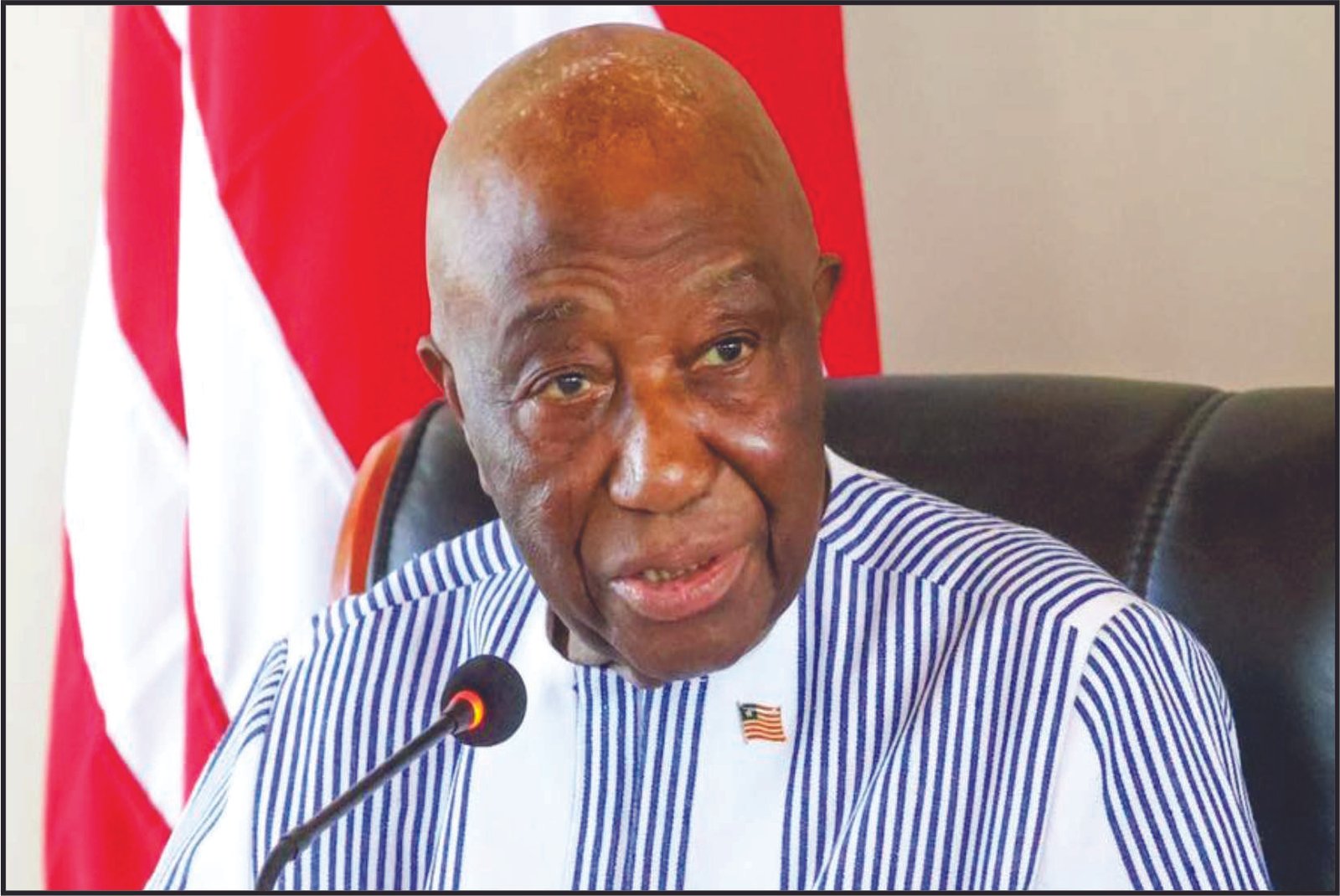
President Joseph Nyuma Boakai has vetoed the proposed Liberia Vocational Education and Training (TVET) Commission Bill, citing significant legal, administrative, and governance shortcomings.
In a formal communication to the Speaker of the House of Representatives, the President acknowledged receipt of House’s Enrolled Bill No. 5 of the Third Session of the Fifty-Fifth Legislature, but said his office found “substantive concerns” in the draft law establishing the Liberia TVET Commission (LITCOM).
Boakai argued that, while the bill was intended to improve skills development and workforce readiness, its current structure risks creating inefficiency and institutional confusion rather than reform.
At the center of the President’s objections is what he sees as a dangerous overlap between regulation and service delivery. According to the President, the bill gives LITCOM sweeping powers to regulate, oversee, harmonize, coordinate, promote, monitor, and evaluate technical and vocational education and training across Liberia. It also grants the proposed commission authority to license, register, accredit, monitor, and evaluate TVET institutions and programs.
However, Boakai warned that the same bill also proposes to absorb and dissolve existing TVET-related functions from the Ministries of Education, Youth and Sports, as well as the Agricultural and Industrial Training Bureau, effectively making LITCOM both a referee and a player in the sector.
“To preserve regulatory neutrality and avoid conflicts of interest, LITCOM should remain a regulatory institution, while line ministries continue as delivery institutions,” the President said.
He stressed that separating oversight from implementation is necessary to align Liberia’s reform agenda with international public sector governance standards and to ensure the credibility of regulatory decisions.
The President also raised red flags over the bill’s transition plan, especially Section 43, which provides for the transfer of assets, liabilities, and staff to the proposed commission. He cautioned that Liberia’s past experiences with public sector restructuring have shown that dissolving institutions without a clear legal and operational transition framework can trigger labor disputes, lawsuits, disruption of services, and employee unrest.
Boakai noted that without detailed provisions to govern how affected institutions and personnel would be integrated or reassigned, the country risks repeating costly mistakes from earlier reforms.
The veto message further identified governance and constitutional problems in the bill’s board and leadership structure. The President pointed to Section 11.1(a), which provides that non-statutory board members shall serve a two-year term renewable once, while also stating that the Commissioner-General shall remain in office for as long as he or she occupies the position, subject to another section of the bill.
According to Boakai, that clause appears internally inconsistent, especially because Section 16(4) identifies the Commissioner-General as Chief Executive Officer, while Section 16(3) appears to set a limit of two five-year terms. He said this contradiction creates uncertainty over tenure and governance.