


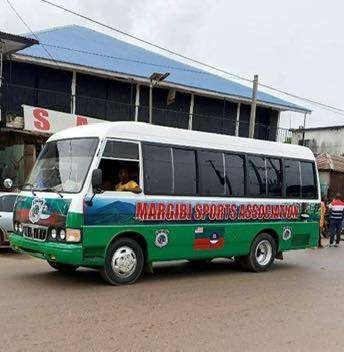
KAKATA, Margibi County — The purchase of a 32-seater bus for the Margibi Sports Association (MSA) has stirred intense public debate across Margibi County, earning praise from supporters who see long-awaited progress for county sports while provoking sharp criticism from others who question the use, quality and accountability of public funds.
The controversy centers on US$55,000 approved by the Margibi County Council for sports management ahead of the 2025/2026 National County Sports Meet. Critics argue that the bus acquired with a portion of the funds is substandard and unsuitable for public service, raising concerns about procurement procedures and compliance with Liberia’s Public Procurement and Concessions Commission (PPCC) regulations.
Public scrutiny escalated following the unveiling of the bus at a gathering convened by Margibi County Superintendent Ojay Morris. While many residents applauded the moment as historic—marking the first time Margibi County teams would own a dedicated transport vehicle—others questioned the bus’s condition, age and whether it represented value for money.
Political pundits like Israel Mayue, Vee Kromah and Edwin Lombeh, took to social media to accuse county authorities and the MSA of mismanaging county development funds. They argued that public money should not be used to purchase what they described as an “old and third-hand vehicle,” insisting that public procurement standards favor durable, high-quality assets capable of serving long-term public needs.
As criticism intensified, attention turned to Superintendent Morris, with allegations circulating that he may have influenced the use of the county’s Social Development Funds. Those claims were later rejected by the Margibi Sports Association.
In a press statement responding to the allegations, MSA Chairman Tonny Walker denied any involvement by the Superintendent in the procurement process and defended the decision to acquire the bus. He said the Superintendent neither purchased the bus nor played any role in the transaction.
Walker said the MSA independently purchased the bus through its leadership using US$21,500 from the allocated funds, disputing claims on social media that as much as US$39,000 was spent. According to him, the vehicle was imported from South Korea through a businessman whose identity was not publicly disclosed, following consultations and approvals by both the MSA Steering Committee and Executive Committee. The cost, he said, covered importation, clearing, spraying and branding.
However, Walker’s remarks describing those demanding accountability as “few angry and self-interest Margibians” drew further criticism, with some radio callers saying the language appeared dismissive and only deepened public concern.
The MSA said the decision to acquire the bus was driven by persistent transportation challenges faced by county teams, particularly during the National County Sports Meet, one of Liberia’s most widely followed and participated sporting events. Walker noted that since Margibi County’s establishment and its participation in the County Meet, this is the first time its teams have owned a bus, calling the acquisition a boost for both the association and the county.
Despite the MSA’s explanations, skepticism persists. Critics maintain that the association has not publicly released procurement documents, inspection reports or detailed financial records related to the purchase, an omission they say has fueled suspicion and prolonged the controversy.
The association, meanwhile, warned against what it described as false and unverified information circulating on social media, particularly by commentators including influencer Prophet Key, urging those seeking clarification to engage the MSA through official channels.
As public debate continues, many residents are calling for greater transparency and independent verification of the procurement process, arguing that public confidence in county development projects depends not only on visible results but also on openness and accountability in how public funds are managed.