

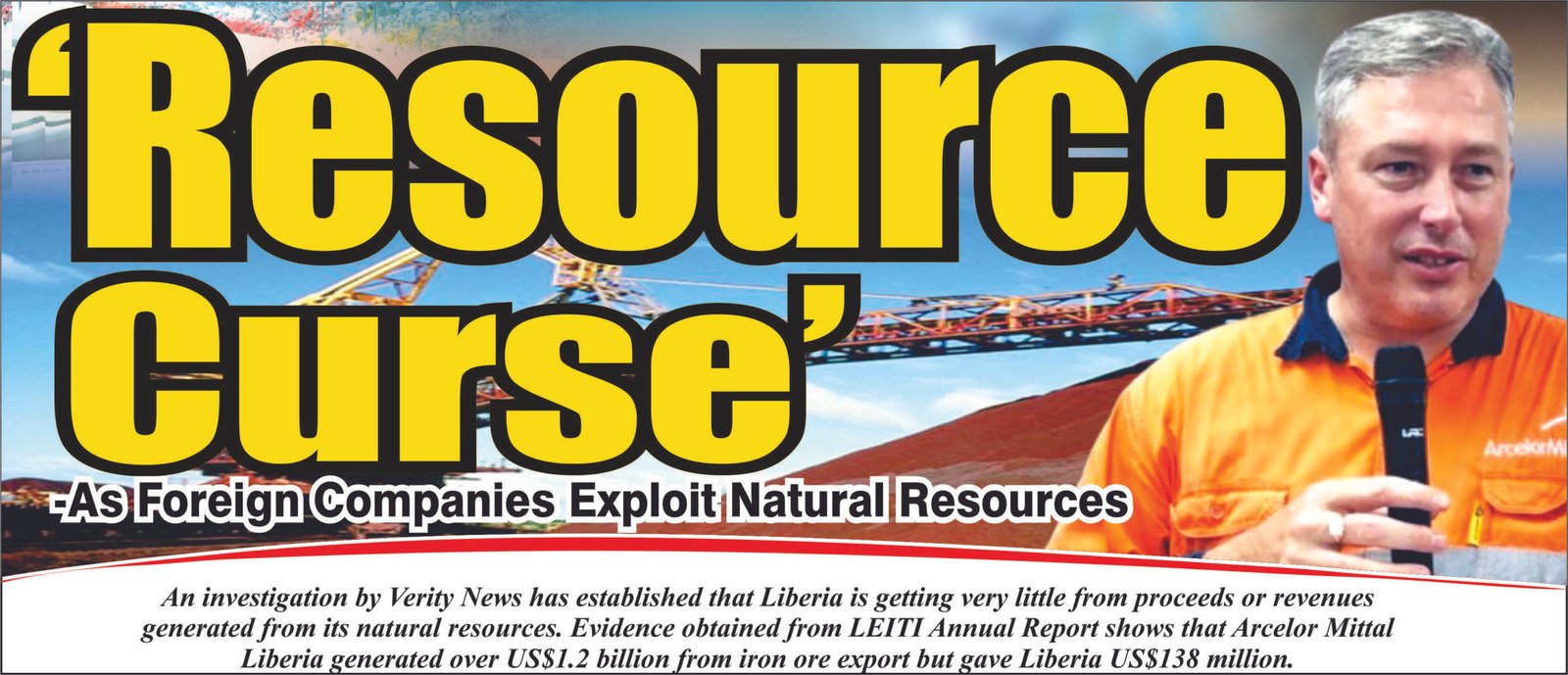
An investigation by Verity News has established that Liberia is getting very little from proceeds or revenues generated from its natural resources.
Evidence obtained from the LEITI Annual Report shows that ArcelorMittal Liberia (ALM) generated over US$1.2 billion from iron ore exports but paid Liberia only US$138 million.
Payments Made by Year
2019-2020 =$US30, 966,820
2020-2021 =$US29, 638,231
2021-2022 =$US78, 226,389
Total =$US 138,831,440
Year Commodity Export Value (US$)
2019-2020 = $US 271,279,906
2020-2021 = $US 465,340,604
2021-2022 = $US 4,477,226,819
Total =$US 1,213,847,329
Grand Total (Payments + Commodity Export Values): 1,352,678,769 US$
Summary Table
Year Payment Made (US$) Commodity Export Value (US$)
2019-2020 =$US30, 966,820 + $US 271,279,906
2020-2021 =$US29, 638,231 + $ US465, 340,604
2021-2022 =$US78, 226,389 + $US477, 226,819
Total= $US 138,831,440+ $US1, 213,847,329
Amid these resource exploitations, ALM is also exploiting Liberia’s human resource capital.
Last week, leaked video footage obtained by Verity News sparked public outrage after showing Indian nationals working as masons and carpenters at ArcelorMittal’s Tokadeh Mines in Yekepa, Nimba County, positions legally reserved for Liberians.
The footage shows foreign workers laying concrete, installing wooden structures, welding, and performing other construction tasks.
This revelation has intensified concerns over violations of Liberia’s Liberianization Policy, which mandates that certain job categories be exclusively occupied by Liberian citizens.
Residents questioned why foreign nationals are occupying roles for which Liberians are already trained and available.
“Are Liberians not qualified to do these jobs?” asked a Yekepa resident. “We have certified carpenters, masons, welders, and skilled workers right here in Nimba County. Yet foreigners are doing the very jobs that young Liberians are desperately seeking.”
Unemployment in Liberia continues to rise while foreign workers perform tasks that Liberians are equally or better equipped to handle.
Liberia’s Investment Act and Liberianization Law reserve several job categories strictly for Liberians, including:
Masonry
Carpentry
Car washing
Driving
Security services
Various construction-related roles
The law aims to protect the local job market, ensure Liberians benefit from employment opportunities, and promote national economic growth.
The presence of foreign nationals in restricted job categories has raised serious concerns about regulatory enforcement and whether concession companies like ALM comply with the law.
ArcelorMittal Liberia, one of Liberia’s largest concessionaires, has faced repeated criticism over its labor practices. The newly surfaced videos have intensified scrutiny and triggered demands for swift government action.
Residents accuse the company of ignoring repeated calls to prioritize local hiring, particularly for low-skill and mid-skill positions. Critics also argue that the Ministry of Labor has failed to enforce its rules effectively.
“We cannot have foreigners doing carpentry, masonry, or washing cars at a multimillion-dollar concession while young Liberians sit home unemployed,” said a youth leader in Yekepa. “The law is the law, and it must be respected.”
Reports of foreign nationals working in supermarkets, garages, construction sites, and hotels have sparked national concern over Liberia’s ability to protect its labor market.
Persistent non-enforcement of the Liberianization Policy could undermine the country’s economic sovereignty and increase youth unemployment.
Residents of Nimba County are urging the Ministry of Labor, National Bureau of Concessions, and House Committee on Labor to investigate ALM’s hiring practices. Community members are demanding:
A full review of all foreign work permits issued to ALM
Penalties for breaches of the Liberianization Law
Replacement of foreign unskilled workers with qualified Liberians
Amid soaring profits from Liberia’s natural wealth, the exploitation of both natural and human resources by foreign companies like ALM continues to spark outrage and calls for urgent reform.