


By Emmanuel Degleh
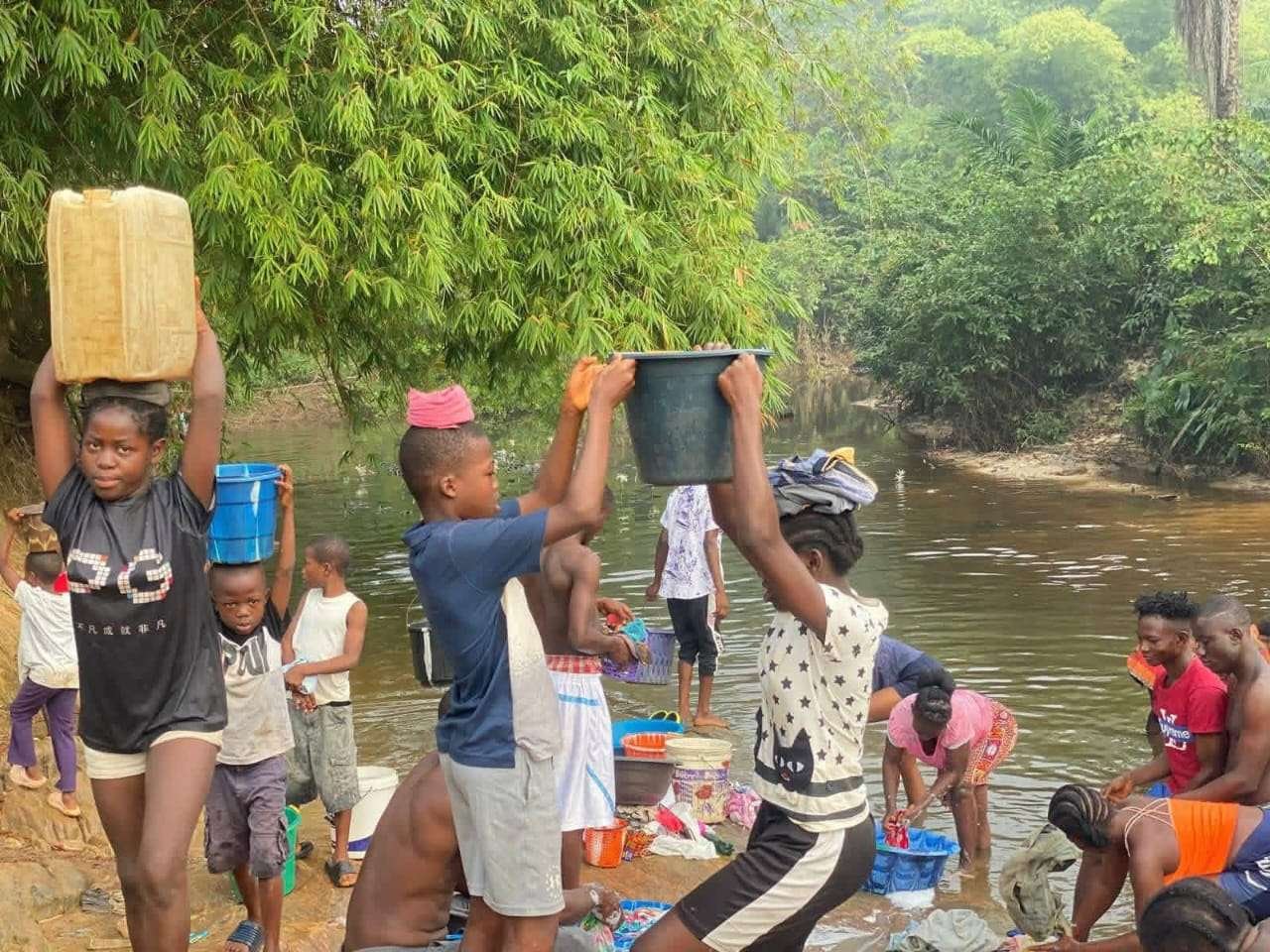
Residents of Morris’s Farm and surrounding communities in Todee District, Rural Montserrado County, continue to face serious challenges accessing safe drinking water, forcing many families to rely on the Du River as their primary source of daily water.
Community members say the river, which is shared by humans, animals, and nearby settlements, remains the only available option for drinking, cooking, and bathing, despite concerns about contamination and waterborne diseases. Women and children are often seen trekking long distances to fetch water, exposing themselves to health risks and physical hardship.
The situation has sparked growing frustration among residents, particularly as reports emerge of high-ranking public officials in Monrovia receiving substantial monthly salaries and benefits. Locals question why, amid such national wealth concentration, basic services such as clean and safe drinking water remain unavailable to rural communities.
“We are drinking from the same river that animals use,” one resident lamented. “Every election year, we are promised hand pumps and clean water, but nothing ever changes.”
Health experts warn that continued dependence on untreated river water increases the risk of cholera, typhoid, diarrhea, and other preventable illnesses, especially among children and the elderly.
Despite repeated appeals, residents say they have seen little intervention from government authorities or development partners to address the water crisis in the area. Calls are now intensifying for urgent government action, including the construction of hand pumps, boreholes, or small-scale water systems to serve the growing population.
As the dry season deepens, concerns are mounting that water scarcity and health risks will worsen if immediate steps are not taken.
More details are expected to emerge as investigations continue into the situation affecting Morris’s Farm and nearby communities in Todee District.
This is a developing story.