

The Student Unification Party (SUP) has formally reaffirmed its solidarity with Liberian rubber farmers, tappers, buyers, and locally owned export enterprises, warning against what it describes as coordinated efforts by foreign dominated companies to marginalize indigenous participation in the rubber export sector.
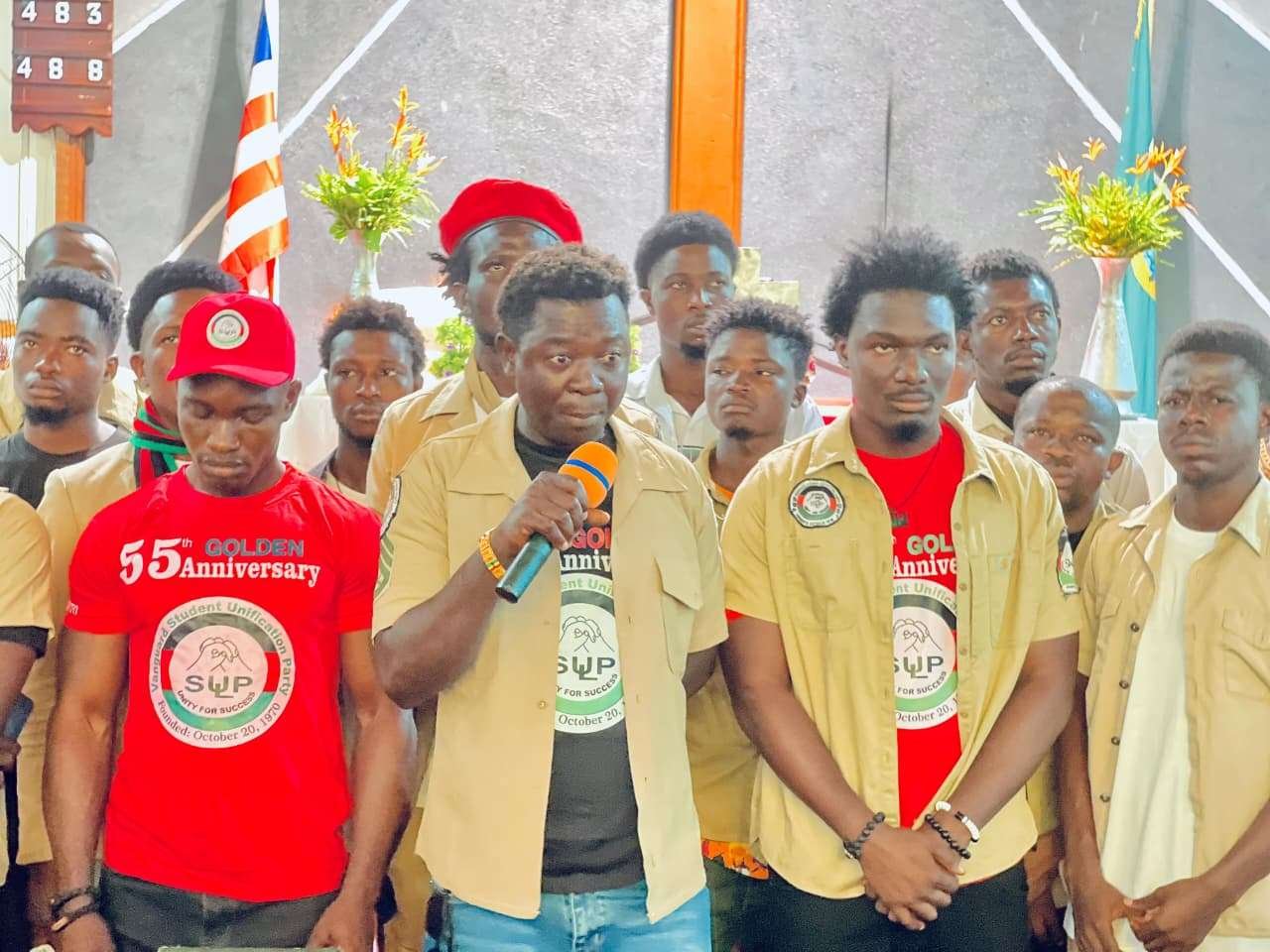
In a statement issued at the University of Liberia’s Capitol Hill campus, SUP accused Jeety Company and allied interests of leading a campaign aimed at obstructing legitimate local involvement in rubber exports.
The student political movement maintained that these actions, presented as regulatory measures, are in fact designed to preserve long-standing foreign dominance over Liberia’s rubber industry.
According to SUP, the criminalization or restriction of smallholder farmers and local exporters under regulatory pretexts undermines constitutional guarantees and economic justice.
The group argued that Liberia’s rubber sector has historically been controlled by foreign corporations that have benefited extensively from the country’s natural resources while leaving local communities impoverished and environmentally vulnerable.
SUP asserted that rubber farming and local export activities are lawful and constitutionally protected, emphasizing that the Government of Liberia bears a responsibility to promote and safeguard indigenous economic participation.
The organization rejected any policy or directive that imposes blanket bans, punitive restrictions, or discriminatory measures against Liberian farmers and exporters.
The statement further called for the uniform application of environmental, labor, tax, and operational standards, stressing that foreign companies should be subject to the same level of scrutiny and compliance as Liberian-owned businesses.
As part of its recommendations, SUP urged the government to provide immediate and comprehensive support to local farmers and exporters, including the mobilization of public and private investment to establish modern rubber processing factories within Liberia. Such initiatives, the group said, would enhance value addition, create employment, and ensure that a greater share of the sector’s economic benefits remains in the country.
Additionally, SUP proposed that the Government of Liberia grant Liberian rubber exporters a protected and enabling period of four years to participate fully and competitively in the export market. The proposed transitional period, according to the organization, would allow indigenous exporters to consolidate capacity, attract investment, and develop efficient processing facilities capable of competing sustainably at both regional and international levels.
In closing, SUP reaffirmed its commitment to advocating for the rights of Liberian rubber farmers and exporters, describing their participation in the sector as essential to national development and economic self-determination.