


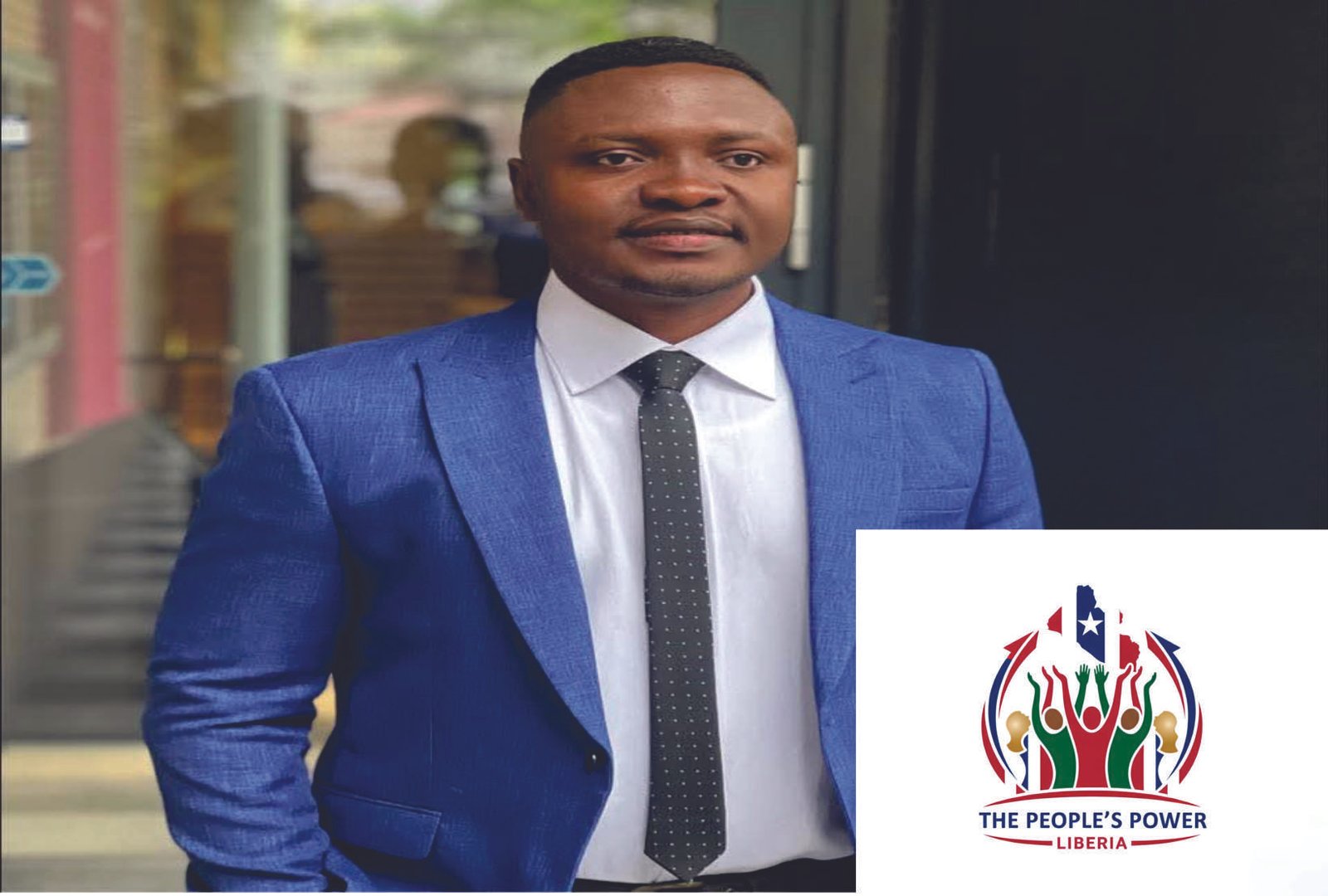
Liberian exiled activist Martin K. N. Kollie has announced plans to launch what he describes as a “big, serious, and patriotic” nationwide movement aimed at driving sweeping political, economic, and governance reforms in Liberia.
In a public statement circulated this week, Kollie said the proposed movement — described as a “pro-people” and “big tent” initiative — seeks to unite ordinary Liberians around a shared vision for national renewal. He framed the effort as a platform for “real change,” emphasizing citizen participation, accountability, and structural reforms.
According to Kollie, the movement, referred to as The People’s Power, will focus on a broad reform agenda that includes governance, anti-corruption measures, economic development, and social justice. He said the initiative is intended to provide a “new direction, a fresh start, and a new day” for the country.
Among the key proposals outlined are significant public-sector salary reforms, including capping all government salaries and benefits at US$5,000 per month, while ensuring that no civil servant earns less than US$500 monthly. Kollie also called for a comprehensive audit of the National Legislature covering the period from 2006 to 2025.
On economic development, the activist proposed a “One-County, One-Factory Policy” aimed at promoting industrialization and sustainable job creation across Liberia. He also advocated for the establishment of a Bank of Agriculture, Rural Development, and Entrepreneurship to support farmers, small businesses, and rural communities.
The reform agenda further includes a review of the 1986 Constitution, reductions in presidential, legislative, and senatorial terms, and the establishment of specialized courts, including an Anti-Corruption and Financial Crimes Court and a War Crimes Court.
Kollie also called for independent investigations into past and present mysterious deaths, full implementation of recommendations from audit and investigative institutions, and the creation of a sex offender registry alongside the appointment of a special prosecutor for rape cases.
Other proposals target government spending and accountability, such as limits on the cost of vehicles for public officials, stricter management of government vehicles, audits of national security institutions, and tighter controls on foreign travel by officials.
While no official launch date has been announced, Kollie urged Liberians at home and abroad to engage with the movement, arguing that the country’s future depends on collective action.
“Do you want a Liberia that offers hope for all?” Kollie asked, calling on citizens who share that vision to join The People’s Power.
Political observers note that the announcement adds to growing public debate over governance reform, accountability, and economic inequality in Liberia, as the country continues to grapple with long-standing structural challenges.