
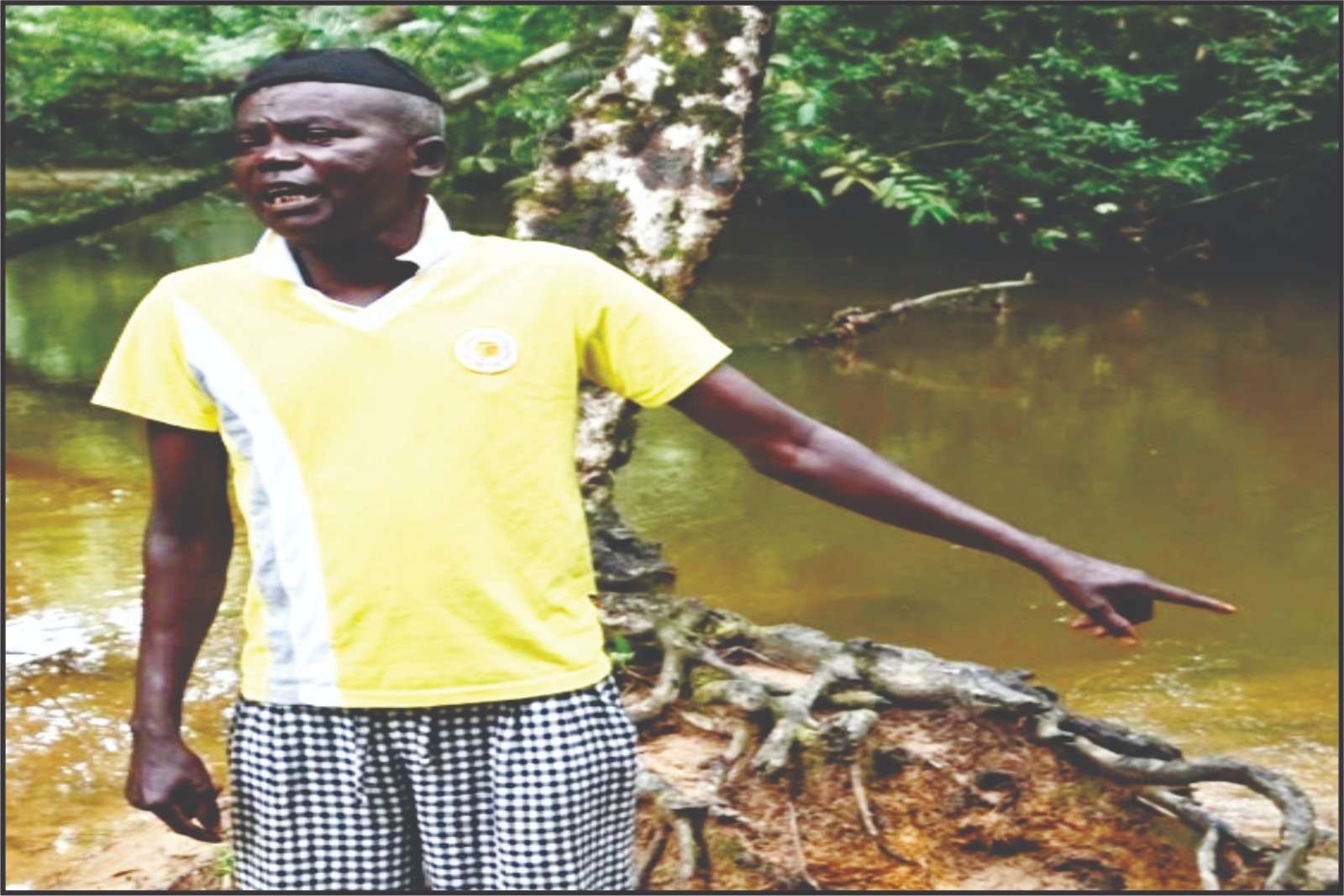
For generations, families in Jikandor village relied on the river for drinking water, fishing, and daily survival. Today, residents say that same river has become a source of danger chemicals.
Communities blame Bea Mountain Mining Corporation (BMMC), Liberia’s largest gold producer, for repeated chemical spills that government records show released toxic substances into surrounding waterways over several years.
“If we don’t move, we will die,” said village Chief Mustapha Pabai, standing near a river where dead fish floated on the surface.
Documents from Liberia’s Environmental Protection Agency (EPA), reviewed by The Associated Press and The Gecko Project, show that cyanide, arsenic, and copper leaked multiple times from Bea Mountain’s mining facilities, often exceeding legal safety limits.
The records, later removed from the EPA’s website but recovered during the investigation, provide the most detailed public account to date of the spills.
The reports also show that Bea Mountain failed to promptly notify regulators following a major spill in 2022 and, on previous occasions, blocked government inspectors from accessing its laboratory and environmental test results.
Pattern of Negligence, Weak Oversight
Environmental experts say the incidents reflect serious corporate misconduct.
“These failures can only be described as sustained negligence,” said Mandy Olsgard, a Canadian toxicologist who reviewed the EPA findings.
The records also highlight weak enforcement by the Liberian government, which holds a 5 percent ownership stake in Bea Mountain. Under Liberian law, mining licenses can be suspended or revoked for environmental violations, but no such action has been taken.
The World Bank has repeatedly cited limited regulatory capacity as a challenge in Liberia’s extractive sector.
Former Mines and Energy Minister Wilmot Paye, who was dismissed in October, said he was “appalled by the harm being done to our country” and confirmed that the government had begun reviewing mining concession agreements following the investigation.
Gold from Bea Mountain is sold to Swiss refiner MKS PAMP, whose supply chain includes major global technology companies such as Apple and Nvidia. Investigators were unable to determine which companies ultimately used the gold mined in Liberia.
MKS PAMP said it commissioned an independent assessment of Bea Mountain’s New Liberty Mine in early 2025. While the review found no grounds to immediately sever ties, it identified health and safety concerns and said improvements were required. A follow-up inspection is planned for 2026.
The company declined to release the assessment, citing confidentiality, but said it would terminate its relationship if conditions fail to improve.
Between July 2021 and December 2022, Bea Mountain exported more than US$576 million worth of gold, contributing US$37.8 million to Liberia’s national revenue.
Bea Mountain is controlled by Avesoro Resources, owned by Murathan Günal, son of Turkish billionaire Mehmet Nazif Günal. The Günal family acquired the company in 2016, despite years of prior environmental warnings.
As early as 2012, consultants warned of contamination risks linked to the New Liberty Mine’s tailings dam. Subsequent studies flagged cyanide and arsenic as major threats, warning that drinking water could exceed World Health Organization safety standards if not properly managed.
Environmental groups say Bea Mountain’s operations have already cleared more than 2,200 hectares of rainforest, threatening habitats of endangered species including pygmy hippos and western chimpanzees.