


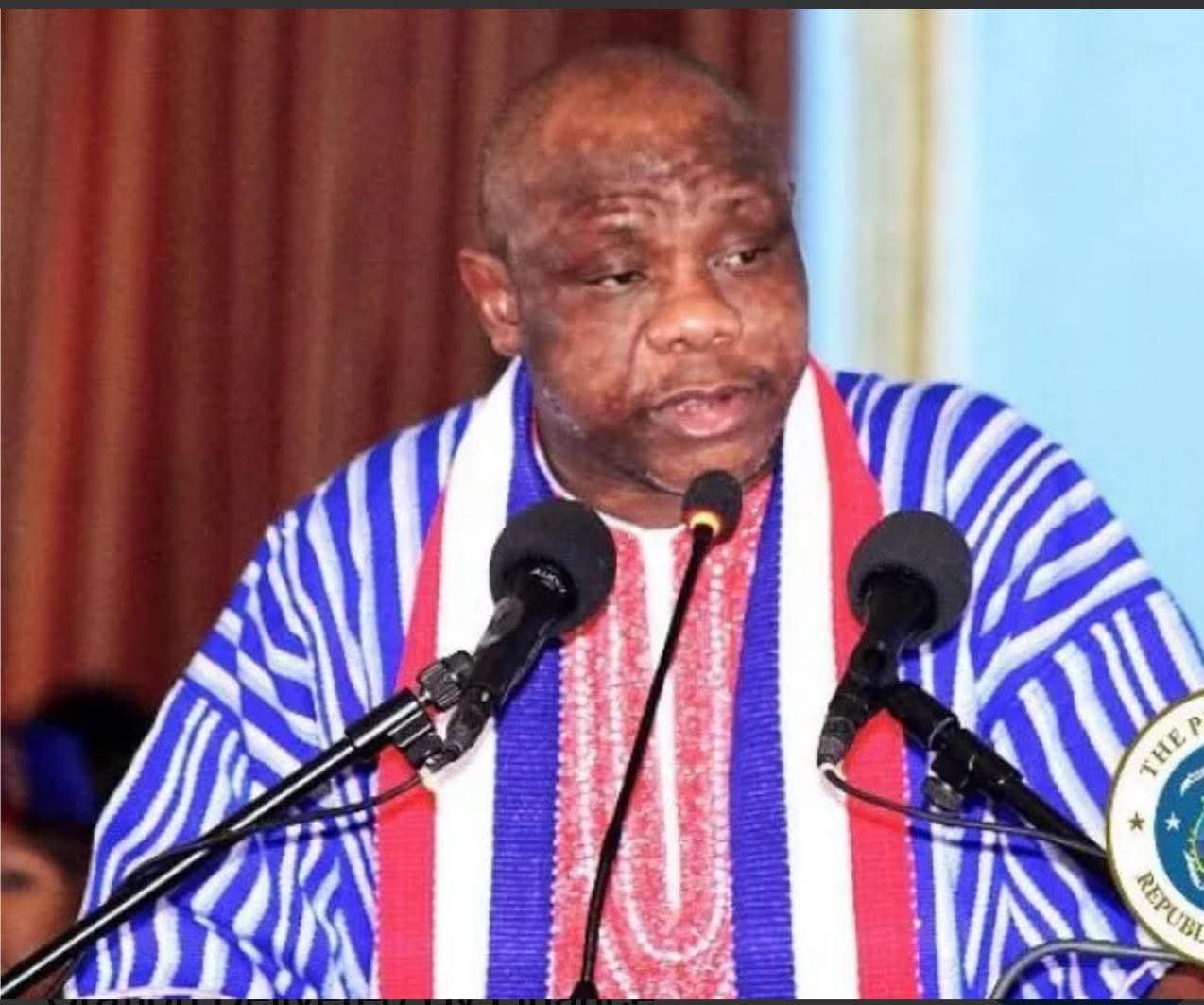
Former Minister of Finance and Development Planning Samuel D. Tweah Jr. has argued that the former Coalition for Democratic Change (CDC) administration halted a rapid slide of Liberians into poverty and handed the current Unity Party (UP) government a stronger economic foundation, urging the new administration to build on those gains to significantly reduce poverty beyond 2025.
In a detailed policy commentary based on the World Bank’s latest poverty projections, Tweah said public debate around poverty figures has often been misleading and politically driven, rather than grounded in sound economic analysis.
“CDC stopped Liberians’ mass slide into poverty and handed the UP a solid poverty-reducing foundation,” Tweah wrote, adding that the critical question now is whether the UP can “begin moving Liberians out of poverty in a sustained way.”
Tweah criticized claims by some commentators that the CDC left more people in poverty than it inherited, saying such arguments ignore population growth, economic shocks, and global crises such as COVID-19.
“If one uses that same flawed reasoning,” Tweah noted, “then between 2005 and 2016 the UP caused 2.4 million Liberians to be poor. Of course, that is not how economists analyze poverty.”
Drawing from World Bank projections—since Liberia’s last full poverty survey was conducted in 2016—Tweah outlined trends in poverty incidence, poverty gaps, and the estimated cost of lifting people above the poverty line. He explained that the poverty gap index measures how far poor households fall below the poverty line and should be the central focus of government policy.
According to his analysis, poverty was already increasing before the CDC assumed power in 2018 and worsened during the early CDC years due to macroeconomic difficulties and later the COVID-19 pandemic.
Between 2018 and 2019, more than 334,000 Liberians fell below the poverty line, with an additional 174,000 pushed into poverty in 2020 as a result of COVID-19.
However, Tweah said Liberia performed better than many countries during the pandemic. “Globally, poverty increased by about 1.3 percent due to COVID-19,” he wrote. “In Liberia, the increase was only 0.3 percent. That means fewer Liberians fell into poverty compared to the rest of Sub-Saharan Africa and the world.”
He credited aggressive macroeconomic stabilization policies and the Pro-Poor Agenda for Prosperity and Development (PAPD) under the CDC for reversing the trend. By 2021, the number of people falling into poverty dropped sharply, and in 2022, projections show that about 1,900 Liberians moved out of poverty.
Tweah highlighted economic growth as a key factor, noting that growth under the UP stood at about 2.5 percent in 2017, compared to 4.7 percent in 2023 under the CDC.
“The World Bank has consistently argued that growth alone will not solve Africa’s poverty problem,” he said, “but growth is foundational to stopping mass descents into poverty and creating the conditions for people to escape it.”
Tweah placed responsibility squarely on the Unity Party government to accelerate poverty reduction. He argued that with Liberia’s national budget now exceeding US$1.2 billion, the country has the fiscal space to make a meaningful impact.
“My calculations show that, on average since 2016, Liberia has needed about US$484 million annually to close the poverty gap,” Tweah stated. “This amount has often been less than our national budget. With the current budget size, we should be able to move at least 50,000 people out of poverty every year.”
He added that the estimated cost to lift one poor person above the poverty line in 2025 is about US$133, describing it as “entirely doable” if resources are properly allocated.
Tweah cautioned that achieving such results would require major changes in budget priorities, particularly deeper investment in agriculture and the private sector, which he described as the most promising pathways out of poverty.
“If business as usual continues, business-as-usual results will follow,” he warned, urging citizens to hold policymakers accountable. “The debate should not be CDC versus UP. It should be about what leaders and citizens must do to finally change Liberia’s poverty story.”
Tweah said he plans to further elaborate on his analysis in upcoming public discussions, including an appearance on the Spoon Talk program.